





Aerial view of a square outdoor air conditioning condenser unit on a concrete pad beside a house wall with a sliding glass door.

AC Installation in Topeka, KS

Tell us about the job

Takes about a minute. No obligation.

New system or replacementCentral ACShawnee County, KS
Step 1 of 2

What ZIP code is the job in?

Shawnee County saw 351 severe weather events between 2015 and 2024. That includes 224 damaging wind events and 108 hail storms, with 7 tornadoes touching down in the same stretch. An outdoor condenser sits outside through all of it, exposed to wind-blown branches and hail. Power doesn't always hold up either. 19% of Kansas households went at least 24 hours without power in 2024. For a new install, that's worth thinking about before the unit goes in, not after.

5 months
May through September, your air conditioner is on duty
88°F
the average summer afternoon it cools against
108 hail events
in ten years, and hail bends the fins on outdoor coils
13.4 SEER2
the federal minimum any new unit must meet
Isometric line illustration of a cutaway single-story house showing interior rooms, ductwork, an indoor air handler or furnace, and a refrigerant line running to an outdoor condenser unit on a pad.
Your air conditioner works hardest from June through August.

NOAA nClimDiv, 1991–2020 normals

Afternoon highs average 88°F through June, July and August in Shawnee County.

A new system has to pull that heat down for five months straight, so sizing it right matters more than finding the lowest price.

Half these homes were built before central air was standard

Half the homes here were built by 1972
Cooling runs May through September
Summer afternoons average 88°F

Gas heats 68% of homes in Shawnee County, electricity heats most of the rest. That split matters for a new AC install, because the furnace stays put and the condenser has to work with it. If your house already has a gas furnace, a straightforward air conditioner pairs with the existing ductwork and blower, and that's the path most homes here take. Houses heated by electric furnace or heat pump are a smaller share, but worth checking before assuming which setup is yours. Matching what's already there keeps the install simple and keeps the two systems working together instead of against each other.

Decide where the condenser sits before it goes in

Where the new condenser gets placed is part of the install conversation, not an afterthought. A unit set away from fence lines and low branches rides out wind and hail better than one tucked in a corner where debris collects. That's a conversation worth having with the installer before the unit goes in, since moving it later means redoing the line set and pad.

Find a contractor
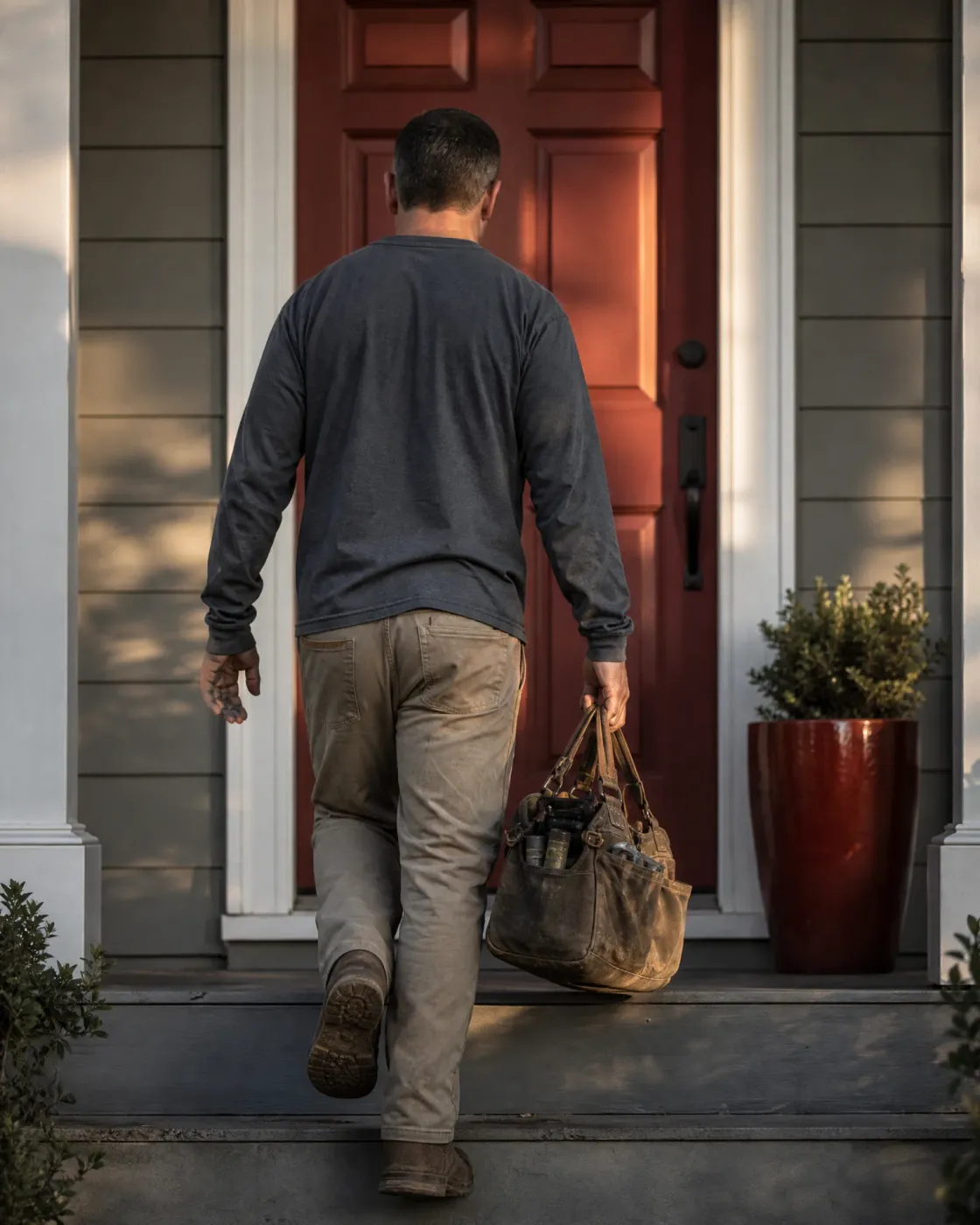
A man in a dark long-sleeve shirt and tan work pants, seen from behind, steps onto a porch toward a red front door while carrying a worn leather tool bag, with a shrub in a red planter beside him.
An outdoor air conditioning condenser unit mounted on a concrete pad surrounded by gravel, photographed against a partly cloudy blue sky.

April is the month to do this, not May

Cooling runs May through September here, five months straight once it starts. April is the month before that, and it's the month to get a new system in. Install it then and the condenser is already running fine by the time the heat sets in, with nobody rushing the job or working around a unit that's already straining. Wait until the season's underway and you're scheduling around whatever the summer throws at the crew, hail and wind included. Going in April means the install happens on a calm day, not a storm day.

Ask what size the load calculation supports

A contractor should size the system to the house, not just swap in whatever size is already there. Room dimensions, window area, insulation and duct condition all factor into that number. A unit too big cools the air fast but shuts off before it pulls the moisture out, leaving the house cold and damp. A unit too small runs constantly and never quite catches up on the hottest days. Ask to see the calculation, not just the recommendation.

Ask how the new unit matches the furnace and ductwork

The condenser outside has to work with the blower and coil already in the house. If the indoor coil doesn't match the new condenser, the system won't deliver the cooling it's rated for, even if the outdoor unit is sized right. Ask whether the indoor coil is being replaced along with the condenser, and whether the existing ductwork and blower can move the air the new system needs. A mismatched pair costs efficiency for the life of the system.

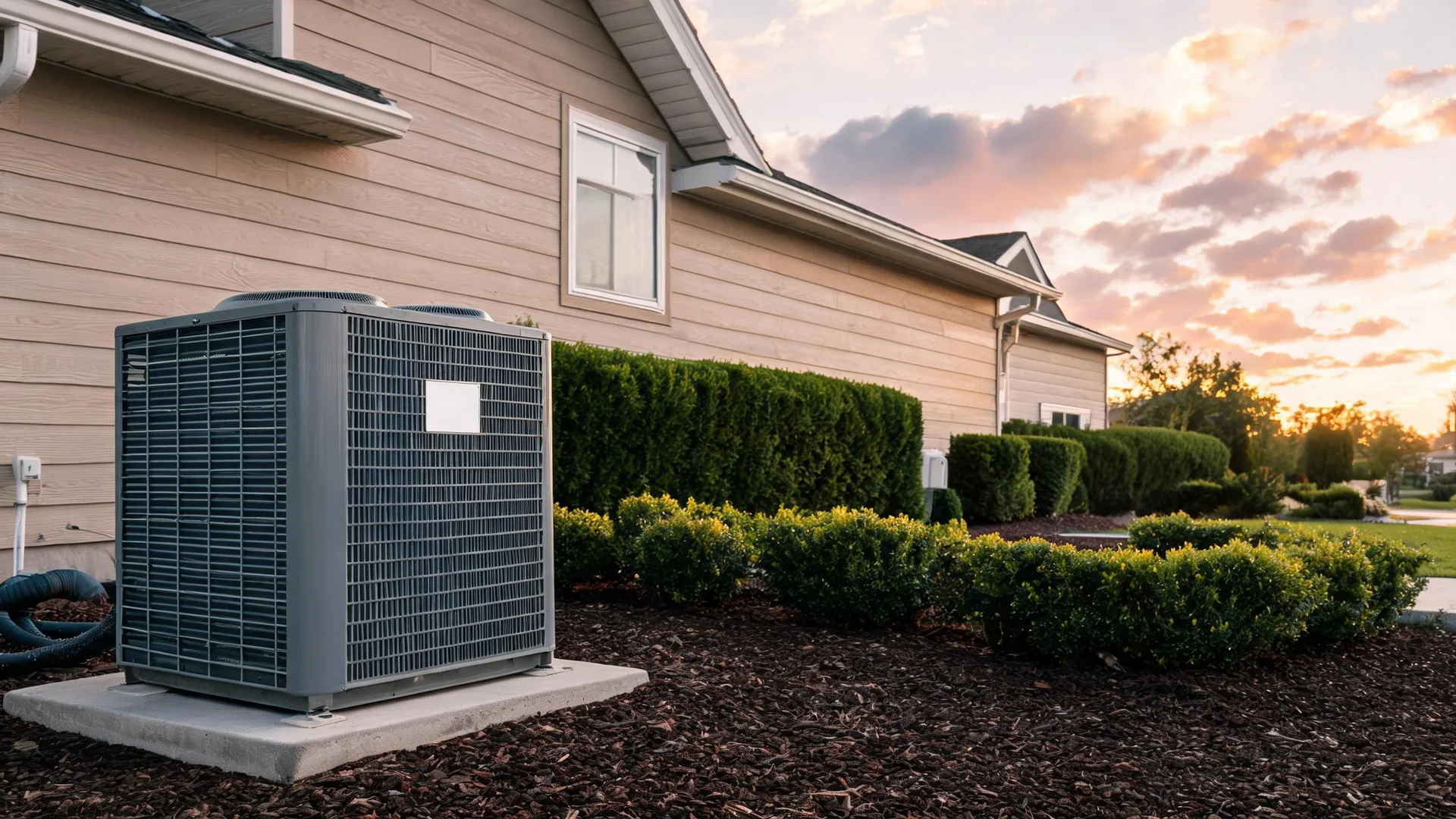
Overhead view of a gray residential air conditioning condenser unit mounted on a concrete pad beside a house with asphalt shingle roofing.

A higher-efficiency unit would save about $30 a year to run in Shawnee County compared with a new unit at the federal minimum.

  • A higher-efficiency unit$290 a year
  • A new unit at the federal minimum, 13.4 SEER2$320 a year

Estimates for a typical Shawnee County home, from EIA household energy data, Kansas fuel prices and NOAA climate normals. Your home will differ.

Install day starts with the old equipment coming out, not the new one going in. The crew disconnects and removes the existing condenser and indoor coil, then checks what they're left with. The refrigerant lines, the electrical disconnect, the condensate drain, all of it gets inspected before anything new gets set. Lines get replaced if they're the wrong size for the new system, not just reused because they're already there. The new condenser goes on a level pad, the indoor coil gets matched into the plenum, and then the lines get connected, purged and sealed. Once everything's tight, the system gets charged with refrigerant to the exact amount the manufacturer specs, checked against the pressures for the outdoor temperature that day. Last comes the startup, running the system through a full cycle and checking airflow at the vents, the temperature drop across the coil, and that the condenser is drawing the right current. A system that looks installed isn't the same as one that's been checked running.