




A snow-covered small-town street at dusk, with lit white clapboard houses, bare trees, and a grain elevator silhouetted against an orange and blue twilight sky.

AC Installation in Wamego, KS

Tell us about the job

Takes about a minute. No obligation.

New system or replacementCentral ACPottawatomie County, KS
Step 1 of 2

What ZIP code is the job in?

Electricity in Pottawatomie County ran about 15.36 cents per kilowatt-hour in 2025. That's the rate this new AC gets billed at every time it cycles on. A system that runs inefficiently doesn't waste power once in a while, it wastes it on every cycle, all summer long. At that rate, the difference between a unit that's sized and installed right and one that isn't shows up on the bill long after the installation itself is forgotten. Where power costs less, a sloppy install is easier to shrug off. Here it isn't.

4 months
June through September, your air conditioner is on duty
87°F
the average summer afternoon it cools against
82 hail events
in ten years, and hail bends the fins on outdoor coils
13.4 SEER2
the federal minimum any new unit must meet
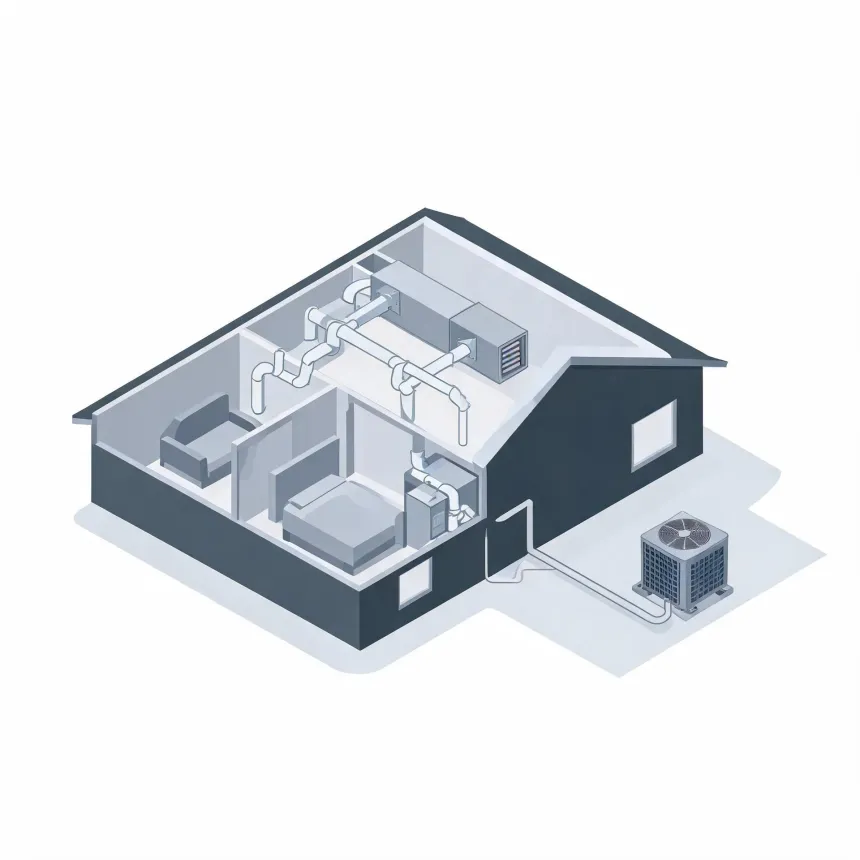
Isometric cutaway illustration of a house showing interior ductwork, an air handler and furnace unit, and an outdoor condenser connected by lines outside the wall.
Your air conditioner works hardest from June through August.

NOAA nClimDiv, 1991–2020 normals

More than half the homes in Pottawatomie County heat with gas, and gas furnaces need a matching cold air return and ductwork, same as the system being replaced.

When your new AC gets installed alongside that furnace, sizing it to work with what's already there matters more than picking the biggest unit on the lot.

Four months of work, decided before June

Cooling runs June through September
Climate zone 4A
Power here costs 15.36 cents per kilowatt-hour

Pottawatomie County saw 82 hail events and 68 damaging wind events between 2015 and 2024, plus 8 tornadoes. That outdoor condenser sits outside through all of it. Hail dents fins and bends the cabinet, and wind-blown debris does the same, so where it goes matters: away from the roof line, clear of falling branches, somewhere a contractor can still get a panel off to work on it. Statewide, 19% of Kansas households lost power for a day or more in 2024. A gas furnace with electronic ignition won't fire without power either, and a standard water heater won't run its burner control, so an outage here can mean no heat and no hot water at the same time, not just no air conditioning.

Get the sizing right, and every bill after this one is lower for it

Get the sizing and the installation right and this system earns that back on every bill that follows, for as long as it runs. That's the piece worth getting right before anything goes in the ground.

Find a contractor
An outdoor air conditioning condenser unit mounted on a concrete pad beside a house, with electrical conduit running to a wall-mounted disconnect box.

Four months, flat out, every year

Cooling runs June through September here, and the afternoon high averages 87°F across those four months. That's not a string of hot days, it's the baseline. The dew point averages 64°F the same three summer months, which is what makes the air feel heavier than the temperature alone suggests, and it's part of why this climate is rated to demand real work from both sides of the system, not just heating. A unit sized and installed right handles that load without strain. One that's oversized or poorly matched to the ductwork short cycles instead of running steady, and the parts that start and stop the most are the parts that wear out first.

Size comes from a load calculation, not the old unit's tag

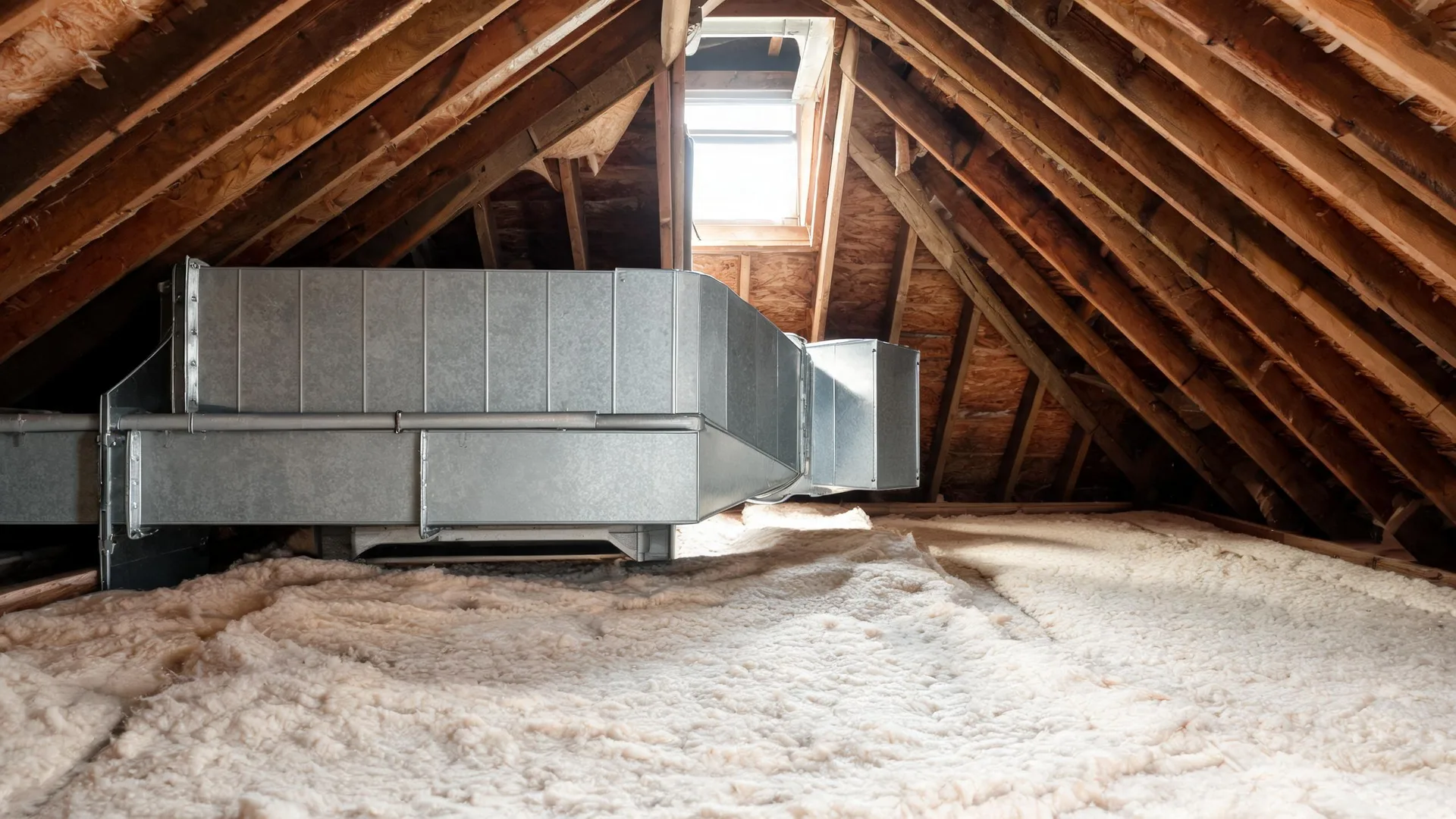
The right size for a new system comes from a room by room load calculation, the kind that accounts for window area, insulation and duct layout. Matching the old unit's capacity just repeats whatever mistake was already there. A unit that's too big cools the air fast without pulling the moisture out of it, so the house feels clammy even at the thermostat setting you want.

The install work decides how long the equipment lasts

Refrigerant charge has to land at the exact amount the system calls for, not close enough. Too little and the compressor runs hot. Too much and it floods back liquid refrigerant into a compressor built to handle gas. The line set needs proper support and the right length of insulation, and the ductwork has to move enough air across the coil or the whole system struggles no matter how good the equipment is.

Aerial view of a square outdoor air conditioning condenser unit on a concrete pad beside a house wall with a sliding glass door.

A higher-efficiency unit would save about $30 a year to run in Pottawatomie County compared with a new unit at the federal minimum.

  • A higher-efficiency unit$270 a year
  • A new unit at the federal minimum, 13.4 SEER2$300 a year

Estimates for a typical Pottawatomie County home, from EIA household energy data, Kansas fuel prices and NOAA climate normals. Your home will differ.

Installation day starts with the equipment that isn't the condenser or the furnace coil. A contractor sets the outdoor unit on a pad, levels it, and runs new line set if the old one doesn't match the refrigerant the new system uses. Inside, the coil goes in above or beside the furnace, and that connection has to seal tight or the whole system loses efficiency before it ever runs a cycle. Once everything's connected, the line gets pulled down to a vacuum to clear out air and moisture, because either one left behind ruins the refrigerant charge. Only after that does the refrigerant go in, weighed to the amount the system calls for. Then comes the test run: checking airflow at the vents, checking the temperature split across the coil, and listening for anything that shouldn't be there before the job's called done.