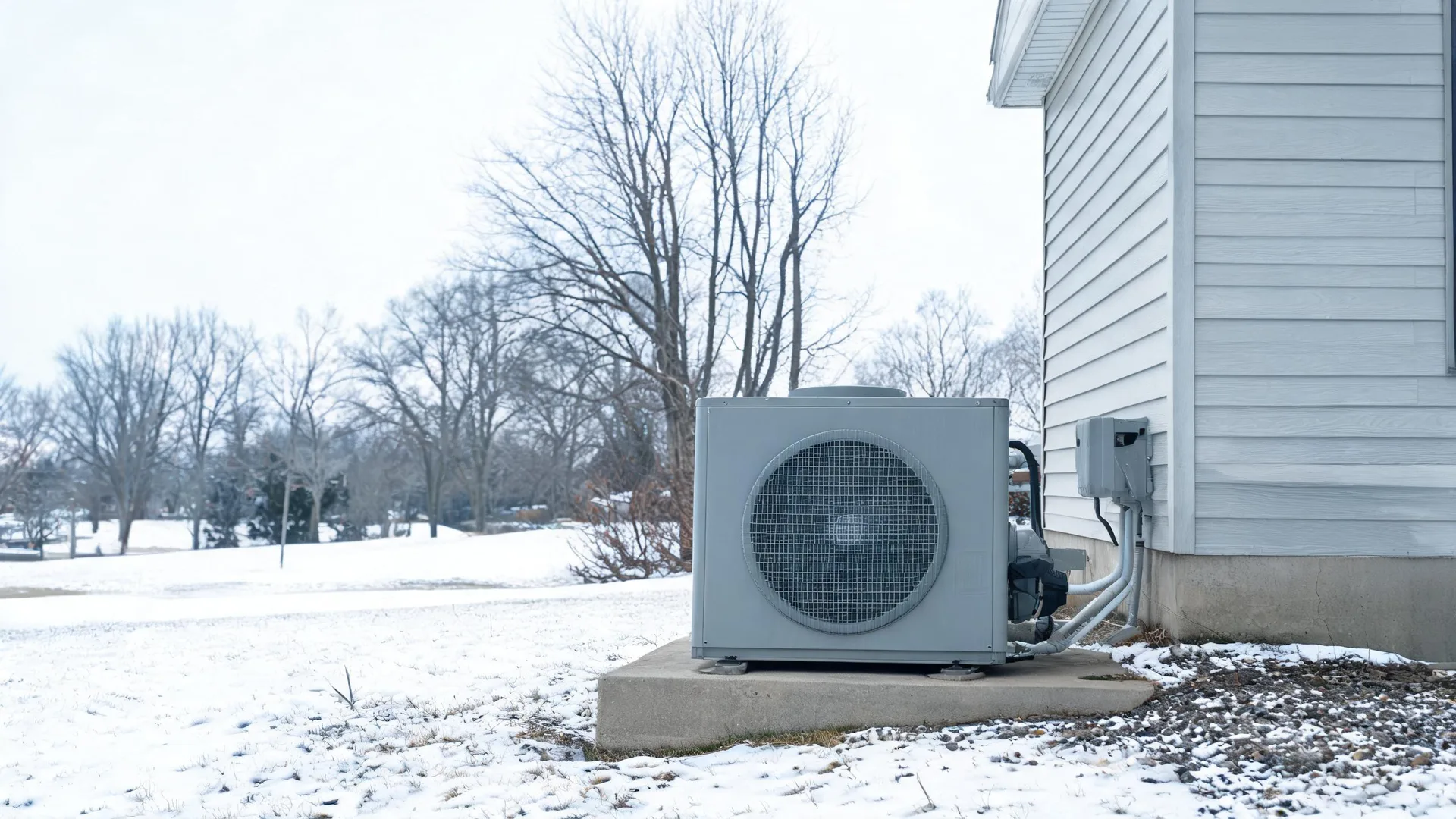
Storms come through often
Sedgwick County logged 332 damaging wind events and 268 hail events between 2015 and 2024, plus 4 tornadoes. An outdoor AC unit sits outside through all of it, exposed to wind-blown debris and hail.
Takes about a minute. No obligation.
Sedgwick County logged 332 damaging wind events and 268 hail events between 2015 and 2024, plus 4 tornadoes. An outdoor AC unit sits outside through all of it, exposed to wind-blown debris and hail.
19% of Kansas households went at least 24 hours without power in 2024. A new system has to fit into a plan for keeping cool, and keeping the furnace running, when the power drops.

NOAA nClimDiv, 1991–2020 normals
Two out of three homes in Sedgwick County heat with gas furnaces.
A new AC installed alongside one of those furnaces usually just adds the outdoor condenser and coil, matched to the furnace blower already in place.




Cooling runs May through September here, five months of steady use. April is the month before that starts, and it's the better time to put in a new system. A contractor can size the unit correctly and match it to the furnace blower without rushing to beat the first hot week. Wait until the season's already running and the job gets harder to schedule on your terms. Get it done in April and the first warm day just means the system turns on and runs.
Where the new unit goes and how it's protected from wind and hail is part of the install, not an afterthought. Ask about a surge protector and a plan for the furnace and water heater if the power goes out. That's easier to settle before the unit is in the ground than after.
Find a contractor
Five months of running every day, with afternoons averaging 90°F, puts real hours on a new system before it ever sees a storm. That's the baseline wear, before wind or hail enters into it. Get the size right at install and the unit runs those hours without straining past what the heat alone already asks of it. Sizing against this county's summer, not just the square footage, matters more here than in a place where the unit gets a few easy months a year.
A straight swap, same spot, same ductwork, same electrical, is the simplest version of this job. Add a line set that has to run further, a disconnect box that needs replacing, or ductwork that was never right for the house, and the labor and materials both go up. The condenser and coil are only part of what gets priced.
Condensers vary by capacity, efficiency rating, and sound level, and all three move the price. A larger coil and a more efficient compressor cost more to build and more to install correctly. Matching the new condenser to the existing furnace blower keeps the airflow right, and sometimes that match pushes the choice toward a particular tier of equipment rather than the cheapest one available.
Estimates for a typical Sedgwick County home, from EIA household energy data, Kansas fuel prices and NOAA climate normals. Your home will differ.
Install day starts with the old equipment coming out, the condenser outside and the coil that sits in the plenum above or beside the furnace. The line set gets disconnected and usually replaced rather than reused, since old refrigerant lines can carry contamination into a new system. The new coil goes in first, matched to the furnace blower, then the condenser gets set on its pad outside and leveled. From there it's the line set run between the two, the electrical disconnect wired in, and the refrigerant charge set once everything is connected. A good contractor pulls a vacuum on the line set before charging it, to get any moisture and air out of the system. Before anyone leaves, the system runs through a full cycle so airflow and refrigerant charge can be checked against what that equipment is supposed to deliver, not just whether cold air is coming out of the vents.