







A dark grey two-story wood-sided house with white-trimmed windows stands behind a wire fence and a mown lawn, backed by tall spruce trees under an overcast sky.

AC Maintenance in Arkansas City, KS

Tell us about the job

Takes about a minute. No obligation.

Tune-up, service, or cleaningCentral ACCowley County, KS
Step 1 of 2

What ZIP code is the job in?

A quick tune-up means someone glances at the unit, hoses off the condenser coil, and checks that the system turns on and blows cold. A thorough one means they pull the panel and check the capacitor's actual readings against what it should be, not just whether it starts. They check the refrigerant charge against the manufacturer's numbers instead of just feeling the lines. They check amp draw on the compressor and the fan motor, because a motor pulling too many amps is wearing out even if it still spins. They clean the evaporator coil too, not just the outside one, since a dirty evaporator coil chokes airflow the same way a clogged filter does. They check the contactor for pitting, tighten electrical connections that work loose from vibration and heat, and clear the condensate drain so it won't back up later. Ask what they checked and what the numbers were, not just whether everything looked fine.

5 months
May through September, your air conditioner is on duty
89°F
the average summer afternoon it cools against
125 hail events
in ten years, and hail bends the fins on outdoor coils
123 wind events
in ten years, and wind drives debris into outdoor units
Isometric illustration of a cutaway house showing interior ductwork, an indoor air handler and furniture, connected by lines to an outdoor condenser unit on a pad.
Your air conditioner works hardest from June through August.

NOAA nClimDiv, 1991–2020 normals

A weak capacitor can still start the compressor every time you ask it to.

A tune-up catches that weak capacitor before the compressor it starts gives out for good.

Half the homes here were built by 1961, and an old system needs a yearly look to catch trouble early

Half the homes here were built by 1961
Cooling runs May through September
Summer afternoons average 89°F
The cost of skipping itElectricity in Kansas ran 14.15 cents per kilowatthour in 2024, and a neglected AC burns more of it.

Cooling starts in May here and runs through September, five months straight. April is the month to get the system looked at, before it has to work. Once May hits, the system runs every day with no break, so a problem that shows up early just keeps running until something fails. A weak capacitor or a dirty coil found in April is a quick fix. Found in the middle of summer, with the system already working flat out, it is a breakdown instead.

This system earns its keep here. Have it checked before summer asks more of it.

Summer here runs five months straight, with afternoons averaging 89°F through June, July and August. The outdoor unit takes that heat every day with no break, and Cowley County weather has not been easy on it either, with plenty of damaging wind and hail in recent years. Parts wear sooner under that kind of load. A check before the season starts catches what that wear is already doing.

Find a contractor
A man in a dark shirt and tan work pants carries a worn canvas tool bag up concrete steps toward a red front door of a gray clapboard house, with a potted shrub in a red planter beside the entry.
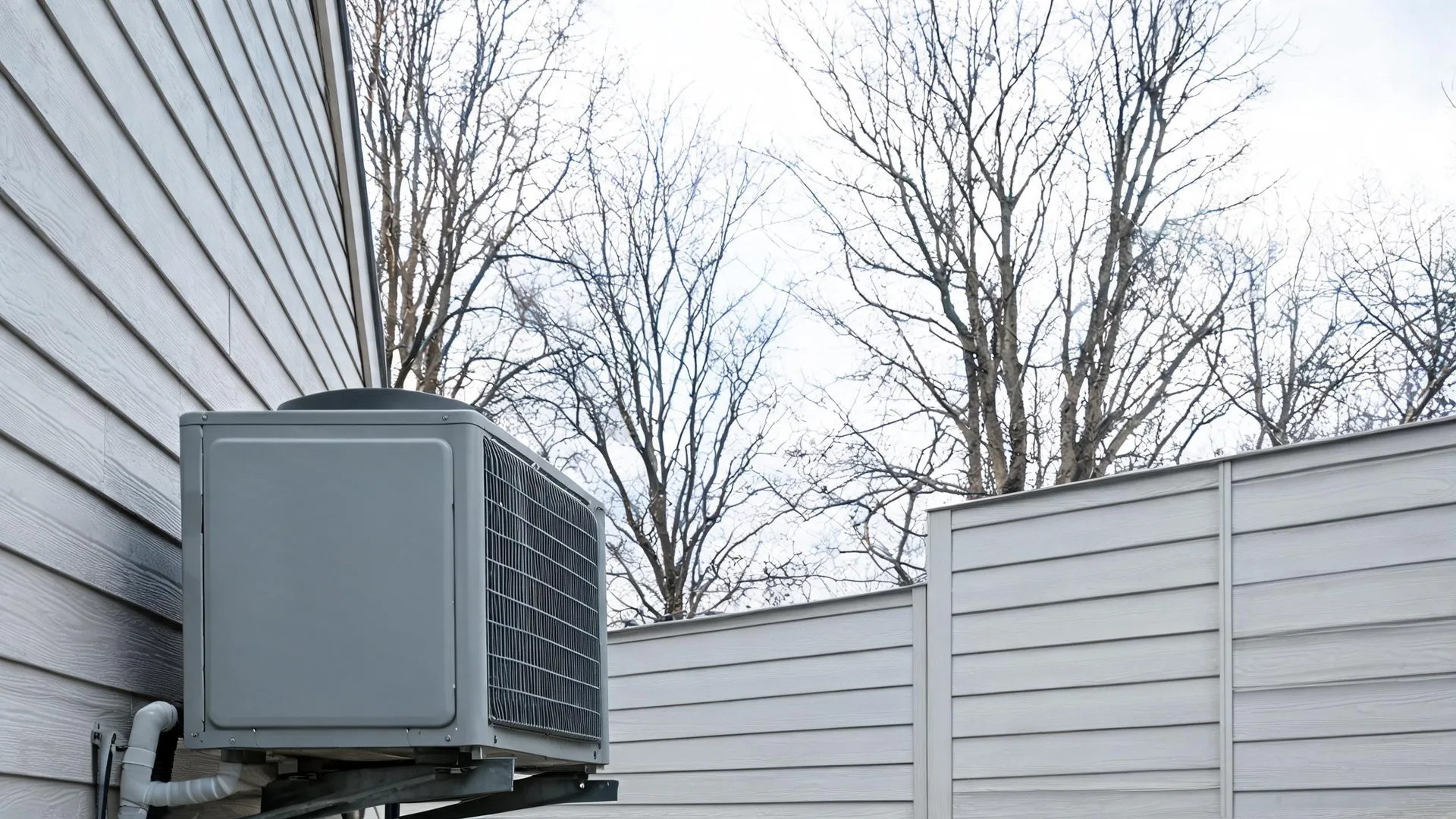
A gray residential air conditioner condenser unit mounted on a concrete pad in an open grass field.

Nothing fails on day one

An air conditioner that never gets looked at doesn't fail all at once. The capacitor weakens, so the compressor draws harder to start every cycle. The coil loses airflow, so the compressor runs longer to move the same heat. The contactor pits, so it runs hotter and arcs a little more each time it closes. None of that shows up as a dead system. It shows up as a system working harder than it should, for longer than it should, cycle after cycle, until the part that was already weak gives out under a load it was never going to carry for long. The unit does not know it is behind. It just keeps running the way it's told to, and the running is what uses it up.

The signs are easy to miss

A system asking for a check does not usually just stop. It runs longer than it used to before the house feels cool. The air from the vents is cool but not cold the way it was. The outdoor unit cycles on and off more than it should, or it runs and runs without shutting off at all. Sometimes there's a smell when it first kicks on, or a rattle that wasn't there before. None of that means it's about to quit. It means something inside has already started to wear.

A weak part still works, until it doesn't

A capacitor losing strength still starts the compressor every time, right up until the morning it doesn't. A coil choked with dirt still cools the house, just by making the compressor run longer and work harder to do it. None of that looks like a problem day to day. A check catches the part that's already failing before it picks its own time to quit, and a hot afternoon is never a good time for that.

Aerial view of a residential air conditioning condenser unit mounted on a concrete pad next to a house with vinyl siding and a sliding glass door.

Book your AC tune-up in April, before homes here start needing cooling in May.

  1. Jan
  2. Feb
  3. Mar
  4. Apr
  5. May
  6. Jun
  7. Jul
  8. Aug
  9. Sep
  10. Oct
  11. Nov
  12. Dec

A tune-up checks the refrigerant charge, cleans the coils, tests the capacitor and tightens the electrical connections.

A tune-up starts with the filter and the airflow behind it, because a system straining to pull air through a clogged filter runs harder everywhere else too. From there it's the refrigerant charge, checked against the manufacturer's numbers rather than guessed at by feel. Too little charge and the compressor runs long and still can't satisfy the thermostat. Too much and it can carry liquid back to the compressor, which is not what the compressor is built for. The condensate drain gets checked and cleared, since a blocked one backs water up into the house instead of out the side of it. The whole system gets watched through a full cycle, starting cold and running until it shuts off on its own, because some trouble only shows up once everything has had a chance to heat up and settle in.