





A snow-covered suburban street at dusk with lit houses and bare trees under a twilight sky.

AC Repair in Abilene, KS

Tell us about the job

Takes about a minute. No obligation.

RepairCentral ACDickinson County, KS
Step 1 of 2

What ZIP code is the job in?

A compressor is the heart of the system, and once it starts failing, the unit is on borrowed time. If a technician tells you the compressor is going out, that's usually the point where repair stops making sense. Smaller problems are a different story. A capacitor, a contactor, a fan motor, these are parts that fail on their own without taking the rest of the unit down with them, and replacing one is a quick, contained job. The age of the system matters too, since older units use a refrigerant that's being phased out, and some parts get harder to find every year. If your unit is still fairly young and the repair is a single part, fixing it is the right call. If it's old and the compressor or coil is failing, that's usually the sign to start thinking about replacement instead.

5 months
May through September, your air conditioner is on duty
89°F
the average summer afternoon it cools against
96 hail events
in ten years, and hail bends the fins on outdoor coils
84 wind events
in ten years, and wind drives debris into outdoor units
Isometric cutaway illustration of a single-story house with a dark shingled roof, showing interior rooms with ductwork and an indoor air handler connected to an outdoor condenser unit beside the building.
Your air conditioner works hardest from June through August.

NOAA nClimDiv, 1991–2020 normals

Half the houses in Dickinson County were built in 1956 or earlier.

An air conditioner in a house that old is probably not the original, and it may be closer to the end of its life than the symptom in front of you suggests.

This county sees weather that's hard on an outdoor unit

200 severe weather events from 2015 to 2024
19% of homes statewide lost power a day or more in 2024
84 damaging wind events from 2015 to 2024

Power here runs 15.12 cents per kilowatt-hour, and a unit that's struggling runs longer to hit the same temperature. That extra runtime shows up on the bill every month it goes unfixed. The air here doesn't help. A dew point averaging 64°F through June, July and August means the system is wringing moisture out of the air on top of cooling it, which asks more of the compressor than dry heat does. A dirty coil or a low charge already makes it work harder. Add heavy air on top of that, and a small problem gets expensive fast.

Know what you're paying to fix before you fix it

If the repair ahead of you is more than a small one, ask the technician how much life is left in the unit before you pay for it. On a system that's old enough to be original to the house, that answer matters as much as the repair itself.

Find a contractor
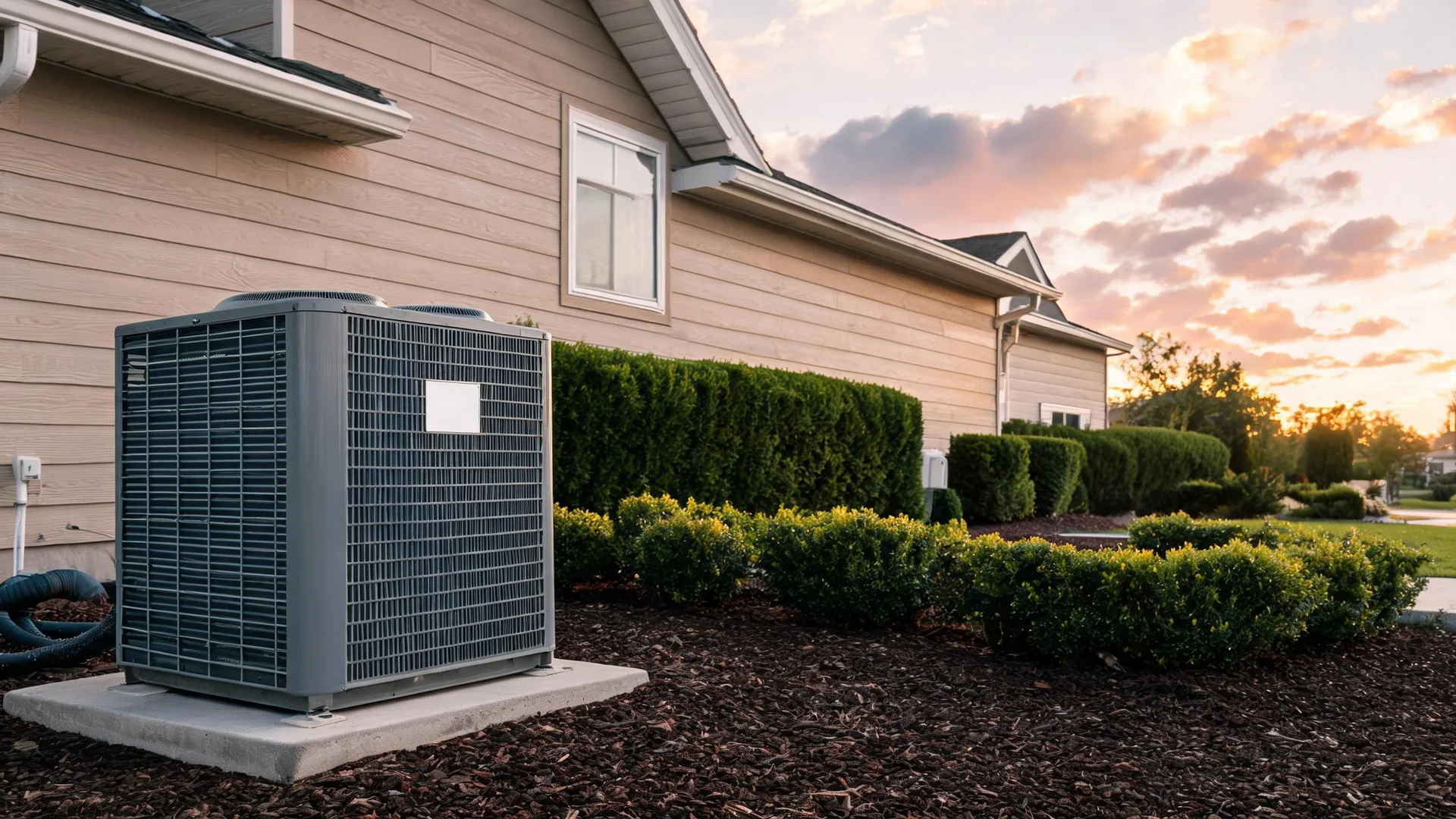
An outdoor residential air conditioning condenser unit mounted on a concrete pad, surrounded by gravel with a blue sky in the background.

Five months of work, and the first weeks are when it shows

Cooling starts in May here and runs through September, five months a year. The other seven, this unit sits idle. When it starts back up in May, whatever was already weak gets found fast, a capacitor near the end of its life, a contactor with pitted points. Those don't usually fail while the system is resting. They fail under the first real load. A unit that struggled last September didn't get better sitting unused. It's the same unit, with the same worn part, about to be asked to work again.

What shows up before the breakdown does

An air conditioner rarely quits without warning first. Warm air from the vents when it's been running a while, ice on the copper line outside, a smell when it kicks on, water pooling near the indoor unit. Short cycling, where it shuts off minutes after starting, usually points to a sensor or airflow problem. A hard clicking or humming without the fan starting often means a failing capacitor. None of these mean the unit is done, but none of them fix themselves either.

Noise tells you where to look

A healthy system runs with a steady, low hum. A grinding or screeching sound usually means a motor bearing is going. A rattle that comes and goes can be a loose panel, or it can be a fan blade hitting something it shouldn't. A loud bang at startup is different from a soft click, and worth mentioning to the technician exactly as it sounded. Catching a noise early, before it turns into a motor that won't turn at all, is often the difference between a part swap and a much bigger repair.

Aerial view of a square outdoor air conditioning condenser unit on a concrete pad beside a house wall with a sliding glass door.

A new air conditioner would save little on running costs in Dickinson County, so the repair decision comes down to the unit's condition.

  • A new one at the federal minimum, 13.4 SEER2$350 a year
  • An older air conditioner$370 a year

Estimates for a typical Dickinson County home, compared with an older unit built to the previous federal minimum, from EIA household energy data, Kansas fuel prices and NOAA climate normals. Your home will differ.

Repair makes sense when a part like a capacitor or contactor has failed.

Replacement makes sense when the compressor has failed or the system uses R-22 refrigerant, which is no longer made.

A diagnostic visit starts with questions, not tools. A technician wants to know what the unit was doing before it quit, what sounds or smells came with it, and whether the problem showed up slowly or all at once. From there, it's a check of pressures and electrical readings, refrigerant charge, voltage at the capacitor, amp draw on the motors. A gauge set on the lines tells a technician whether the system has enough refrigerant and whether it's moving the way it should.電 readings on the compressor and fan motors show whether a part is drawing too much current, which usually means it's wearing out. The indoor side gets checked too, airflow across the coil, the condition of the filter, whether the blower is pulling its full share of air. Most of this happens before any panel comes off for a repair. The goal is to find the one part actually causing the problem, not to start swapping parts and see what helps.