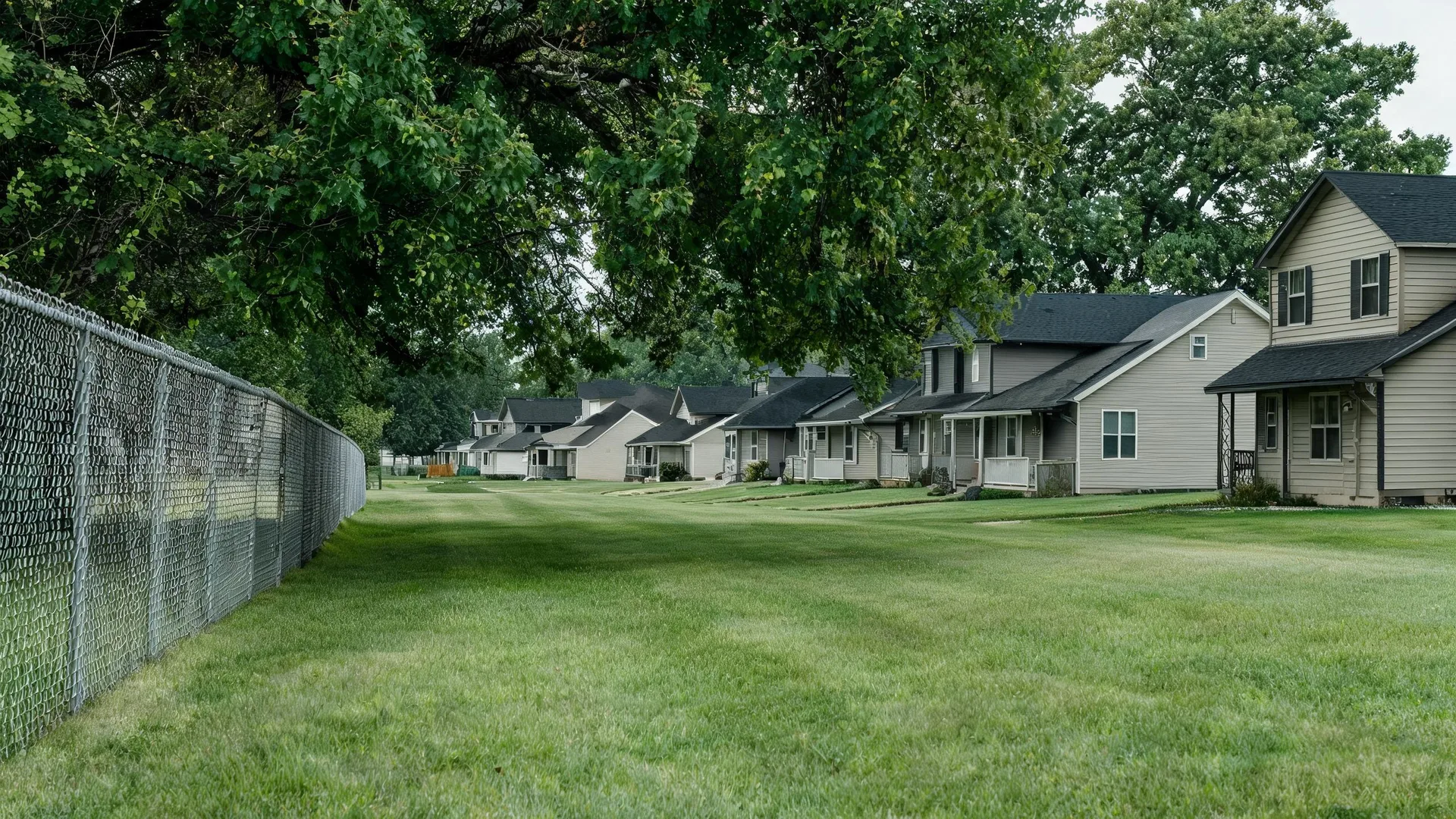






A row of similar two-story houses with gray siding and shingled roofs faces a wide mown lawn, bordered on the left by a chain-link fence and large leafy trees overhead.

AC Repair in Andover, KS

Tell us about the job

Takes about a minute. No obligation.

RepairCentral ACButler County, KS
Step 1 of 2

What ZIP code is the job in?

A system that's struggling still tries to do its job, and that's what causes the damage. Take a refrigerant leak. Run the compressor low on charge long enough and it starts working harder than it was built for, and heat builds up inside it that it can't shed. A dirty coil causes the same kind of strain. It can't give off heat properly, so the system keeps running longer than it should, and the extra strain shows up somewhere else down the line. Even a clogged filter chokes airflow across the evaporator coil, and a coil that runs too cold will ice over. Once ice builds up, it blocks airflow even more, and the problem feeds itself. Caught early, most of these are a straightforward repair. Left alone, they tend to take other parts down with them.

5 months
May through September, your air conditioner is on duty
89°F
the average summer afternoon it cools against
166 hail events
in ten years, and hail bends the fins on outdoor coils
190 wind events
in ten years, and wind drives debris into outdoor units
Isometric cutaway illustration of a single-story house showing interior rooms, ductwork and an air handler in the attic space, and an outdoor condenser unit connected by lines at the exterior wall.
Your air conditioner works hardest from June through August.

NOAA nClimDiv, 1991–2020 normals

Electricity in Kansas ran 14.15 cents per kilowatthour in 2024.

A struggling AC pulls more power every day it runs that way, and in Andover that shows up fast.

Half the homes in Butler County date to 1984 or later, and most of those systems still have years in them

Half the homes here were built by 1984
Cooling runs May through September
Summer afternoons average 89°F
Cooling starts in May hereAndover runs its AC from May through September, and April is when a weak part gets found the hard way.

If your AC is running weak right now, that's the moment to get it looked at, not after it's limped through another few weeks. A system low on charge or choking on a dirty coil pulls more power to do less cooling, and at 14.15 cents a kilowatthour that difference lands on your bill before it ever shows up as a breakdown. Waiting doesn't save you anything here. It just means you pay more each month for a machine that's also wearing itself toward a bigger repair.

Stop paying for a struggling machine

Power costs more here, so a machine that's running badly costs you every month. Get it fixed soon.

Find a contractor
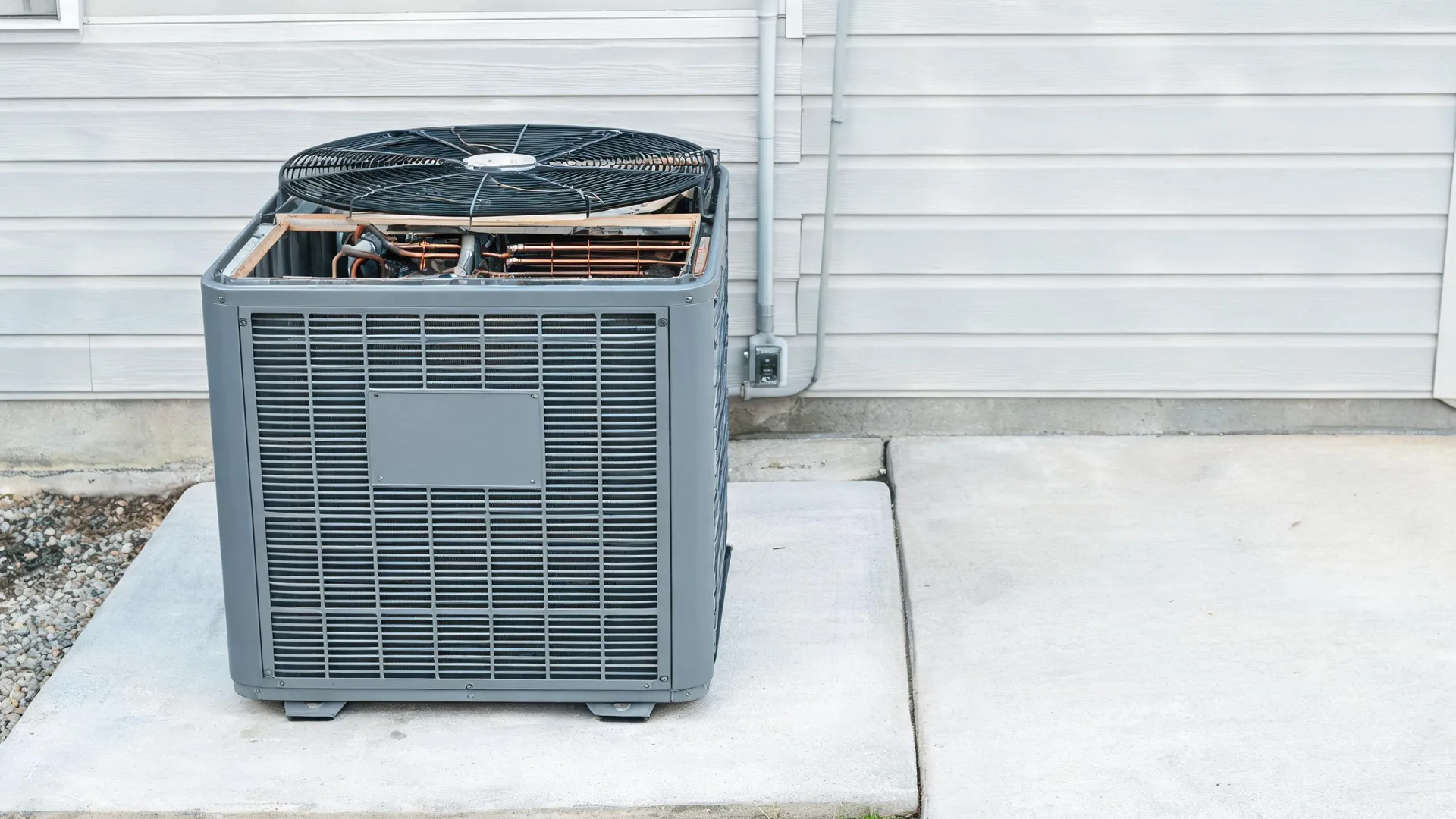
A gray cylindrical air conditioning condenser unit mounted on a concrete pad next to a light-colored vinyl-sided house exterior.

A newer system is worth fixing

If your AC came with a newer build here, repair is almost always worth it over replacement. Parts wear out or fail on their own well before a system built in 1984 or later runs out of life. A tech can confirm the age and condition of what you have before you spend money on either option.

What you can check yourself

Look at the outdoor unit first. Clear away leaves, grass clippings or anything blocking the sides, and make sure nothing is sitting on top of it. Check the air filter and swap it if it's gray or caked with dust. Go to the thermostat and confirm it's set to cool and the temperature is actually below room temperature. Check the breaker panel for a tripped breaker. If the outdoor unit isn't running at all, look for a shutoff switch near it that may have been bumped off.

What to leave alone

Don't take the cabinet off the outdoor unit or touch anything inside it. Don't add refrigerant or try to find a leak yourself, that takes gauges and training to do safely. If you see ice on the indoor coil or lines, turn the system off and let it thaw completely before anyone looks at it further, running it iced up can damage the compressor. A breaker that trips again after you reset it once means something is actively wrong, not a fluke, so stop resetting it and get it looked at.

An outdoor air conditioning condenser unit positioned on a concrete pad next to a blue-sided house, surrounded by green shrubs and flowering hydrangeas at sunset.

A new air conditioner would cut about $30 a year off cooling for a typical Butler County home.

  • A new one at the federal minimum, 13.4 SEER2$350 a year
  • An older air conditioner$380 a year

Estimates for a typical Butler County home, compared with an older unit built to the previous federal minimum, from EIA household energy data, Kansas fuel prices and NOAA climate normals. Your home will differ.

Repair makes sense when a part like a capacitor or contactor has failed.

Replacement makes sense when the compressor has failed or the system uses R-22 refrigerant, which is no longer made.

A diagnostic starts outside at the condenser, checking that the fan spins freely and the coil isn't caked with dirt. From there the tech hooks up gauges to the refrigerant lines and checks the pressures against what the system should be running. Low pressure points toward a leak, high pressure can mean a failing compressor or a coil that isn't shedding heat. They'll check capacitor and contactor too, since a weak capacitor is one of the most common reasons a compressor won't start. Inside, they check airflow off the vents and look at the evaporator coil for ice or buildup. By the time they're done they can usually point to the one part that's failing, not just guess at a list of maybes.