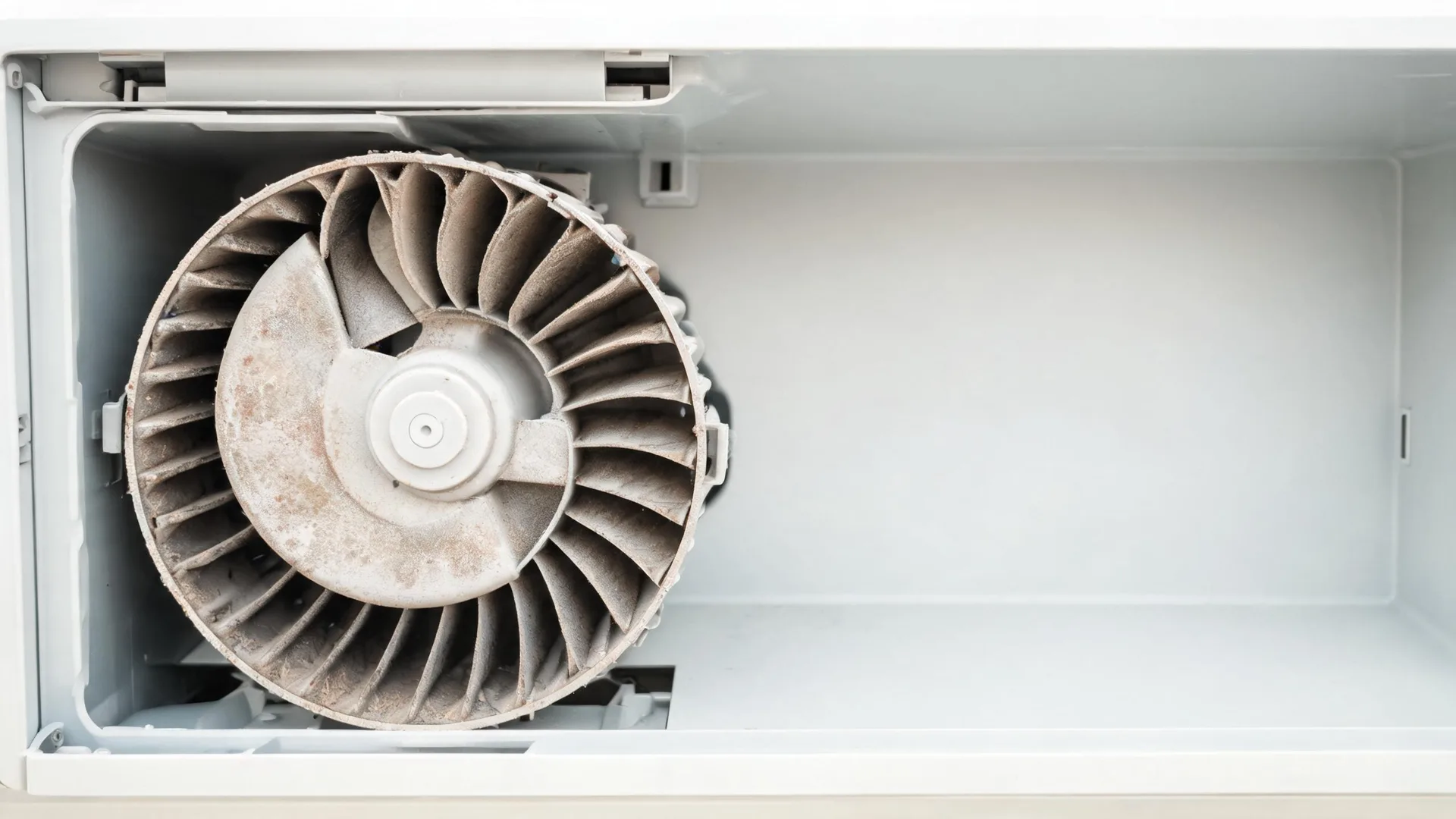
Check the filter first
A clogged filter chokes airflow across the indoor coil, and that alone can look like a refrigerant problem. Pull it out and hold it to the light. If you cannot see through it, replace it before anyone diagnoses anything else.

Takes about a minute. No obligation.
May is the month to get a weak system looked at here. Cooling runs June through September, and the first warm stretch of June is when a tired capacitor or a low charge finally gives out. A system sits unused most of the year, so a problem that was minor before can show up as no cooling at all once the heat hits. Getting it checked in May means a part gets replaced before the season starts, not after it already failed on you.
NOAA nClimDiv, 1991–2020 normals
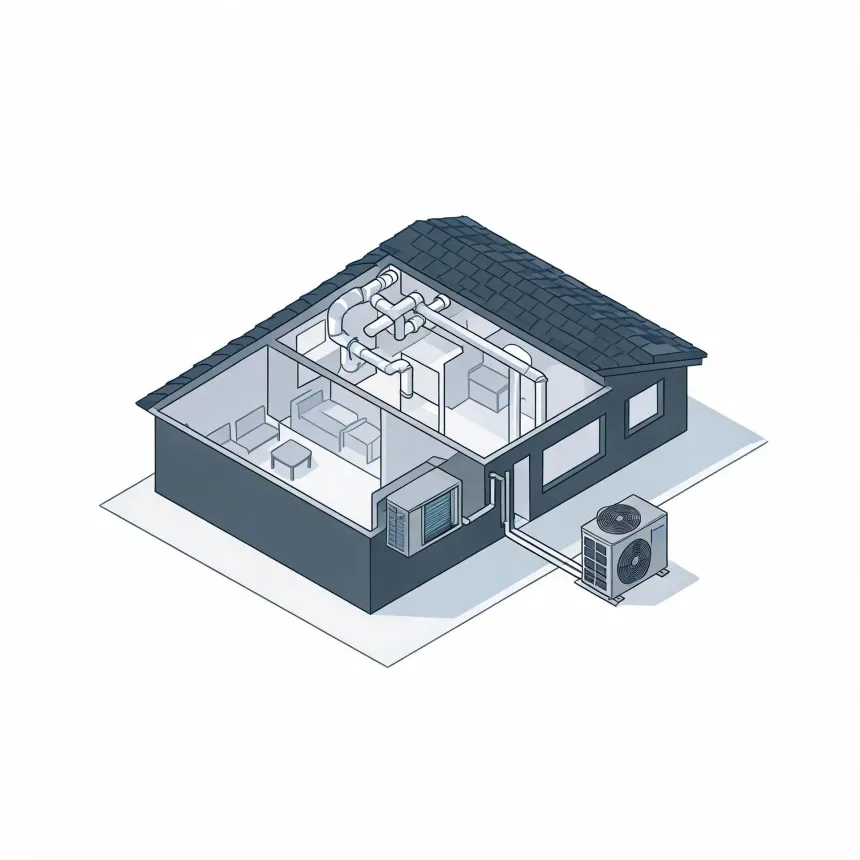
Atchison County runs air conditioners four months a year, June through September, with afternoon highs averaging 86.
A cooling load like that is normal for this part of Kansas, so a system breaking down is almost always a worn part, not the weather asking too much of it.



Electricity in Kansas ran 14.15 cents per kilowatthour in 2024, and a struggling AC uses more of it than a healthy one. A low charge makes the compressor run longer to do the same job. A weak capacitor can make it short cycle, stopping and starting instead of running clean. Either way the unit is working harder for the same cooling, and that shows up on the bill before it shows up as a breakdown. Fixing the actual part is what brings the draw back down, not just turning the thermostat up.
If your AC came with the house, and the house went up in 1968 or earlier, it is old enough that the unit has likely already been replaced once. Before paying for a repair, ask the contractor straight how much life is left in what's there. A capacitor or a charge is a fair repair on a system of any age. A compressor going out on an old unit is a harder call to make without knowing the rest of its condition.
Find a contractor
Warm air out of the vents is usually the first thing anyone notices, and it means the system is running without actually cooling. A refrigerant leak or a failing compressor both show up this way. Short cycling is the other common complaint, where the unit kicks on, runs a few minutes, and shuts off before the house cools at all. That points to a weak capacitor or a clogged filter choking the airflow. Ice on the refrigerant line is worth checking too. It looks like the system is working too hard, but ice forms when airflow is low or charge is low, and it actually means the unit is cooling less, not more. A unit that won't start at all, no hum, no click, is often the capacitor or the contactor rather than the compressor itself. None of these get better left alone. A system straining to do its job now is the same system that quits on the first truly hot day.
A clogged filter chokes airflow across the indoor coil, and that alone can look like a refrigerant problem. Pull it out and hold it to the light. If you cannot see through it, replace it before anyone diagnoses anything else.
The outdoor unit needs open air around it to shed heat. Leaves, grass clippings, or a fence panel too close to the cabinet can block airflow and make the system run hot and weak. Clear anything piled against it and make sure the fan on top spins freely.
Estimates for a typical Atchison County home, compared with an older unit built to the previous federal minimum, from EIA household energy data, Kansas fuel prices and NOAA climate normals. Your home will differ.
Repair makes sense when a part like a capacitor or contactor has failed.
Replacement makes sense when the compressor has failed or the system uses R-22 refrigerant, which is no longer made.
A repair is worth making when the part that failed is a cheap one. A capacitor, a contactor, a fan motor, those wear out on their own schedule and swapping one buys the rest of the system years. A compressor is a different question. It sits at the center of the refrigerant circuit, and when it goes, replacing just the compressor on an older system often means spending real money on a unit that's already most of the way to done. Refrigerant is worth asking about too. A unit that's low because of a slow leak will go low again, so recharging it without finding the leak is a temporary fix, not a real one. A unit that's been looked after and just had one part give out is worth fixing almost every time.