Half these homes were built in 1958 or earlier
Coffeyville sits in Montgomery County, where half the homes went up in 1958 or earlier. A house lasts longer than the AC system in it, so the unit outside is rarely the first one that house has had.
Takes about a minute. No obligation.
Coffeyville sits in Montgomery County, where half the homes went up in 1958 or earlier. A house lasts longer than the AC system in it, so the unit outside is rarely the first one that house has had.
If nobody in the house knows when the system was installed, it may already be on borrowed time. Ask the contractor straight out how much life is likely left in it before paying for a big fix.

NOAA nClimDiv, 1991–2020 normals
Check the thermostat batteries and the breaker before anything else
A dead thermostat or a tripped breaker looks exactly like a dead AC, and both are quick to rule out



A unit that's already struggling and still running up the power bill is one worth calling about soon instead of letting ride through summer. Every cycle it runs costs the same in electricity whether the house gets cool or not. Waiting a few more weeks while it labors just adds those cents per kilowatt-hour on top of a repair bill that isn't going anywhere. If it's a quick fix, a contractor can usually get it done in one visit, and the sooner that happens the sooner you stop paying extra for air that isn't cooling the house.
Kansas homes paid 14.15 cents per kilowatthour in 2024, on the higher end for this part of the country. A unit that's struggling still pulls power the whole time it runs, just without cooling the house right. Letting it sit broken only adds to what you're already paying for electricity here.
Find a contractor
Before you pay for the repair in front of you, ask the contractor how many years it's likely to buy you. A compressor or coil job on a system that's already old can mean paying again soon for something else on the same unit. Find out if this is a system worth putting more into, or one that's near the end regardless of what's wrong with it right now.
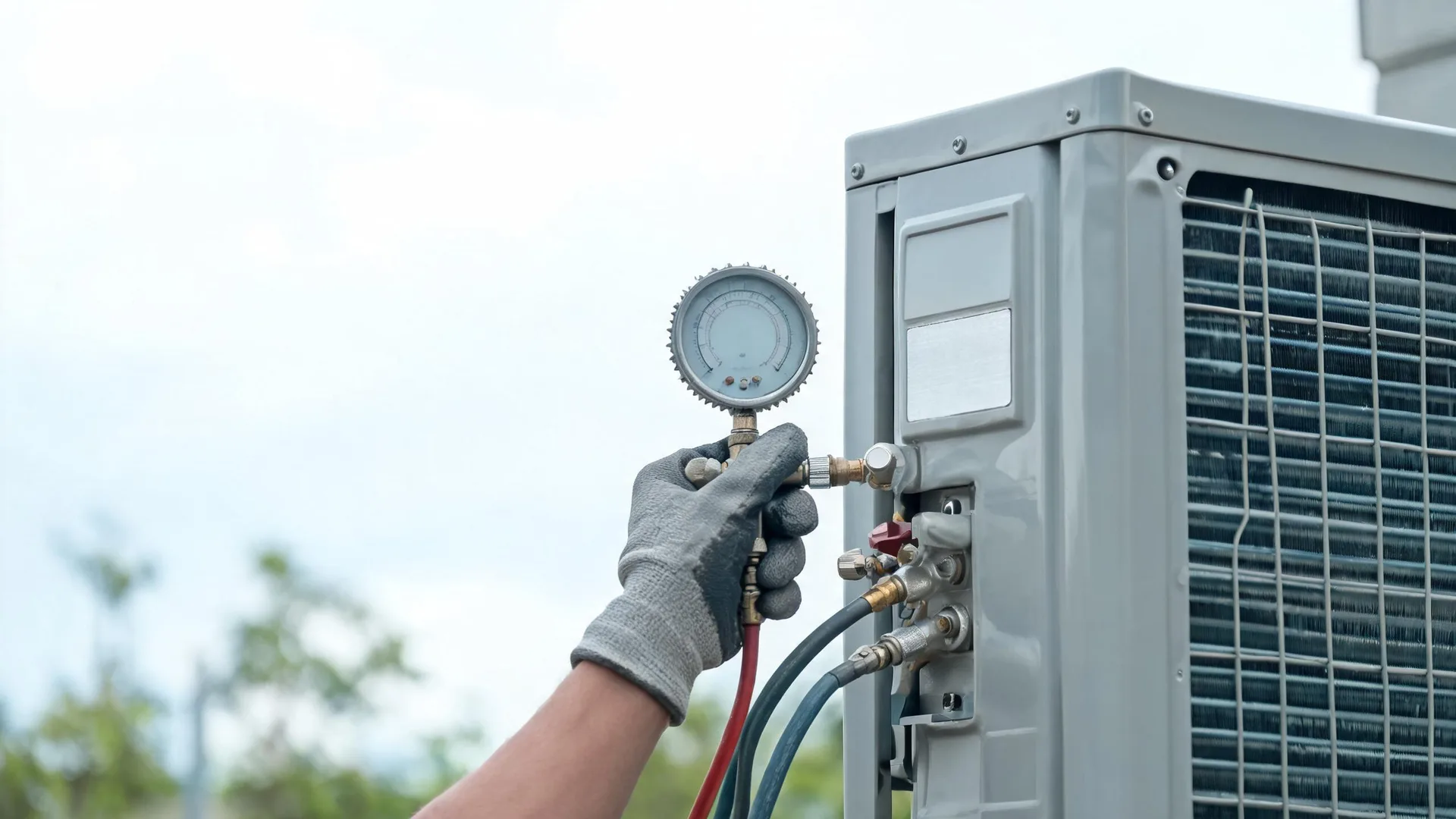
A refrigerant leak, a failing compressor or a coil caked with dirt can all leave the air coming out barely cooler than the air going in. The blower still runs, so people think the system is working. Feel the air at the vent. If it isn't noticeably cold, something in the cooling cycle itself isn't doing its job.
An AC that shuts off a few minutes after starting, then kicks back on soon after, is short cycling. It can mean a dirty filter choking airflow, a low refrigerant charge or a failing sensor telling the system to stop too soon. Every start draws a hard surge of power through the compressor. A unit doing this all day is aging faster than one that runs normal, longer cycles.
Estimates for a typical Montgomery County home, compared with an older unit built to the previous federal minimum, from EIA household energy data, Kansas fuel prices and NOAA climate normals. Your home will differ.
Repair makes sense when a part like a capacitor or contactor has failed.
Replacement makes sense when the compressor has failed or the system uses R-22 refrigerant, which is no longer made.
Age isn't the only thing to weigh, but it's the one that decides most repair calls. A part failing on a system that's still young is a repair, plain and simple, because the rest of the unit has plenty of life left to use it. The same part failing on a system near the end of its run is a different question, because fixing one thing on an old unit doesn't stop the next thing from going. Refrigerant leaks are worth asking about directly. Older refrigerant is being phased out, and topping off a leak in a system that uses it can cost more than the leak itself once did. A compressor failure is usually the line to weigh most carefully, since that part costs more than most others in the system, and a contractor can tell you whether replacing it still makes sense on a unit that old.