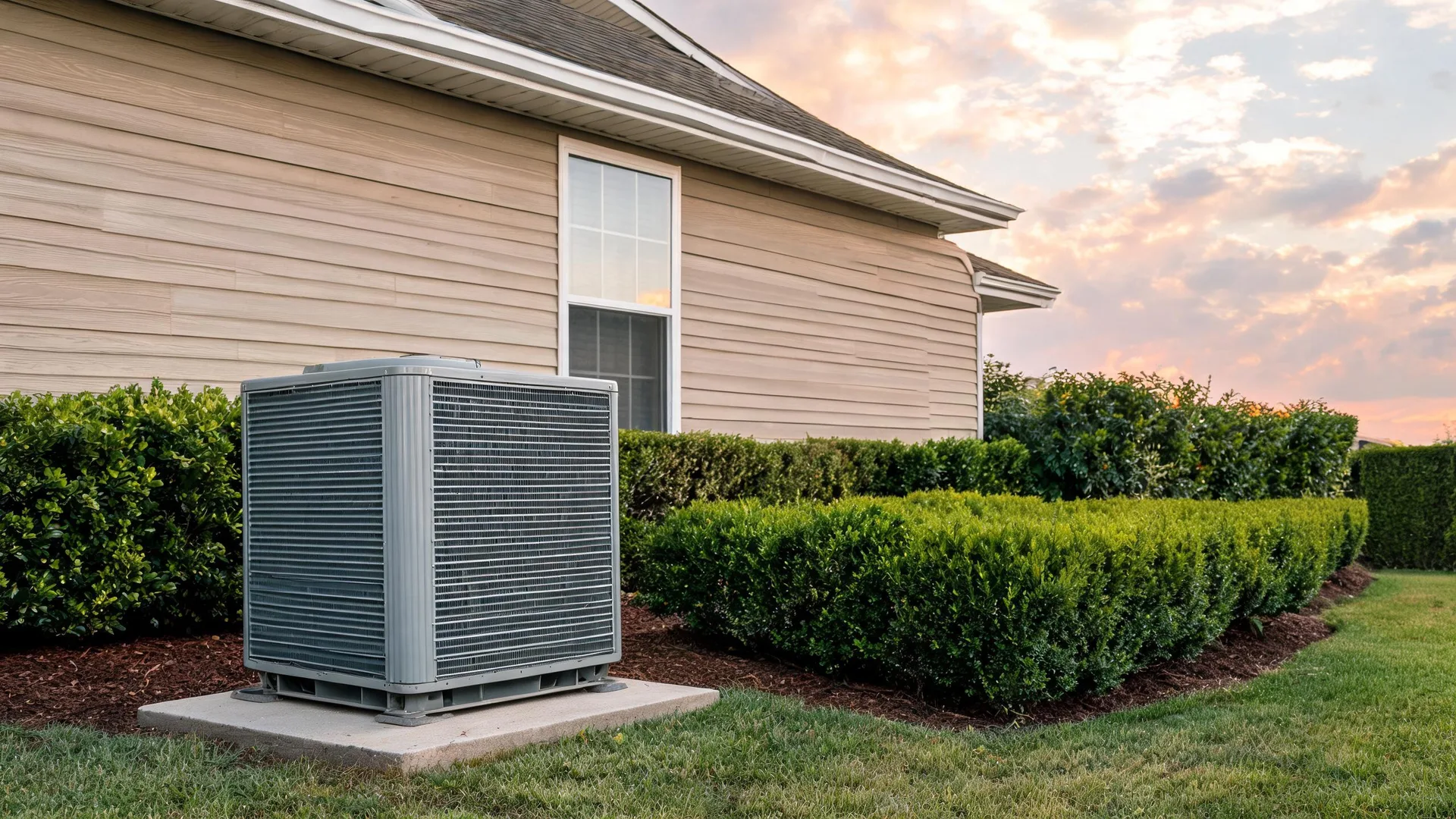
An outdoor air conditioning condenser unit positioned on a concrete pad next to a blue-sided house, surrounded by green shrubs and flowering hydrangeas at sunset.

AC Repair in Dodge City, KS

Tell us about the job

Takes about a minute. No obligation.

RepairCentral ACFord County, KS
Step 1 of 2

What ZIP code is the job in?

Ford County sees serious storms

Ford County recorded 484 severe weather events between 2015 and 2024, including 251 cases of damaging wind, 163 hail events and 33 tornadoes. An outdoor AC unit sitting through that many storms takes a beating most years don't test.


Hail and wind reach the condenser

The condenser sits outside with nothing but a thin metal housing around it. Hail dents the fins, wind throws branches and debris into the coil, and a unit can keep running afterward even with that damage done. If a storm came through, it's worth having the unit looked at, not just listened to.

4 months
June through September, your air conditioner is on duty
90°F
the average summer afternoon it cools against
163 hail events
in ten years, and hail bends the fins on outdoor coils
251 wind events
in ten years, and wind drives debris into outdoor units
Isometric cutaway illustration of a house interior showing ducted air handling equipment and duct runs through rooms, connected by piping to an outdoor condenser unit on a pad outside the wall.
Your air conditioner works hardest from June through August.

NOAA nClimDiv, 1991–2020 normals

Half the homes in Ford County were built in 1972 or earlier.

A system in one of these houses may already be on its last years, storm damage or not.

June is when a weak part fails

Cooling runs June through September
Summer afternoons average 90°F
251 damaging wind events from 2015 to 2024
Four months of 90 degreesDodge City summers put four straight months of 90-degree afternoons on this unit, and that's before a storm touches it.

Before paying for a repair on a unit that's getting on in years, ask the contractor how much life it has left. A compressor or coil near the end doesn't always give a clean failure. It can run short, trip the breaker, or cost more to fix than it's worth keeping alive. If your system came with the house, find out when it was put in. A repair that makes sense on a five-year-old unit can be money lost on one that's twenty. The contractor out for the repair can tell you which one you have.

If a storm came through, have the unit checked

A unit can take a hit from hail or wind and keep running, so it cooling the house doesn't mean it came through clean. If a storm came through recently, have it looked over before you decide there's nothing wrong.

Find a contractor
A man in a cap, gray long-sleeve shirt and tan work pants walks up wooden porch steps toward a red door, carrying a canvas tool bag, with a potted plant beside the entry.
A gray metal air conditioning condenser unit mounted on a concrete pad in a flat grassy field under a partly cloudy sky.

Four straight months of this wears on it

Four months a year, this unit runs flat out against 90 degree afternoons. That kind of stretch wears on a compressor and coil before a single storm adds to it. When something finally gives, the heat load this summer is usually part of why, not the only reason. Have the contractor check for storm damage and heat wear both before they call it one or the other.

The signs usually start small

Warm air out of the vents, a unit that cycles on and off too fast, or ice forming on the copper line are the first things people notice. A grinding or screeching noise from the outdoor unit means a motor bearing or fan is wearing out. Water pooling near the indoor unit points to a clogged condensate line. None of these fix themselves, and most get worse the longer the unit keeps running.

Running it broken costs more than the repair

A failing capacitor or a dirty coil makes the compressor work harder to do the same job. Left alone, that strain is what takes out the compressor itself, and a compressor is the most expensive part in the system to replace. Catching the small failure early is almost always the cheaper job.

Aerial view of a gray central air conditioning condenser unit on a concrete pad next to a house with vinyl siding.

A new air conditioner would save little on running costs in Ford County, so the repair decision comes down to the unit's condition.

  • A new one at the federal minimum, 13.4 SEER2$330 a year
  • An older air conditioner$350 a year

Estimates for a typical Ford County home, compared with an older unit built to the previous federal minimum, from EIA household energy data, Kansas fuel prices and NOAA climate normals. Your home will differ.

Repair makes sense when a part like a capacitor or contactor has failed.

Replacement makes sense when the compressor has failed or the system uses R-22 refrigerant, which is no longer made.

The part that failed matters as much as the age of the unit. A blown capacitor or a bad contactor is a small job on an old system or a new one, because the compressor and coil never come into it. A failing compressor or a coil full of leaks is a different kind of repair, and that's where age and condition both count. If the unit is already old when a big part goes, replacing that part can mean paying close to what a new system costs just to keep the old one running. Ask the contractor two things: what actually failed, and what shape the rest of the unit is in. Together those answers tell you whether you're fixing it or just delaying the same decision.