






A snow-covered small-town street at dusk, with lit white clapboard houses, bare trees, and a grain elevator silhouetted against an orange and blue twilight sky.

AC Repair in Emporia, KS

Tell us about the job

Takes about a minute. No obligation.

RepairCentral ACLyon County, KS
Step 1 of 2

What ZIP code is the job in?

Half the houses in Lyon County were built in 1970 or earlier. If yours is one of them, the air conditioner outside is almost certainly not original to the house. Old equipment gets replaced, and replaced equipment still ages. The question worth asking before paying for a repair is how old the unit itself is, not the house around it. A repair on a system near the end of its life is a different decision than the same repair on something new.

4 months
June through September, your air conditioner is on duty
88°F
the average summer afternoon it cools against
85 hail events
in ten years, and hail bends the fins on outdoor coils
90 wind events
in ten years, and wind drives debris into outdoor units
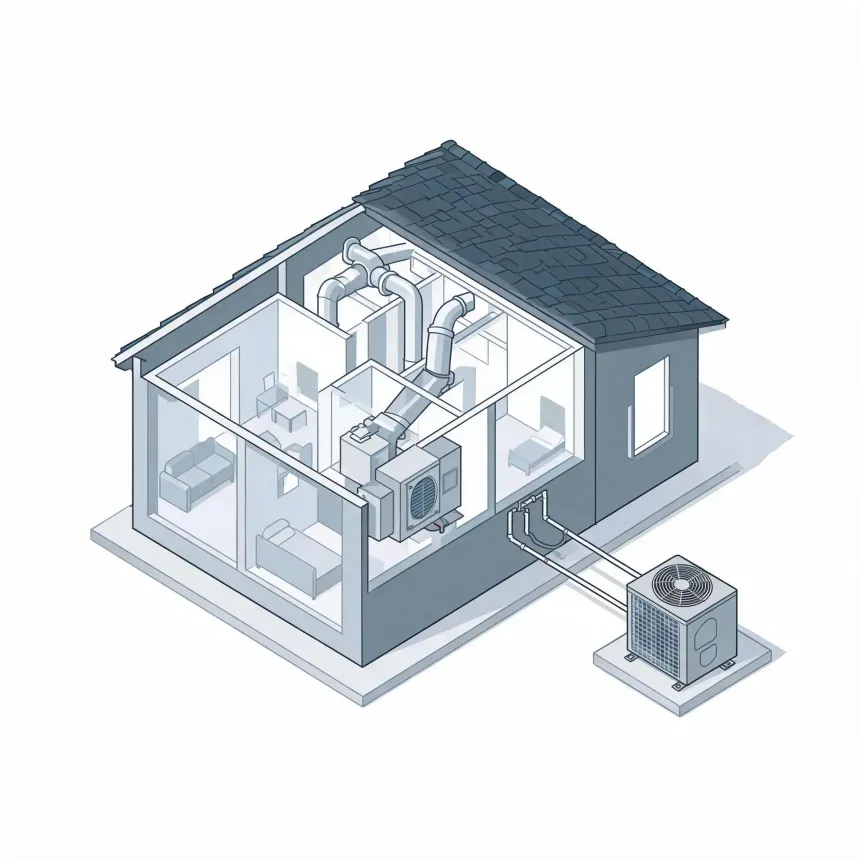
Isometric cutaway illustration of a small house showing interior rooms with furniture, an indoor air handler with ducts in the attic space, and refrigerant lines running to an outdoor condenser unit on a pad.
Your air conditioner works hardest from June through August.

NOAA nClimDiv, 1991–2020 normals

The air conditioner outside runs about four months straight, June through September, with afternoon highs near 88°F.

That is a long stretch of hard running, and it is usually what is behind the problem a homeowner calls about.

Lyon County gets hit by severe weather often enough that it's worth checking your outdoor unit for damage

194 severe weather events from 2015 to 2024
19% of homes statewide lost power a day or more in 2024
90 damaging wind events from 2015 to 2024
May is when a weak AC shows its handCooling starts in June and runs through September, and the first hot stretch is when a tired part finally gives out.

After any storm with hail or wind, walk outside and look at the unit before you assume it's fine. Bent fins block airflow across the coil. A cracked fan blade throws the unit off balance and wears the motor fast. Even a unit that still starts up and blows cold can be running damaged, and that damage gets worse every week it runs. If the outage lasted a while, check that the unit actually came back on. Most do this on their own, but it's worth confirming rather than assuming.

Know the age before you fix it

A technician can read the age off the nameplate in a couple of minutes, before any repair gets decided. If the unit is original to a house built in 1970 or earlier, that number matters more than whatever is wrong with it today.

Find a contractor
A person in a dark shirt, tan work pants and boots climbs porch steps toward a red door, carrying a worn canvas tool bag beside a potted shrub.
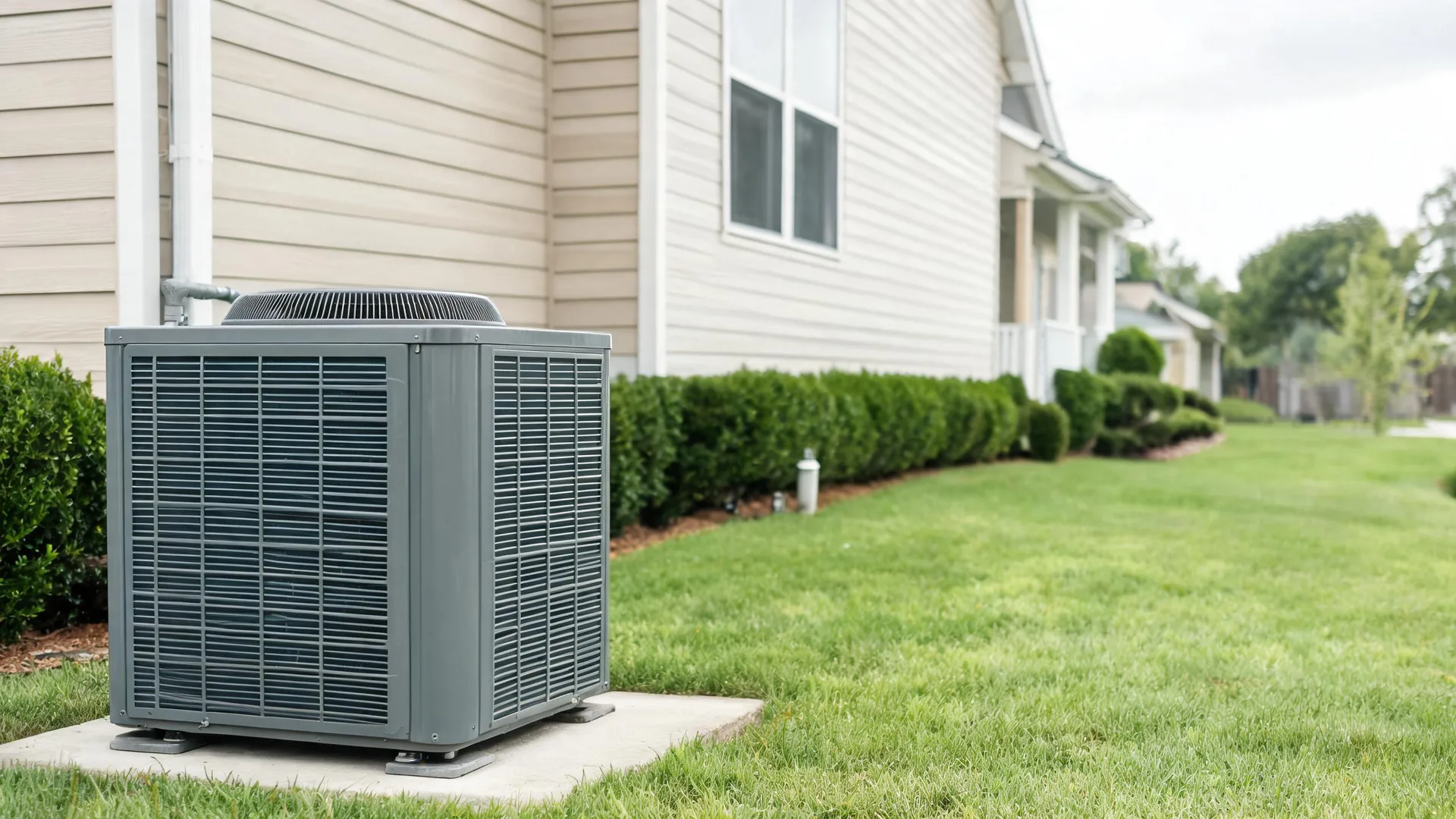
A gray cylindrical air conditioning condenser unit mounted on a concrete pad next to a light-colored vinyl-sided house exterior.

Have it diagnosed, not just patched

A tech who knows this stretch of Kansas will check for wear before anything else. Four months of running near 90 degrees puts strain on parts that a mild climate never would, and that strain shows up as worn contactors, weak capacitors, coils that cannot shed heat the way they used to. A proper diagnosis looks for that first, not just the symptom you called about. That is what makes a repair worth paying for, instead of a patch that fails again in August.

What you can check yourself

Look at the thermostat first. Make sure it is set to cool and the setpoint is actually below room temperature, and swap the batteries if it uses them. Check the air filter and replace it if it is gray or clogged, since a blocked filter starves the system of airflow and can freeze the coil. Walk outside and check that the breaker for the outdoor unit hasn't tripped. Inside, check the drain pan and float switch near the air handler, since a full pan will shut the system down on purpose to stop a leak.

What tells you to stop and call

If the outdoor unit is humming but the fan isn't spinning, don't keep resetting it. That points to a failed capacitor or a seized motor, and leaving it running that way can burn the compressor out. Ice on the refrigerant lines or the indoor coil means shut the system off and let it thaw before anyone touches it. A burning smell or a breaker that trips every time you reset it means the problem is electrical, not something to troubleshoot further yourself.

Aerial view of a gray outdoor air conditioning condenser unit mounted on a concrete pad next to a house with vinyl siding.

A new air conditioner would cut about $30 a year off cooling for a typical Lyon County home.

  • A new one at the federal minimum, 13.4 SEER2$320 a year
  • An older air conditioner$350 a year

Estimates for a typical Lyon County home, compared with an older unit built to the previous federal minimum, from EIA household energy data, Kansas fuel prices and NOAA climate normals. Your home will differ.

Repair makes sense when a part like a capacitor or contactor has failed.

Replacement makes sense when the compressor has failed or the system uses R-22 refrigerant, which is no longer made.

A diagnostic visit starts outside, not with a screwdriver. A tech will check the nameplate for the model and age, then run the system and watch how it behaves before touching anything. Refrigerant pressures get checked at the service valves, since too little or too much points to different problems. The capacitor gets tested under load, because a capacitor can read fine sitting still and still fail to start the compressor. Electrical connections at the contactor get checked for pitting or looseness, since a bad connection creates heat that damages the parts around it. Inside, airflow across the coil gets checked, and the coil itself gets looked at for ice or buildup that blocks heat transfer. None of this takes guesswork. A tech who tests instead of guessing can tell you which part failed and why, and whether what's wrong is worth fixing or a sign the unit is done.