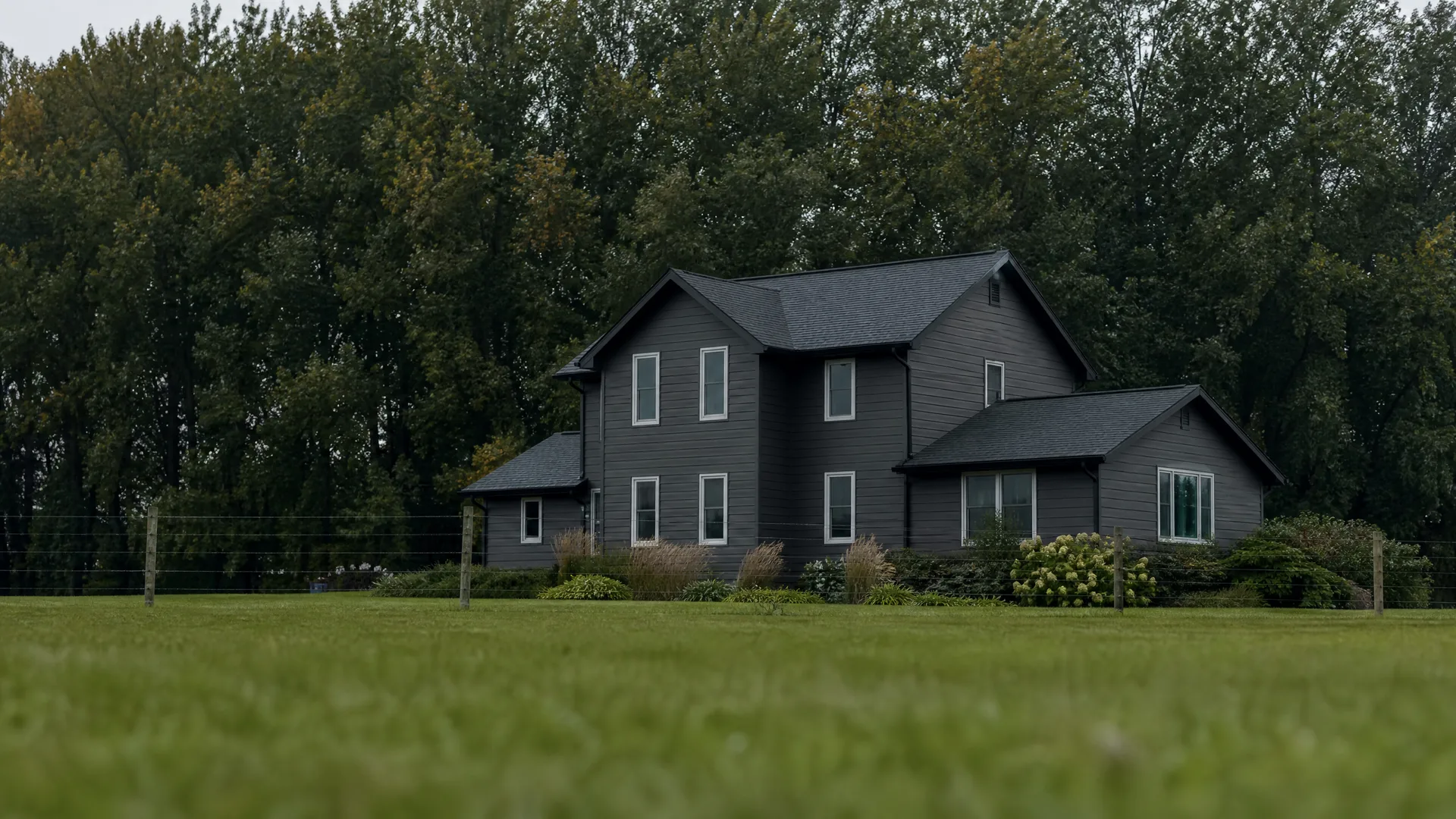






A two-story black-clad house with white-trimmed windows and a dark shingled roof stands behind a mowed lawn and low shrubs, backed by dense deciduous trees under an overcast sky.

AC Repair in Fort Scott, KS

Tell us about the job

Takes about a minute. No obligation.

RepairCentral ACBourbon County, KS
Step 1 of 2

What ZIP code is the job in?

Fort Scott runs its air conditioning from May through September, with afternoon highs around 88 in June, July and August. That's a normal summer, not a brutal one. An AC here fails for the same reasons it fails anywhere. A weak capacitor. A dirty coil. A low refrigerant charge. A clogged filter making the system work harder than it should. Nothing about this county shortens the life of your unit or makes the repair any different than it would be one county over. If your AC is struggling, the question isn't what's special about Fort Scott. It's what's actually wrong with your system, and whether fixing that one thing solves it.

5 months
May through September, your air conditioner is on duty
88°F
the average summer afternoon it cools against
26 hail events
in ten years, and hail bends the fins on outdoor coils
41 wind events
in ten years, and wind drives debris into outdoor units
Isometric cutaway illustration of a small house showing interior rooms with furniture, an indoor air handler with ducts in the attic space, and refrigerant lines running to an outdoor condenser unit on a pad.
Your air conditioner works hardest from June through August.

NOAA nClimDiv, 1991–2020 normals

Check the thermostat setting and the breaker before you assume the worst.

A tripped breaker or a thermostat bumped to the wrong mode rules itself out in a minute, no tools needed.

A lot of AC equipment in Bourbon County is old simply because the houses are

Half the homes here were built by 1957
Climate zone 4A
Power costs 14.15 cents a kWh statewide
What electricity costs in KansasKansas homes paid 14.15 cents per kilowatthour in 2024

If your AC came with the house and the house is one of the older ones, ask the contractor straight out how much life is left in it before you pay for a repair. A capacitor or a contactor is worth replacing on an old unit. A compressor usually isn't. Get the honest number on remaining life before deciding, not after.

Get the usual fix

Nothing about this area is especially hard on it. It's most likely the usual problem with the usual fix.

Find a contractor
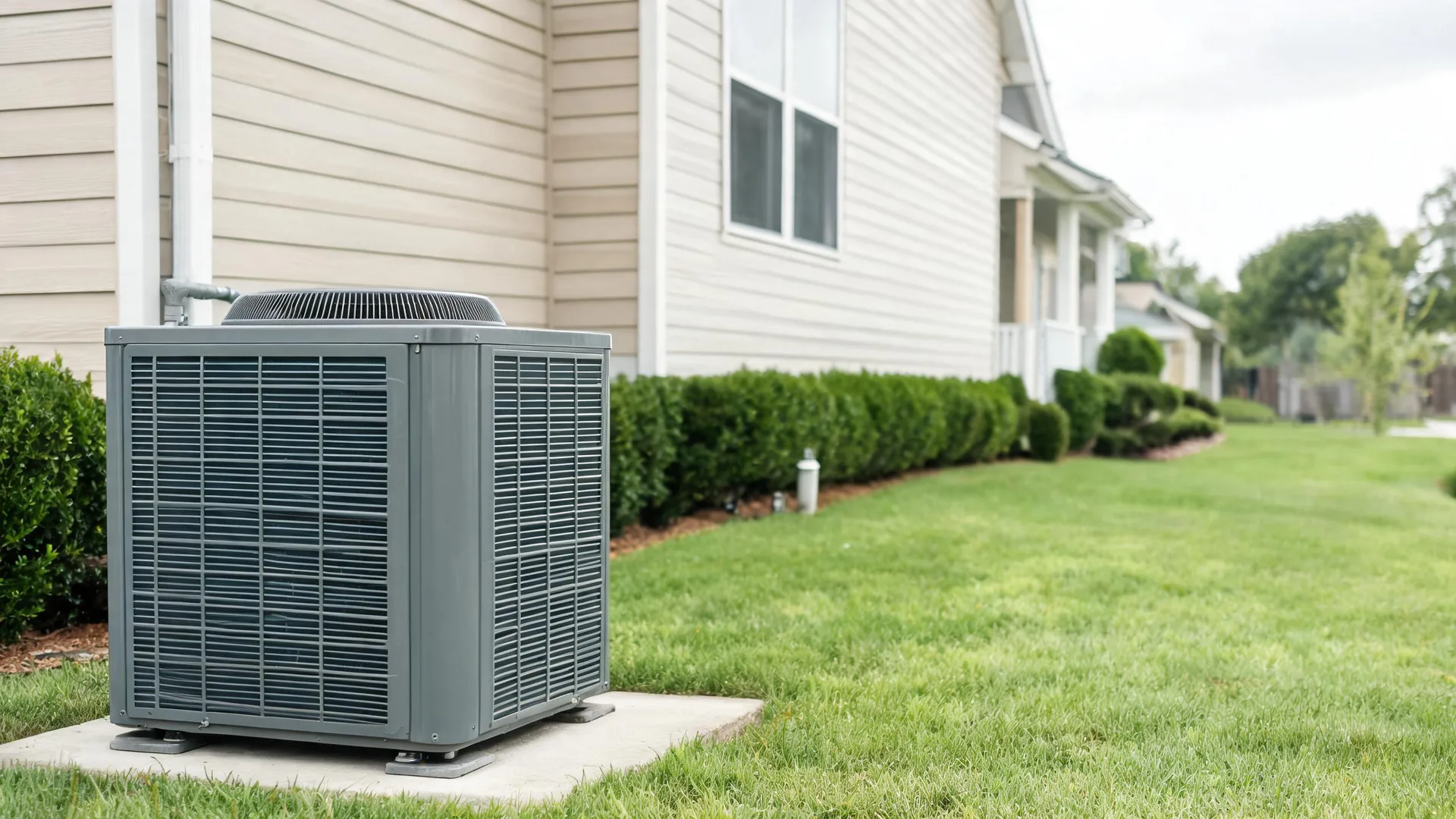
A gray cylindrical air conditioning condenser unit mounted on a concrete pad next to a light-colored vinyl-sided house exterior.

Hours add up, and parts wear on a schedule

Every time the system cycles on, the compressor takes the hardest hit of its day. That start-up draw is what wears capacitors down over the years, and a capacitor doesn't usually fail all at once. It weakens, the compressor starts harder and slower each time, and eventually it doesn't start at all. The coil tells a similar story. Every hour of runtime pulls air across it, and whatever is in that air settles on the fins. Dust and grime thin out airflow a little at a time until the coil can't shed heat the way it should. Run that long enough without a cleaning and the system works harder for less cooling. Refrigerant charge doesn't drop from use. If it's low, something is leaking, and a slow leak can take a long time to show up as warm air. The more hours a unit logs, the more chances all of this has had to catch up with it.

A weak capacitor can take the compressor with it

A capacitor that's starting to go makes the compressor strain on every start. Keep running it in that state and the compressor windings take the damage instead of the capacitor. Swapping a capacitor is a quick job. A damaged compressor usually means the whole outdoor unit gets replaced.

Warm air doesn't mean stop worrying about it

Once a system is just blowing warm air, it's easy to assume there's no more harm it can do. But a refrigerant leak keeps leaking while the system runs, and a compressor running on too little refrigerant can score itself from the inside. Letting it run that way turns a leak into a bigger repair.

Aerial view of a gray outdoor air conditioning condenser unit mounted on a concrete pad next to a house with vinyl siding.

A new air conditioner would save little on running costs in Bourbon County, so the repair decision comes down to the unit's condition.

  • A new one at the federal minimum, 13.4 SEER2$350 a year
  • An older air conditioner$370 a year

Estimates for a typical Bourbon County home, compared with an older unit built to the previous federal minimum, from EIA household energy data, Kansas fuel prices and NOAA climate normals. Your home will differ.

Repair makes sense when a part like a capacitor or contactor has failed.

Replacement makes sense when the compressor has failed or the system uses R-22 refrigerant, which is no longer made.

A diagnostic starts with the thermostat, not the outdoor unit. A tech will check the call for cooling is actually reaching the system before anything gets opened up. From there it's gauges on the refrigerant lines to read the charge and the pressures, and a look at the capacitor and contactor in the outdoor unit since those are what wear out first. The coil gets checked for airflow and the condensate line for a clog, since a backed-up line will shut the system down on its own as a safety measure. Most of this takes less time than people expect, because the readings point to the problem fast. The slower part is confirming it, not finding it.