A snow-covered residential street at twilight with illuminated houses, bare trees, and an orange horizon glow beneath a deep blue sky.

AC Repair in Great Bend, KS

Tell us about the job

Takes about a minute. No obligation.

RepairCentral ACBarton County, KS
Step 1 of 2

What ZIP code is the job in?

Hail and wind find the outdoor unit

Barton County logged 146 hail events and 126 damaging wind events between 2015 and 2024, with 13 tornadoes in that same stretch. That unit sits outside, exposed to all of it, with coils and fins that bend or clog easier than most people expect.

A unit that still runs can still be hurt

Bent fins and dented coils do not always stop an air conditioner from starting. A unit that took a hit from hail or flying debris can keep running for weeks while it works harder than it should, so a storm worth noting is worth a second look even if nothing seems wrong yet.

4 months
June through September, your air conditioner is on duty
90°F
the average summer afternoon it cools against
146 hail events
in ten years, and hail bends the fins on outdoor coils
126 wind events
in ten years, and wind drives debris into outdoor units
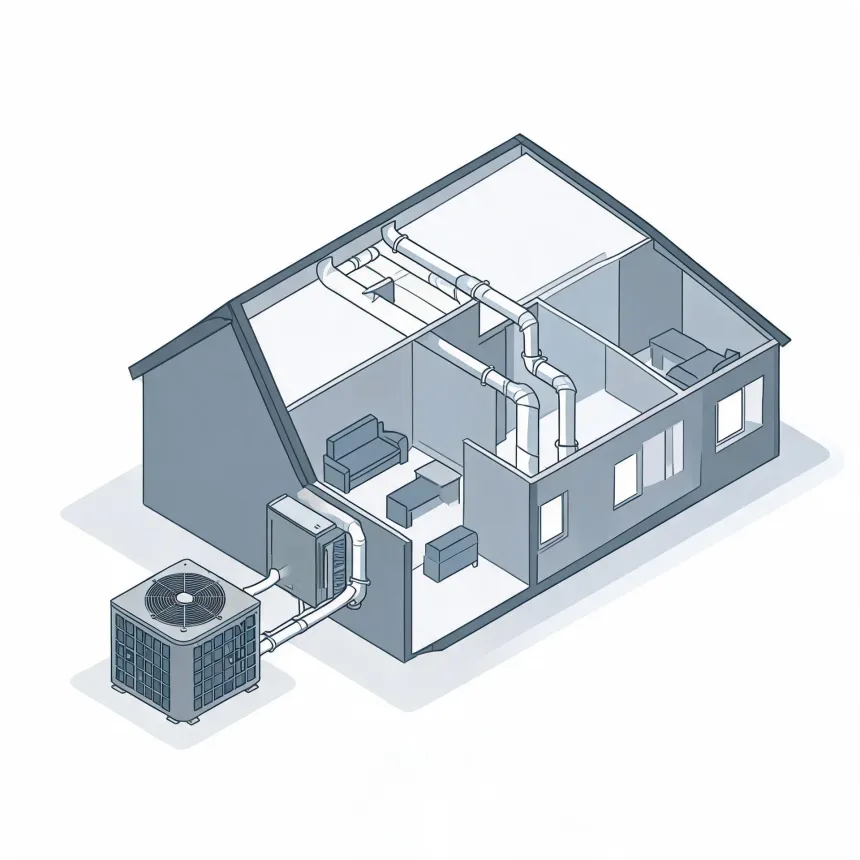
Isometric line illustration of a cutaway house showing interior rooms with ductwork, an indoor air handler, and an outdoor condenser unit connected by lines, on a white background.
Your air conditioner works hardest from June through August.

NOAA nClimDiv, 1991–2020 normals

Four months of 90 degree afternoons asks a lot of one machine.

When this AC starts slipping, it's usually worn parts from a hard summer, and that's where a tech should start looking.

Half the homes here were built before anyone knew what a SEER rating was

Half the homes here were built by 1959
Cooling runs June through September
Summer afternoons average 90°F

Cooling starts here in June, so May is the month to get a struggling unit looked at. The first hot stretch is when a part that was already weak gives out, because it's the first time all year the system has had to run flat out. A capacitor or contactor that limped through last summer doesn't rest over the winter and get better on its own. It sits unused for months, then gets asked for four straight months of work the day it finally gets hot. If the unit has been acting up this spring, before the real heat arrives, that's the time to have it checked, not the week it quits in June.

If this unit came through a storm, don't wait for it to fail

After hail or high wind, a coil can be dented or fins bent without the unit missing a beat. It can keep running like that for weeks. If a storm came through Barton County recently, have the outdoor unit looked at now, even if it's still cooling fine.

Find a contractor
An outdoor air conditioning condenser unit mounted on a concrete pad surrounded by gravel, photographed against a partly cloudy blue sky.

How old is this unit really

If your AC is original to the house, find out how old that makes it. A unit installed when the house was built is doing the math against it right now. If a repair is more than a small one, ask the tech what the unit's got left before you pay for it. Sometimes the answer is years. Sometimes it's not, and that changes whether this repair is worth making at all.

What you can check before you call

Start at the thermostat. Make sure it's set to cool and set below room temperature, and check the batteries if it has a screen that's dim or blank. Then look at the air filter. A filter clogged with dust chokes off airflow and can make the whole system struggle or ice up. Next check the breaker panel. A tripped breaker or a switch near the outdoor unit left in the off position will stop the unit cold without anything being broken. Last, look at the outdoor unit itself. Leaves, grass clippings or a fallen branch sitting against it can block airflow across the coil.

What to leave alone

Don't open the electrical panel on the outdoor unit or touch the wiring inside it. Don't pour water on the coil to try to clean it, and don't bend the fins back yourself if you see they're damaged, a wrong move there does more harm than the original bend. If the unit is making a new noise, humming but not starting, or tripping the breaker a second time after you reset it, turn it off at the thermostat and leave it off. Running a struggling compressor or a motor that's drawing too much current is how a repair turns into a replacement.

An outdoor central air conditioning unit mounted on a concrete pad beside a blue-sided house at sunset.

A new air conditioner would save little on running costs in Barton County, so the repair decision comes down to the unit's condition.

  • A new one at the federal minimum, 13.4 SEER2$330 a year
  • An older air conditioner$350 a year

Estimates for a typical Barton County home, compared with an older unit built to the previous federal minimum, from EIA household energy data, Kansas fuel prices and NOAA climate normals. Your home will differ.

Repair makes sense when a part like a capacitor or contactor has failed.

Replacement makes sense when the compressor has failed or the system uses R-22 refrigerant, which is no longer made.

A diagnostic visit starts with questions. What the unit is doing, when it started, whether it's constant or comes and goes. Then the tech checks the thermostat call and confirms the system is actually getting the signal to run before touching anything outside. Outside, they'll check the capacitor and contactor, since those take the brunt of every startup and wear out before most other parts. They'll check refrigerant pressure, because low charge shows up as poor cooling long before the compressor gives out entirely. They'll pull the cover and look at the coil and fins for anything bent or blocked, and check that the fan motor spins freely and isn't drawing more current than it should. Inside, they'll check the evaporator coil for ice and make sure the blower is moving air the way it's supposed to. Most of this is done with gauges and a multimeter, not guesswork, and a tech can usually tell you what's wrong before they tell you what it takes to fix it.