Four months of real work
AC here runs June through September, with afternoon highs averaging 87°F. That is enough heat for a weak system to show what is wrong with it. It is not unusual strain. A properly working unit handles this without trouble.
Takes about a minute. No obligation.
AC here runs June through September, with afternoon highs averaging 87°F. That is enough heat for a weak system to show what is wrong with it. It is not unusual strain. A properly working unit handles this without trouble.
When a unit struggles in a summer like this one, the cause is usually ordinary. A weak capacitor. A low refrigerant charge. A dirty coil or a clogged filter. Finding which one it is matters more than guessing at the weather.

NOAA nClimDiv, 1991–2020 normals
AC in Jackson County runs June through September.
May is the month to get a weak system looked at, before the first hot stretch finds the problem for you.




Half the homes in Jackson County were built in 1976 or earlier, and half in 1976 or later. Age by itself does not tell you much about the AC unit sitting outside the house. A newer home can have an old, neglected system. An older home can have one that was replaced last year and kept up ever since. What matters is whether the unit was sized right for the house and serviced on a regular basis, not when the house itself went up. If your system came with the house, it is worth finding out when it was actually installed.
Nothing about this area is especially hard on it. It's most likely the usual problem with the usual fix.
Find a contractorA unit that is failing tells you before a gauge ever gets involved. Warm air coming out of the vents when the thermostat is calling for cool. Airflow that used to push hard and now barely moves. A smell when it kicks on, musty or burnt. Water pooling near the indoor unit, or ice on the refrigerant line running outside. Short cycling, where it shuts off a few minutes after starting instead of running a full cycle. A hard click before it starts. A hum with no start. A squeal or a rattle that wasn't there last summer. Any one of these on its own is worth a call. Several at once usually means the problem has been building for a while.
A capacitor loses its charge over time and stops giving the compressor and fan motor the kick they need to start. A contactor's points pit and burn from months of closing and opening. The blower motor's bearings wear and start pulling more current than they should. None of this is random. It's just parts doing what parts eventually do.
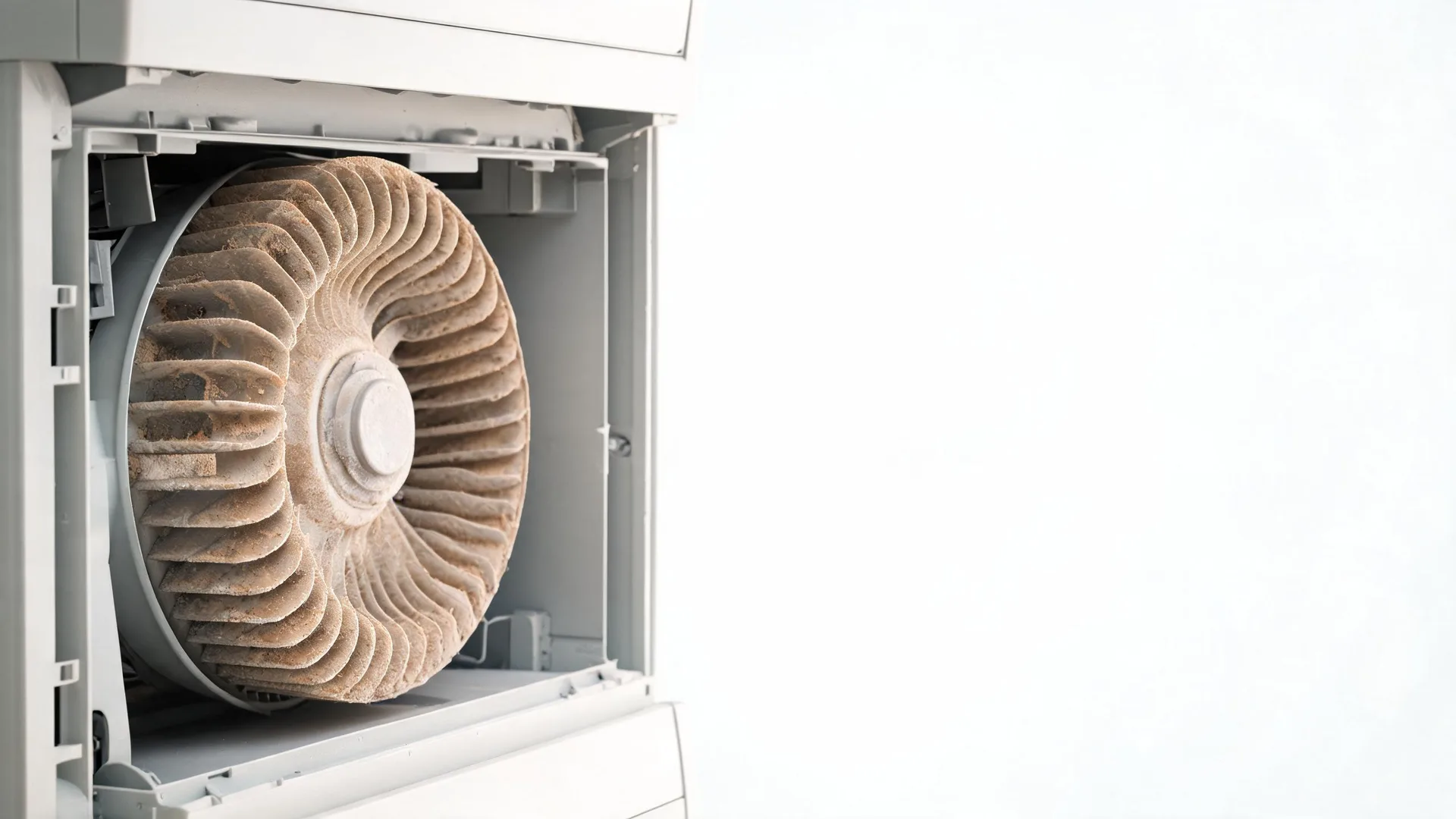
A refrigerant charge that's slipped low from a slow leak won't announce itself. The unit still runs, just not well, and the coil starts icing from the inside out. A clogged filter chokes airflow across that same coil, and the system works harder to move less air. Both are easy to check and easy to let go unchecked.
Estimates for a typical Jackson County home, compared with an older unit built to the previous federal minimum, from EIA household energy data, Kansas fuel prices and NOAA climate normals. Your home will differ.
Repair makes sense when a part like a capacitor or contactor has failed.
Replacement makes sense when the compressor has failed or the system uses R-22 refrigerant, which is no longer made.
Most of the time, a repair is the right call. A capacitor, a contactor, a fan motor, these are normal wear parts, and swapping one brings the system back to running the way it should. Replacement starts to make sense when the compressor itself is failing, since that's the most expensive part of the unit and the labor to replace it rivals putting in a new system anyway. It also makes sense when the same unit keeps coming back for different problems year after year, because that pattern means the whole system is wearing out at once, not just one part of it. A tech can tell you which situation you're in by checking what's actually failed and what shape the rest of the unit is in, not by guessing from the outside.