






A chain-link fence runs diagonally across a mown grass field bordered by leafy trees, with a row of two-story light-colored houses in the background under an overcast sky.

AC Repair in Lawrence, KS

Tell us about the job

Takes about a minute. No obligation.

RepairCentral ACDouglas County, KS
Step 1 of 2

What ZIP code is the job in?

Douglas County saw 208 severe weather events between 2015 and 2024. Damaging wind caused 140 of those, hail another 52, and five tornadoes touched down in the same stretch. An outdoor AC unit sits outside through all of it, exposed to whatever the wind throws at it or whatever the hail does to the fins and coil. A unit can take a hit like that and still run, for a while, with the coil bent or the fan blade knocked out of balance. If a storm has come through recently, it's worth having someone look at the unit even if the air is still blowing cold.

5 months
May through September, your air conditioner is on duty
87°F
the average summer afternoon it cools against
52 hail events
in ten years, and hail bends the fins on outdoor coils
140 wind events
in ten years, and wind drives debris into outdoor units
Isometric cutaway illustration of a house showing interior ductwork, an air handler and furnace unit, and an outdoor condenser connected by lines outside the wall.
Your air conditioner works hardest from June through August.

NOAA nClimDiv, 1991–2020 normals

Your AC runs five months straight here, with afternoon highs averaging 87°F through June, July and August.

That kind of stretch wears parts down early, so the problem you're seeing now may have been building for a while.

May is when a weak part gets found out

Cooling runs May through September
Climate zone 4A
Power here costs 14.77 cents per kilowatt-hour
Your AC is probably younger than you thinkHalf the homes in Douglas County were built in 1988 or later.

When wear is behind the problem, a tech checking it out can tell. Low refrigerant shows up as ice on the line or weak cooling on the hottest afternoons. A failing capacitor shows up as a fan that hums but won't spin, or a compressor that clicks and stops. Those are different fixes, and they cost different amounts, so it's worth having someone pin down which one you've got rather than guessing. A proper diagnosis also means replacing what's actually worn instead of swapping parts that were fine, which matters more here than most places given how many months a year this unit has to run.

Had a storm come through? Get the unit checked before you need it.

If a storm has come through recently and nobody has checked the unit since, that's reason enough to get it looked at, even if it's still blowing cold air.

Find a contractor
A man in a dark cap, dark long-sleeved shirt and tan work pants walks up porch steps toward a red front door, carrying a worn canvas tool bag.
An outdoor air conditioning condenser unit mounted on a concrete pad beside a house, with electrical conduit running to a wall-mounted disconnect box.

A newer system is worth fixing

If your system came with the house and the house is newer, repair is the right first call rather than replacement. A unit with years of life left is worth fixing when a part fails. The time-lapse above is what that life looks like day to day, running through the afternoon heat and into the evening, one stretch at a time.

Most failures are electrical, not mechanical

A capacitor wears out from running hot season after season and either weakens or shorts. A contactor's points pit and burn from constant arcing until they stop making contact. These are the parts that fail most often because they switch the compressor and fan on every cycle, and that wear adds up quietly until the day it doesn't start.

What's clogged matters as much as what's broken

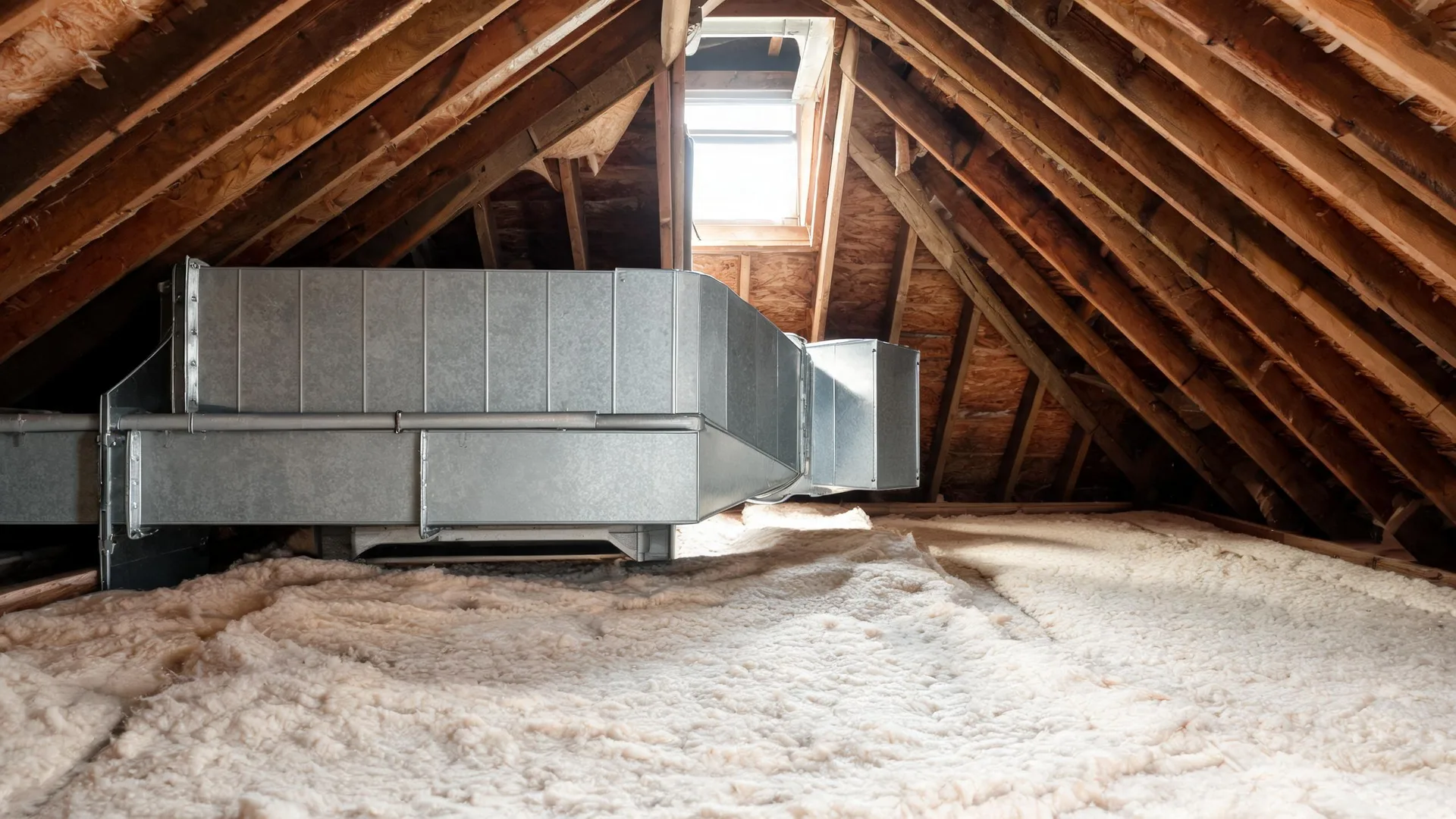
A dirty filter or a coil caked with dust and grime makes the whole system work harder, and that strain is what pushes a weak capacitor or a tired compressor over the edge. Keeping the filter changed and the coil clean doesn't just help airflow, it takes the load off the parts that are already closest to failing.

Aerial view of a square outdoor air conditioning condenser unit on a concrete pad beside a house wall with a sliding glass door.

A new air conditioner would cut about $30 a year off cooling for a typical Douglas County home.

  • A new one at the federal minimum, 13.4 SEER2$320 a year
  • An older air conditioner$350 a year

Estimates for a typical Douglas County home, compared with an older unit built to the previous federal minimum, from EIA household energy data, Kansas fuel prices and NOAA climate normals. Your home will differ.

Repair makes sense when a part like a capacitor or contactor has failed.

Replacement makes sense when the compressor has failed or the system uses R-22 refrigerant, which is no longer made.

A diagnostic visit starts outside at the condenser, checking the capacitor and contactor and seeing whether the compressor is pulling the current it should. Refrigerant pressure gets checked at the service ports, since too little means a leak somewhere in the lines or coil. Inside, the tech looks at the evaporator coil for ice or buildup and checks the filter, because restricted airflow across that coil is what causes a lot of the symptoms that look like something else. The blower gets checked too, since a motor running slow or a wheel caked with dust can starve the whole system of airflow even when everything else is fine. Electrical connections get tested along the way, since a loose wire or a burnt terminal can cause the same shutdown as a failed part. By the end, the tech should be able to point to the one part that's actually failing and explain why, not just which parts might be involved.