






An outdoor air conditioning condenser unit positioned on a concrete pad next to a blue-sided house, surrounded by green shrubs and flowering hydrangeas at sunset.

AC Repair in Liberal, KS

Tell us about the job

Takes about a minute. No obligation.

RepairCentral ACSeward County, KS
Step 1 of 2

What ZIP code is the job in?

Your air conditioner here runs five months straight, May through September, with afternoon highs averaging 91°F through the worst of it. That's not heavy, humid heat, Liberal's dew point runs lower than most of the country, but it's still a long, hot stretch for a compressor to work through without a break. Add the wind and hail this county sees most years, and a unit sitting outside takes a beating beyond just the heat. All of that adds up to parts wearing down sooner than they would somewhere milder. When something starts acting up, it's worth having a contractor actually diagnose it rather than guess, because the cause behind a Liberal AC problem often isn't the same as what you'd find on a unit that only runs a couple months a year.

5 months
May through September, your air conditioner is on duty
91°F
the average summer afternoon it cools against
70 hail events
in ten years, and hail bends the fins on outdoor coils
126 wind events
in ten years, and wind drives debris into outdoor units
Isometric cutaway illustration of a house interior showing ducted air handling equipment and duct runs through rooms, connected by piping to an outdoor condenser unit on a pad outside the wall.
Your air conditioner works hardest from June through August.

NOAA nClimDiv, 1991–2020 normals

Seward County logged 215 severe weather events from 2015 to 2024, including 70 hail events and 126 instances of damaging wind.

An outdoor unit that takes hail or wind-blown debris can keep running for a while before the damage shows up as a real problem.

May is when a weak part finally gives out

Cooling runs May through September
Climate zone 4A
Power here costs 15.33 cents per kilowatt-hour
Half this county was built by 1973If your system is as old as the house, it may not have much left to give.

If your unit has been out in weather this rough, a visual check is worth doing even when it's still blowing cold. Bent fins block airflow across the coil, and a coil that can't shed heat makes the compressor work harder to do the same job. A cracked fan blade or a dented cabinet can throw things out of balance in ways you won't notice until a part fails from the strain. None of that shows up on the thermostat. It shows up months later as a bigger repair, or as a compressor that's worked past the point of being worth saving. A contractor can look the unit over in a few minutes and tell you whether last year's hail actually did anything.

Have it diagnosed, not guessed at

Get the actual cause checked before you decide whether this is a quick fix or something bigger. A unit that's run hard for five summers straight, through wind and hail on top of the heat, can fail for reasons that don't show up with a simple parts swap. A proper diagnosis is what makes sure the repair holds.

Find a contractor
A gray residential air conditioning condenser unit mounted on a concrete pad outdoors, surrounded by green grass under a partly cloudy blue sky.

What the unit tells you before it quits

Most AC trouble gives you a sign before it gives out completely. Warm air from the vents when the thermostat is set low usually means the compressor isn't keeping up or refrigerant has dropped below where it needs to be. Short cycling, where the unit kicks on, runs a few minutes and shuts off, puts a lot of strain on the compressor every time it restarts. Ice on the refrigerant line almost always points back to airflow, a dirty filter or a blower that isn't moving enough air across the coil. A unit that runs longer than it used to, without cycling off the way it should, is usually losing a fight against something: low refrigerant, a failing capacitor, a coil that can't shed heat. None of these fix themselves. Left alone, they tend to take the compressor down with them, and the compressor is the part that makes a repair turn into a replacement.

Capacitors give out without warning

A capacitor stores the charge that starts the compressor and keeps the fan motor running steady. It weakens slowly, then quits all at once. One day the unit is cooling fine, the next the outdoor fan is humming but not spinning, or the whole unit won't kick on at all. It's one of the cheapest parts in the system and one of the most common reasons a unit stops cold.

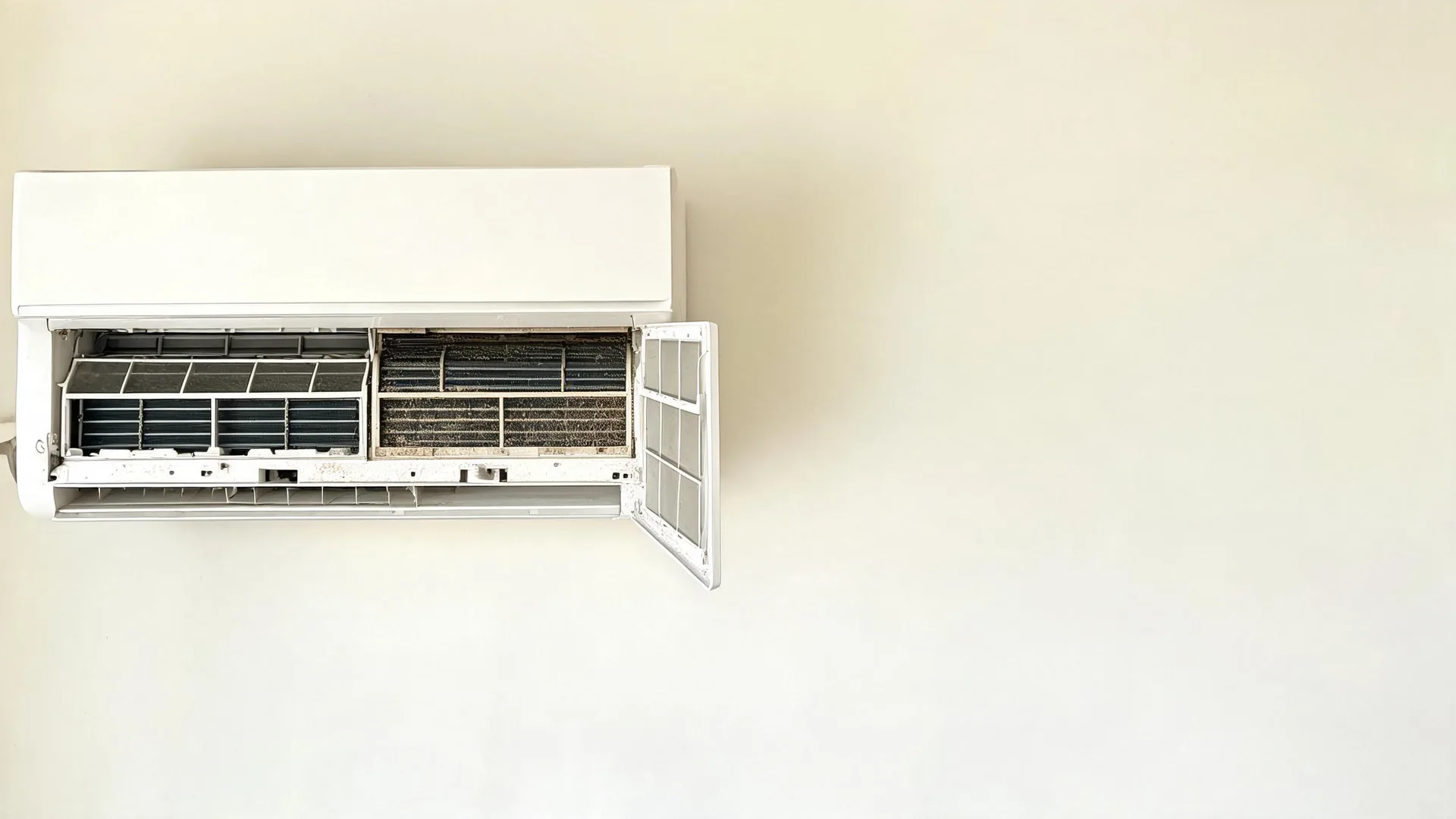
A dirty coil is a slow failure, not a sudden one

The outdoor coil has to shed the heat pulled from inside the house. When dirt, grass clippings or cottonwood seed cake onto those fins, the coil can't let go of that heat as fast as it needs to. The compressor ends up working harder and running hotter just to hit the same temperature. Run it like that long enough and the compressor is what fails, not the coil itself. A coil that gets cleaned before it's caked solid saves the part that's actually expensive to replace.

Overhead view of an outdoor AC condenser unit on a concrete pad next to a house with a dark shingle roof.

A new air conditioner would save little on running costs in Seward County, so the repair decision comes down to the unit's condition.

  • A new one at the federal minimum, 13.4 SEER2$340 a year
  • An older air conditioner$360 a year

Estimates for a typical Seward County home, compared with an older unit built to the previous federal minimum, from EIA household energy data, Kansas fuel prices and NOAA climate normals. Your home will differ.

Repair makes sense when a part like a capacitor or contactor has failed.

Replacement makes sense when the compressor has failed or the system uses R-22 refrigerant, which is no longer made.

A diagnostic visit starts outside at the unit itself, not at the thermostat. A tech pulls the panel and checks the capacitor and contactor first, since those fail often and fail fast. From there it's refrigerant pressure, checking that the compressor is actually drawing the current it should, and listening to how the fan motor sounds under load. Inside, they'll check airflow at the vents and look at the coil and blower for anything restricting it. A lot of what looks like a refrigerant problem is actually an airflow problem further back in the system, so a good diagnosis rules things out in order rather than jumping to the expensive part first. The goal is to find the one thing actually causing the symptom, not to replace parts until something works.