A snow-covered suburban street at dusk with lit houses and bare trees under a twilight sky.

AC Repair in Osage City, KS

Tell us about the job

Takes about a minute. No obligation.

RepairCentral ACOsage County, KS
Step 1 of 2

What ZIP code is the job in?

Osage County sees its share of storms

Osage County logged 157 severe weather events between 2015 and 2024, including 71 damaging wind events, 70 hail events, and 7 tornadoes. Hail dents coils and bends fins. Wind throws branches and debris into the cabinet. An outdoor unit can take a hit like that and keep running, for a while.

Power doesn't always stay on

Winter storms hit the county 9 times in that same stretch, and statewide, almost one in five Kansas households went at least a full day without power in 2024. An outage that long matters when it's your air conditioner that stops, or your water heater that won't relight on its own.

5 months
May through September, your air conditioner is on duty
88°F
the average summer afternoon it cools against
70 hail events
in ten years, and hail bends the fins on outdoor coils
71 wind events
in ten years, and wind drives debris into outdoor units
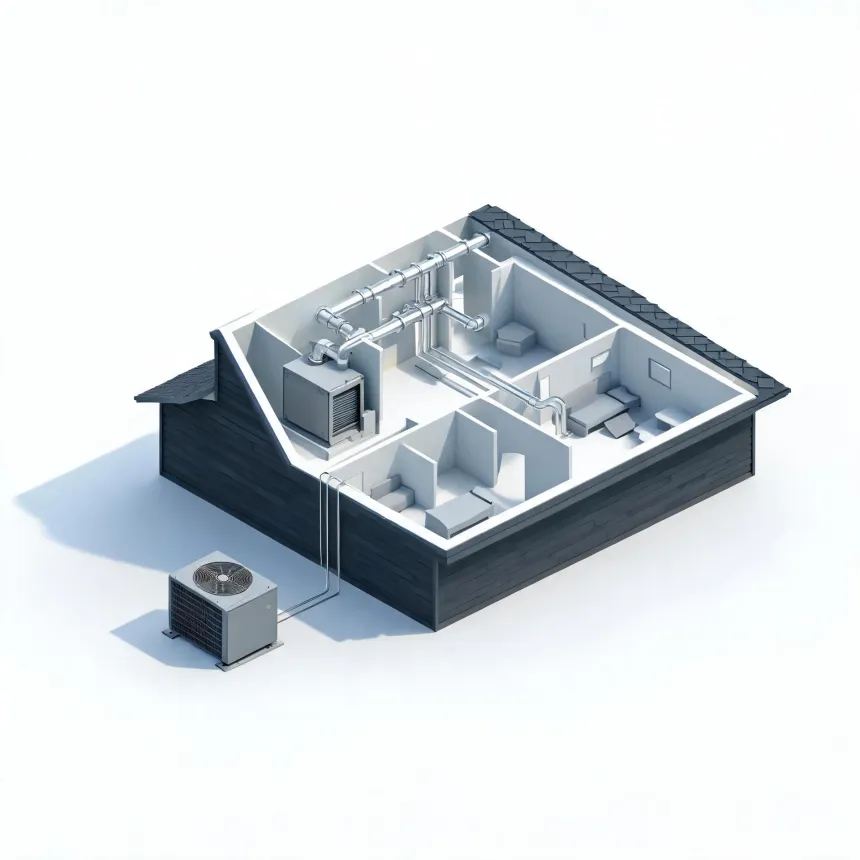
Isometric 3D cutaway render of a house with dark siding showing interior rooms, ductwork and an air handler, connected by lines to an outdoor condenser unit on a white background.
Your air conditioner works hardest from June through August.

NOAA nClimDiv, 1991–2020 normals

Osage County summers run hot and heavy, with afternoon highs averaging 88°F and a dew point near 66°F all through June, July and August.

Your air conditioner runs close to five months straight under that load, and that kind of stretch is usually what's behind the problem you're calling about.

May is when a weak AC shows itself

Cooling runs May through September
Summer afternoons average 88°F
71 damaging wind events from 2015 to 2024

Whatever is wrong with your air conditioner right now, that five month stretch of running is probably part of it. A unit here doesn't get to cycle on and off a few times a day and rest. It runs long hours, day after day, from May into September. A contractor who comes out should check it against that kind of use, not just clear a code and move on. A capacitor or contactor that's starting to go will often show the same symptom as something bigger, and the only way to tell them apart is to actually test it. Get it looked at properly now, and the fix has a real chance of holding through the rest of the summer.

If the outdoor unit took a hit, get it checked before you trust it

Hail and wind have come through this county before, and a unit can keep running after a hit like that for a while before it quits. If yours has been through a storm, have it checked even if it's still cooling. A cracked fin or a dented coil found now is a smaller job than the one you get when it finally gives out.

Find a contractor
A man in a dark jacket, tan pants and a cap, seen from behind, carries a worn canvas tool bag up wooden porch steps toward a red front door.
An outdoor air conditioning condenser unit mounted on a concrete pad surrounded by gravel, photographed against a partly cloudy blue sky.

Small problems don't stay small if the unit keeps running

A refrigerant leak is the clearest case. Run the system low on charge and the compressor works harder to move what little refrigerant is left. It runs hotter doing it. Keep that up and you're looking at a failed compressor instead of a patched line. A weak capacitor is the same story on a different part. It still kicks the compressor and fan on, just not as cleanly, and every start under strain wears the contacts and windings a little more. Dirty coils push the whole system the same direction. The unit has to run longer to move the same heat, which means more hours on a compressor that's already working past what it should. None of these fail a system outright on day one. They just make everything downstream work harder until something does.

Check the simple things first

Look at the thermostat before anything else. Make sure it's set to cool and set below room temperature, and check the batteries if it has a screen that's dim or blank. Then check the breaker box. A tripped breaker will shut the whole system down and it's a flip away from fixing itself. Look at the outdoor unit too. If the fan isn't spinning and you don't hear any hum, that's worth knowing before the contractor arrives.

Know what not to touch

The filter is fair game. Pull it out and hold it up to a light. If you can't see through it, swap it, because a clogged filter starves the system of airflow and can ice up the coil. Past that, leave the cabinet alone. Refrigerant work, electrical testing, and anything inside the compressor housing needs the right gauges and training. Opening it up without that just adds a second problem for the contractor to sort out.

An overhead view of a residential air conditioning condenser unit mounted on a concrete pad next to a house with vinyl siding.

A new air conditioner would cut about $30 a year off cooling for a typical Osage County home.

  • A new one at the federal minimum, 13.4 SEER2$320 a year
  • An older air conditioner$350 a year

Estimates for a typical Osage County home, compared with an older unit built to the previous federal minimum, from EIA household energy data, Kansas fuel prices and NOAA climate normals. Your home will differ.

Repair makes sense when a part like a capacitor or contactor has failed.

Replacement makes sense when the compressor has failed or the system uses R-22 refrigerant, which is no longer made.

A diagnostic visit starts outside at the condenser, not with a screwdriver. The contractor will check the refrigerant charge with gauges, since both low and overcharged systems make the compressor work wrong in different ways. Electrical readings come next: the capacitor gets tested under load, not just looked at, because a capacitor can look fine and still be weak. The contactor gets checked for pitted contacts, which cause the kind of intermittent failure that looks like something else entirely. Indoors, the evaporator coil gets inspected for ice or dirt, and airflow gets checked at the vents, since weak airflow can point to a duct problem instead of the unit itself. A good diagnosis ends with a reason, not just a part. If the contractor can't explain why that part failed, the same failure can show up again in a different part next month.