


A mown grass field bordered on the left by a chain-link fence, with a row of two-story light-colored siding houses and trees in the background under an overcast sky, framed by overhanging leafy branches.

AC Repair in Ottawa, KS

Tell us about the job

Takes about a minute. No obligation.

RepairCentral ACFranklin County, KS
Step 1 of 2

What ZIP code is the job in?

Cooling runs May through September here, so April is when the system comes back on after sitting idle all winter. That first real stretch of heat in May is when a weak part finally gives out. A capacitor that was marginal last September can fail the first hot day it has to work hard again. If your AC is struggling now, early in the season, that's usually not bad luck. It's a sign something was already wearing down before the system got asked to run.

5 months
May through September, your air conditioner is on duty
87°F
the average summer afternoon it cools against
46 hail events
in ten years, and hail bends the fins on outdoor coils
71 wind events
in ten years, and wind drives debris into outdoor units
Isometric illustration of a cutaway single-story house showing interior rooms, ductwork running from an indoor air handler, and an outdoor condenser unit on a pad beside the building.
Your air conditioner works hardest from June through August.

NOAA nClimDiv, 1991–2020 normals

Warm air from the vents while the thermostat is set low usually means the compressor isn't keeping up.

A struggling compressor points to a refrigerant leak or a failing compressor itself, and running the system in that state only makes the damage worse.

Ottawa, KSHalf the homes in Franklin County were built in 1975 or earlier, half later.

Most AC repairs in Ottawa come down to a part that wore out doing its normal job, not anything the county did to it. A dirty filter makes the system pull harder than it should, and a dirty outdoor coil does the same thing from the other side. Either one shortens the life of whatever runs next in line, usually the compressor. Electricity in Kansas ran 14.15 cents per kilowatthour in 2024, so a system working harder than it needs to shows up on the bill before anyone finds the cause. Finding what's actually wearing down costs less than waiting for it to take the compressor with it.

Get it looked at early

Problems tend to show up in the first weeks of the season, when the load hits a part that was already weak.

Find a contractor
A gray metal air conditioning condenser unit mounted on a concrete pad in a flat grassy field under a partly cloudy sky.

Nothing fails on day one. It fails on the thousandth.

A capacitor fails from the strain of starting the compressor and the fan motor over and over, cycle after cycle, year after year. It weakens a little each time until one day it can't deliver the jolt either one needs. A contactor wears the same way. The electrical contacts inside it pit and burn from making and breaking current, until they stick or stop making contact at all. A run capacitor and a start contactor are both wear parts, not defects, and a long-running system puts hours on both every single time it cycles on. The condenser fan motor and blower motor carry bearings that dry out and grind down over years of spinning. None of this comes from one hard day. It comes from the system doing its job over and over until something that was never built to last forever reaches the end of what it had.

A struggling compressor keeps trying anyway

A compressor that's low on refrigerant or straining to keep up still fires every time the thermostat calls for cooling. Each cycle under that strain pushes it closer to a burned winding or a seized motor. What could have been a sealed leak or a single swapped part turns into a compressor that won't run at all.

A frozen coil only gets worse with the system on

Low airflow or low refrigerant can ice the indoor coil, and once ice forms the system cools less while pulling just as hard. Leaving it running melts a little ice and lets more build in its place, and that water has to go somewhere once it thaws. Shutting the system off and letting the coil clear is what keeps it from spreading into a bigger repair.

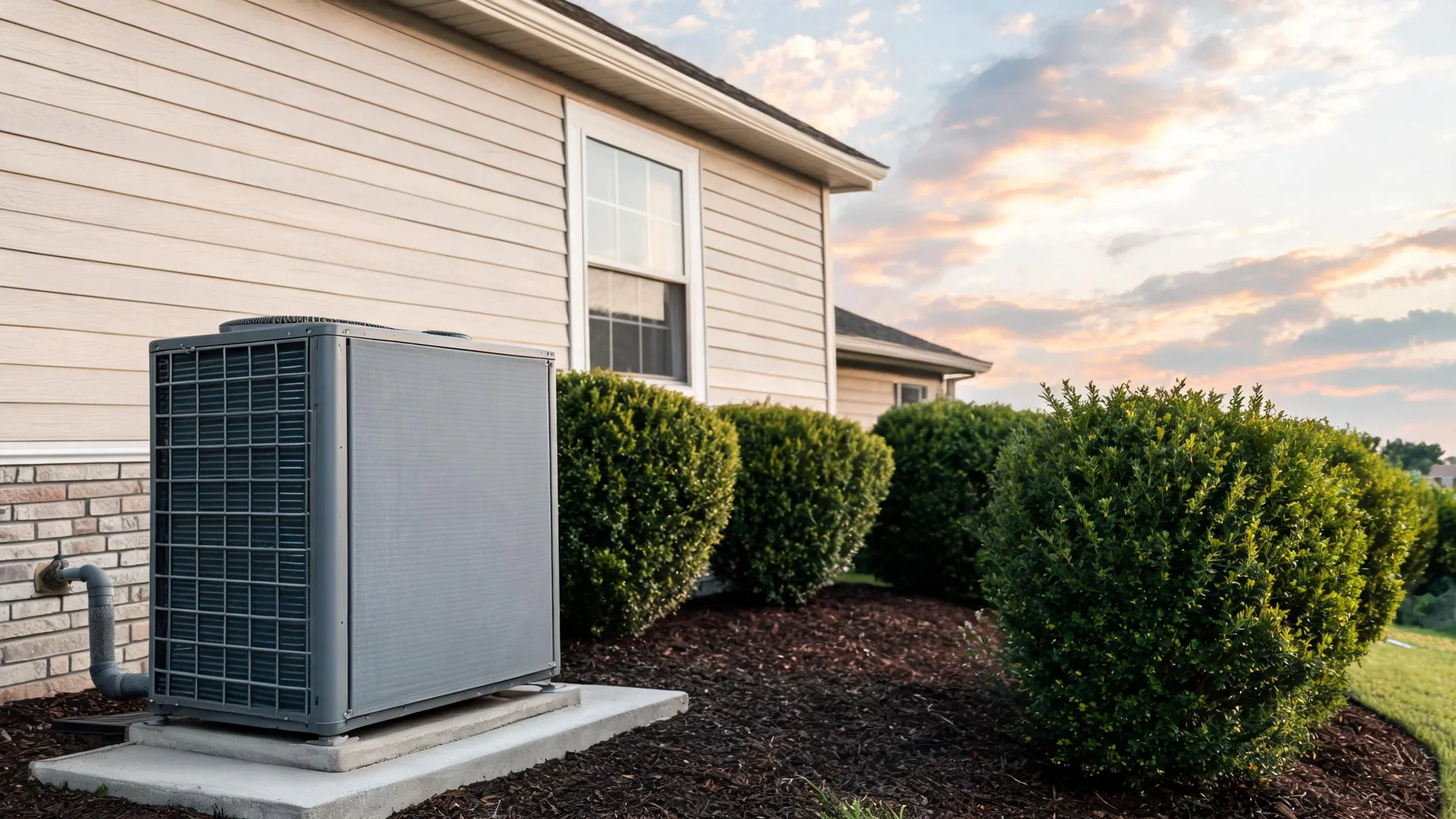
An overhead view of a residential air conditioning condenser unit mounted on a concrete pad next to a house with vinyl siding.

A new air conditioner would save little on running costs in Franklin County, so the repair decision comes down to the unit's condition.

  • A new one at the federal minimum, 13.4 SEER2$330 a year
  • An older air conditioner$350 a year

Estimates for a typical Franklin County home, compared with an older unit built to the previous federal minimum, from EIA household energy data, Kansas fuel prices and NOAA climate normals. Your home will differ.

Repair makes sense when a part like a capacitor or contactor has failed.

Replacement makes sense when the compressor has failed or the system uses R-22 refrigerant, which is no longer made.

An old system can still be worth repairing if the part that failed is a cheap, common one. A capacitor or a contactor is a small job whether the unit is new or old, and age alone doesn't make that repair a bad bet. What changes the math is the compressor. Once that's the part in question, the repair is on the one piece that costs the most and is hardest to replace, on a system that may already be losing efficiency elsewhere. A tech who's honest with you will tell you which kind of repair you're looking at before they start, not after.