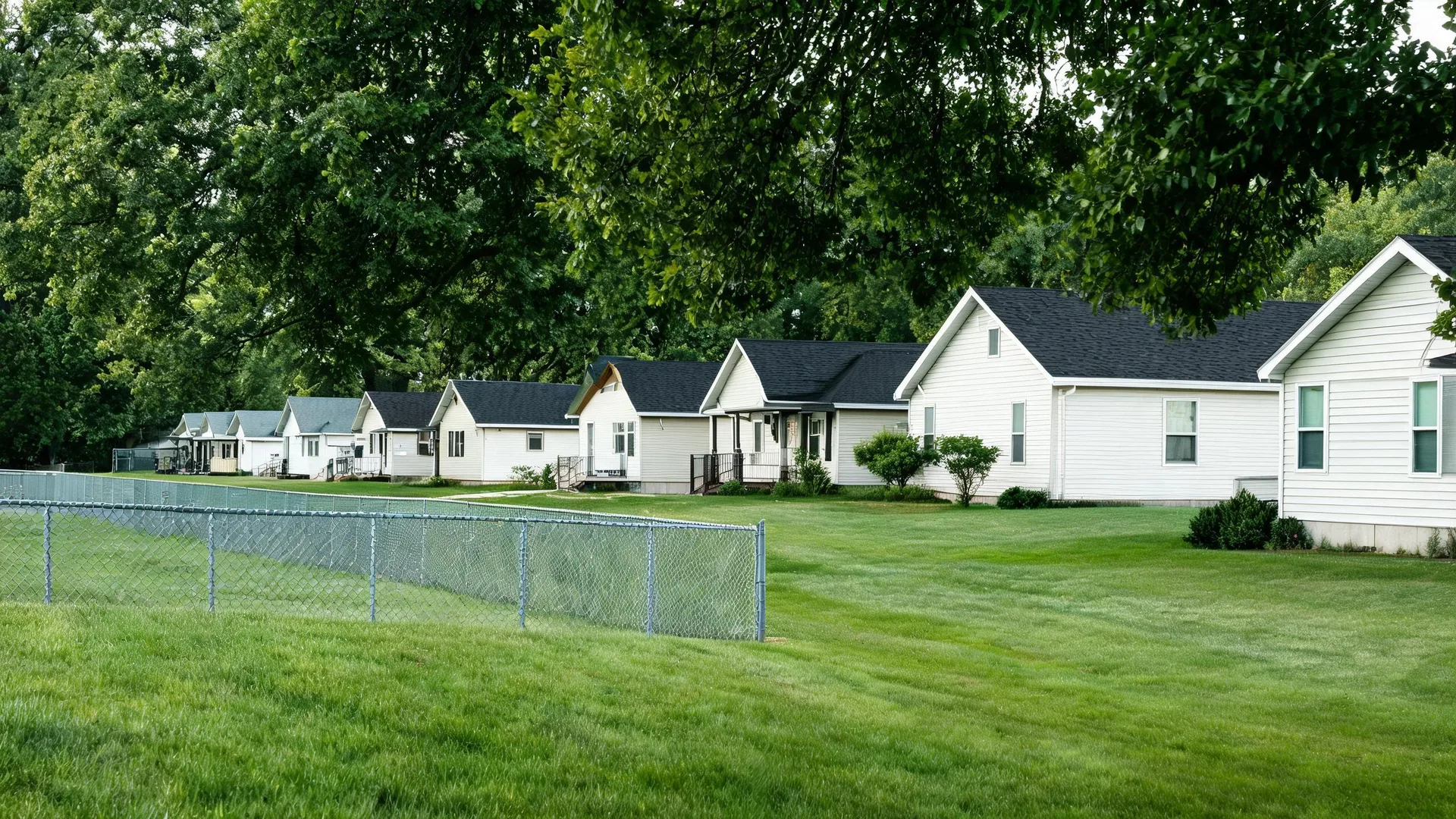







A row of similar white single-story houses with dark gray gabled roofs behind a chain-link fence, with a mowed lawn in the foreground and large leafy trees above.

AC Repair in Overland Park, KS

Tell us about the job

Takes about a minute. No obligation.

RepairCentral ACJohnson County, KS
Step 1 of 2

What ZIP code is the job in?

Johnson County saw 367 severe weather events between 2015 and 2024. Most of that was wind and hail, 179 damaging wind events and 170 hail events, with 9 tornadoes in the same stretch. An outdoor AC unit sits outside through all of it, with nothing but a thin metal case around the coil and fan. Hail dents the fins and bends the housing. Wind throws branches and debris into the cabinet. A unit that still runs after a storm can be running on a damaged coil or a bent fan blade, and that kind of damage gets worse the longer it's ignored. If your system has been through a storm this year, it's worth having someone look even if the air coming out still feels cold.

5 months
May through September, your air conditioner is on duty
87°F
the average summer afternoon it cools against
170 hail events
in ten years, and hail bends the fins on outdoor coils
179 wind events
in ten years, and wind drives debris into outdoor units
Isometric grayscale illustration of a cutaway house interior showing a furnace with ductwork, interior rooms with furniture, and an outdoor condenser unit connected by lines at the exterior wall.
Your air conditioner works hardest from June through August.

NOAA nClimDiv, 1991–2020 normals

Half the homes in Johnson County were built in 1989 or later.

A system that came in with a newer house still has years left in it, and that's worth knowing before you decide whether to fix or replace.

Five months of 87 degree afternoons, and the unit runs the whole stretch

Cooling runs May through September
Summer afternoons average 87°F
179 damaging wind events from 2015 to 2024
The first hot week finds the weak partCooling starts in May here, and most of this county runs it through September.

When a storm has already come through, the next question is just whether the unit still works right, not whether it looks fine. A technician checks the coil fins for crushed spots, the fan blade for a wobble, the cabinet for anything bent in far enough to rub. None of that shows up by listening at the thermostat. It shows up when someone opens the cabinet and looks. If your unit has been running the full stretch since May without a problem, that's still worth confirming once, especially after a summer with hail in it.

If your unit has been through a storm, get it looked at before you decide it's fine

A bent fan blade or a dented coil does not always change how the air feels right away. It shows up later, usually as a bigger repair. If hail or wind has come through your yard this year, have the unit opened up and checked now, while that's still a quick job.

Find a contractor
A man in a cap, dark shirt and olive work pants carries a canvas tool bag up porch steps toward a red front door of a gray clapboard house, with a potted shrub at left.
An outdoor air conditioning condenser unit mounted on a concrete pad surrounded by gravel, photographed against a partly cloudy blue sky.

Check the age, then decide

Find out when the unit was installed before you call around for quotes. If it came with the house, a repair now is likely worth it. Parts are easier to get on a newer unit too, which keeps a simple fix from turning into a long wait for a part. Ask the technician for the age and the model number while they're already out there looking at it.

What a failing AC sounds and feels like

A unit that short cycles, shutting off and starting again before a room cools, is usually struggling with airflow or refrigerant charge. Warm air from the vents with the fan still running points to the compressor or the charge, not the thermostat. A hard rattle or a grinding noise usually means a fan blade or motor bearing, not something that fixes itself. Water pooling near the indoor unit means a clogged condensate line or a frozen coil that's now thawing, and either one needs attention before it reaches the drywall or subfloor underneath.

Why none of these fix themselves

A compressor straining to start will wear out faster every time it tries, and once it fails the whole outdoor unit is usually done. A coil running too cold ices over, and ice on the coil blocks the airflow the system needs to cool anything at all. A fan motor that's starting to grind keeps turning until it seizes, and a seized motor can take the compressor down with it. None of these problems stay small. Catching one early is a repair. Waiting usually turns it into a bigger one.

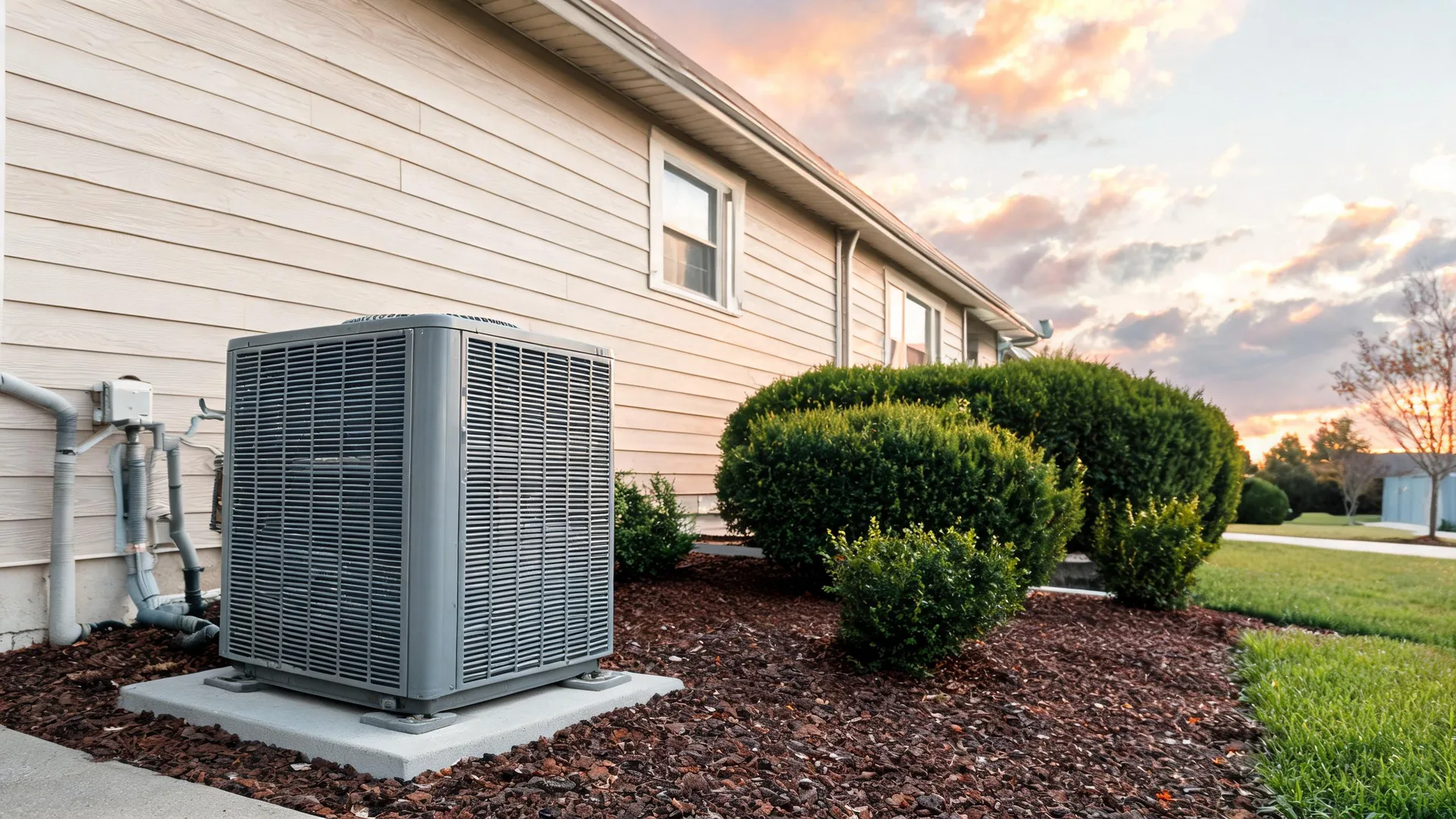
An outdoor air conditioning condenser unit mounted on a concrete pad next to a blue-sided residential house at sunset.

A new air conditioner would save little on running costs in Johnson County, so the repair decision comes down to the unit's condition.

  • A new one at the federal minimum, 13.4 SEER2$320 a year
  • An older air conditioner$340 a year

Estimates for a typical Johnson County home, compared with an older unit built to the previous federal minimum, from EIA household energy data, Kansas fuel prices and NOAA climate normals. Your home will differ.

Repair makes sense when a part like a capacitor or contactor has failed.

Replacement makes sense when the compressor has failed or the system uses R-22 refrigerant, which is no longer made.

Once a unit is actually broken, the question changes from what's wrong to whether it's worth fixing at all. Age matters more than the symptom. A compressor failure on a unit well into its years usually means the rest of the system is close behind, and a major repair on it is money spent holding off the inevitable. The same failure on a younger system is usually just that one part. Cost matters too, but not in isolation. A repair that runs close to what a new system costs is a bad trade no matter what broke. It's also worth asking whether this is the first real repair or the third in a couple of years. One fix is a fix. A pattern of them is a system telling you it's done.