





An outdoor central air conditioning unit mounted on a concrete pad beside a blue-sided house at sunset.

AC Repair in Sabetha, KS

Tell us about the job

Takes about a minute. No obligation.

RepairCentral ACNemaha County, KS
Step 1 of 2

What ZIP code is the job in?

Summers here run about four months, June through September, with afternoon highs averaging 86. That's a normal workload for a home AC system. Nothing about it pushes a unit harder than it was built for. So when an AC in Sabetha starts short cycling, blows warm air, or trips its breaker, the cause is usually ordinary. A weak capacitor. A low refrigerant charge. A dirty coil. A thermostat sensor out of calibration. The job is finding which one it actually is, not guessing from the symptom alone.

4 months
June through September, your air conditioner is on duty
86°F
the average summer afternoon it cools against
35 hail events
in ten years, and hail bends the fins on outdoor coils
55 wind events
in ten years, and wind drives debris into outdoor units
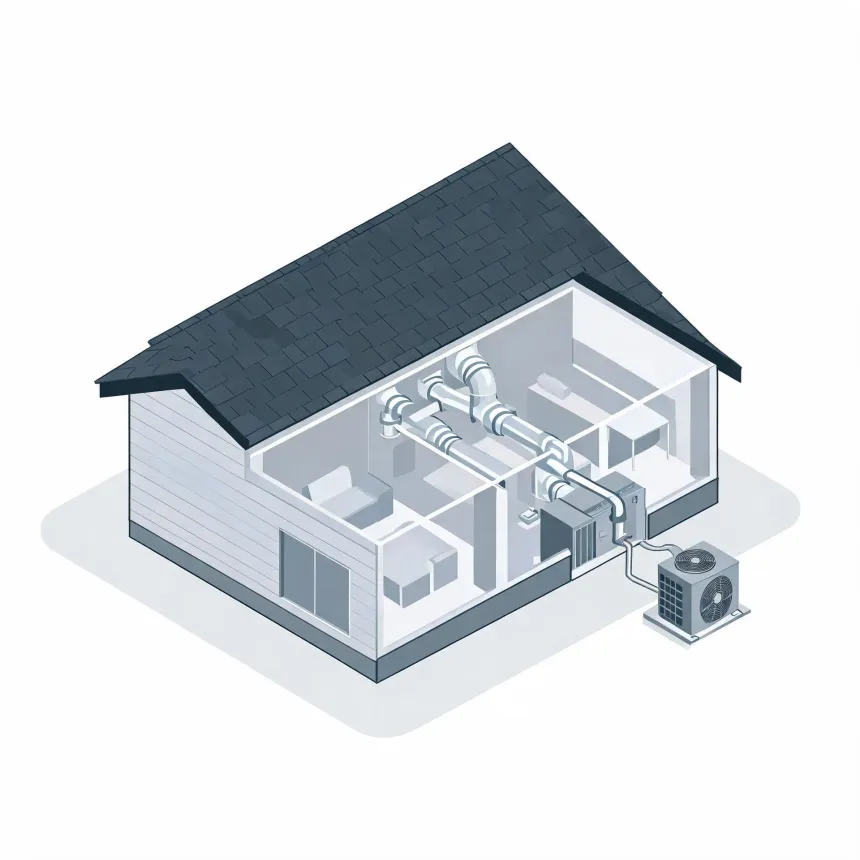
Isometric cutaway illustration of a house with a dark shingled roof, showing interior ductwork connected to an indoor air handler and an outdoor condenser unit beside the building.
Your air conditioner works hardest from June through August.

NOAA nClimDiv, 1991–2020 normals

AC in Nemaha County starts running in June.

May is the month to get a weak capacitor or low charge found before the first hot week catches it.

Nemaha County sees its share of wind and hail, but none of it changes what breaks in an AC

99 severe weather events from 2015 to 2024
19% of homes statewide lost power a day or more in 2024
55 damaging wind events from 2015 to 2024

None of this changes what a repair costs to run once it's found. Kansas households paid about 14.15 cents per kilowatt-hour in 2024, and a struggling AC, one low on charge or fighting a dirty coil, pulls more power to do the same job. A unit that cycles on and off every few minutes is drawing power each time it starts, not just while it runs. That shows up on the bill before most homeowners notice anything else is wrong. Getting the actual cause fixed, rather than living with the symptom, is what keeps that number normal.

Get the usual fix

Nothing about this area is especially hard on it. It's most likely the usual problem with the usual fix.

Find a contractor
A man in a cap, dark T-shirt and tan work pants walks up porch steps toward a red front door, carrying a worn canvas tool bag, with a potted plant beside the door.
A gray cylindrical air conditioning condenser unit mounted on a concrete pad next to a light-colored vinyl-sided house exterior.

What shows up before the breakdown does

A system rarely quits without warning signs first. It runs longer than it used to to hit the same temperature on the thermostat. The air at the vent feels cool but not cold. It short cycles, kicking on and off every few minutes instead of running a full cycle. Any one of those is worth a look. A capacitor losing its charge still starts the compressor and fan most of the time, until the day it doesn't. A coil caked with dirt still moves some heat, just not enough to keep up on the hotter afternoons. None of these show up as a dead system. They show up as a system working harder to do the same job, and that's the point to get it looked at, before the part that's struggling quits outright.

Most failures start outside the refrigerant circuit

A capacitor weakens, a contactor's contacts pit and burn, a fan motor's bearings dry out. These are the parts doing physical work every cycle, and they're usually what gives out first. The refrigerant side can run for years untouched if nothing ever rubs, arcs, or wears.

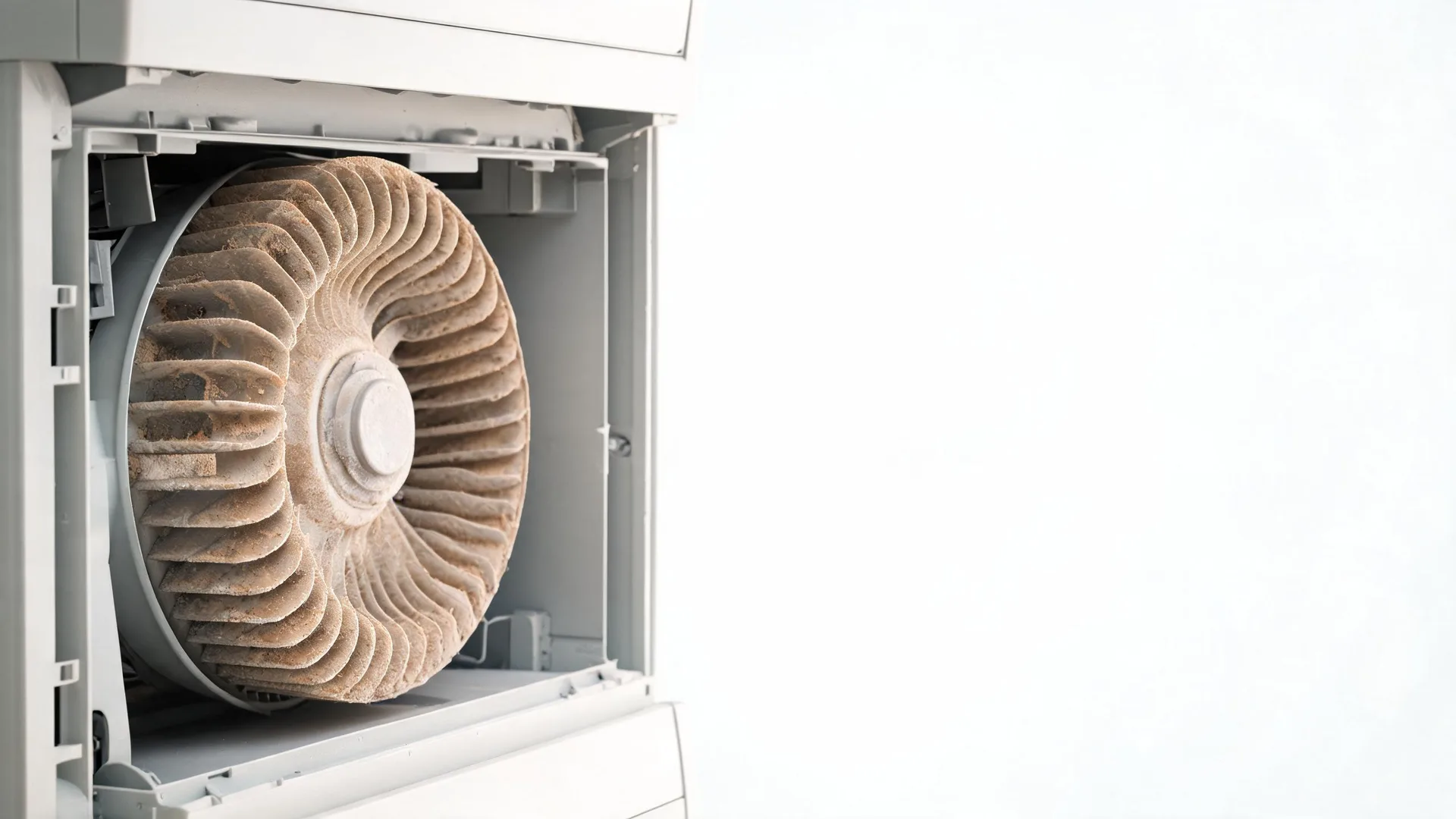
A dirty coil causes problems that look like something else

When the outdoor coil or the indoor coil is coated in dirt, the system can't shed or absorb heat the way it's built to. That shows up as warm air at the vent, ice on the line, or a compressor working harder than it should, none of which means the compressor itself is bad. Clearing the coil is sometimes the whole repair.

An outdoor air conditioning condenser unit installed beside the exterior wall of a blue vinyl-sided house at sunset.

A new air conditioner would save little on running costs in Nemaha County, so the repair decision comes down to the unit's condition.

  • A new one at the federal minimum, 13.4 SEER2$270 a year
  • An older air conditioner$290 a year

Estimates for a typical Nemaha County home, compared with an older unit built to the previous federal minimum, from EIA household energy data, Kansas fuel prices and NOAA climate normals. Your home will differ.

Repair makes sense when a part like a capacitor or contactor has failed.

Replacement makes sense when the compressor has failed or the system uses R-22 refrigerant, which is no longer made.

A diagnostic visit starts before anyone touches a tool, with questions. When did it start, what does it sound like, has the air ever felt right since. Then it's gauges on the lines to read the refrigerant pressure, a meter on the capacitor to see if it's still holding its rating, and a look at the contactor contacts for pitting or burn marks. The condenser fan and the blower both get checked for free, quiet spin, because a bearing starting to go usually makes itself known before it seizes. Airflow gets checked too, at the return and at the vents, since a system can test fine on the electrical side and still fail because the air isn't moving through it. Whatever's found gets explained in plain terms before anything gets replaced.