







A snow-covered small-town street at dusk, lined with illuminated two-story houses and a grain elevator on the horizon.

AC Repair in Wamego, KS

Tell us about the job

Takes about a minute. No obligation.

RepairCentral ACPottawatomie County, KS
Step 1 of 2

What ZIP code is the job in?

Pottawatomie County logged 171 severe weather events between 2015 and 2024. Hail showed up 82 times in that stretch, and damaging wind hit 68 times. Both go straight at an outdoor AC unit sitting outside with nothing but a thin coil guard between it and the weather. A bent fin or a dented cabinet does not always stop the unit from running, so it can keep cooling for a while even with damage inside it. If a storm has come through recently, that is a reason to have the unit looked at whether or not it seems fine right now.

4 months
June through September, your air conditioner is on duty
87°F
the average summer afternoon it cools against
82 hail events
in ten years, and hail bends the fins on outdoor coils
68 wind events
in ten years, and wind drives debris into outdoor units
Isometric cutaway illustration of a small house showing interior rooms, ductwork, an indoor air handler, and an outdoor condenser unit connected by lines, on a plain white background.
Your air conditioner works hardest from June through August.

NOAA nClimDiv, 1991–2020 normals

Half the homes in Pottawatomie County were built in 1987 or later.

A system that came with a newer house usually has years left in it, which makes repair the right call over replacement.

At 15.36 cents a kilowatt-hour, a struggling AC runs up your bill all summer

Power here costs 15.36 cents per kilowatt-hour
Climate zone 4A
Cooling runs June through September
Ready before June asks anything of itCooling here runs June through September, and trouble usually shows up in the first hot weeks.

Summer here runs four months, June through September, with afternoon highs averaging 87°F and the air holding a dew point around 64°F. That is enough moisture that the unit is not just cooling the air, it is pulling water out of it too, and that second job falls on the same compressor and coil day after day. Four months of that kind of load adds up differently than four months of dry heat would. A system that seems to be struggling, running long cycles or not quite keeping up, is often just showing the wear that this kind of summer puts on it. That wear tends to show up as a specific part giving out rather than the whole system failing at once, which is why it is worth having someone look at what is actually going on inside the unit instead of guessing.

If the last storm reached your AC, get it checked before summer leans on it

If hail or wind has come through since the unit was last looked at, that is reason enough to have it checked, even with no sign of trouble now. A unit that took a hit can still run for a while before whatever got damaged inside catches up to it.

Find a contractor
A man in a gray t-shirt and tan work pants, seen from behind, carries a worn canvas tool bag up wooden steps toward a red front door of a gray clapboard house with a potted plant beside it.
A gray residential air conditioning condenser unit mounted on a concrete pad outdoors, surrounded by green grass under a partly cloudy blue sky.

Four months on, the weak part shows itself

Four months of hard running is what this unit sees every year, June through September, and that is the stretch when a worn part finally gives out. If yours is struggling now, that is the load catching up with something specific inside it, a capacitor, a contactor, a coil that has had enough. Worth having someone open it up and find which part it is instead of just running it until it quits for good.

What the unit is telling you

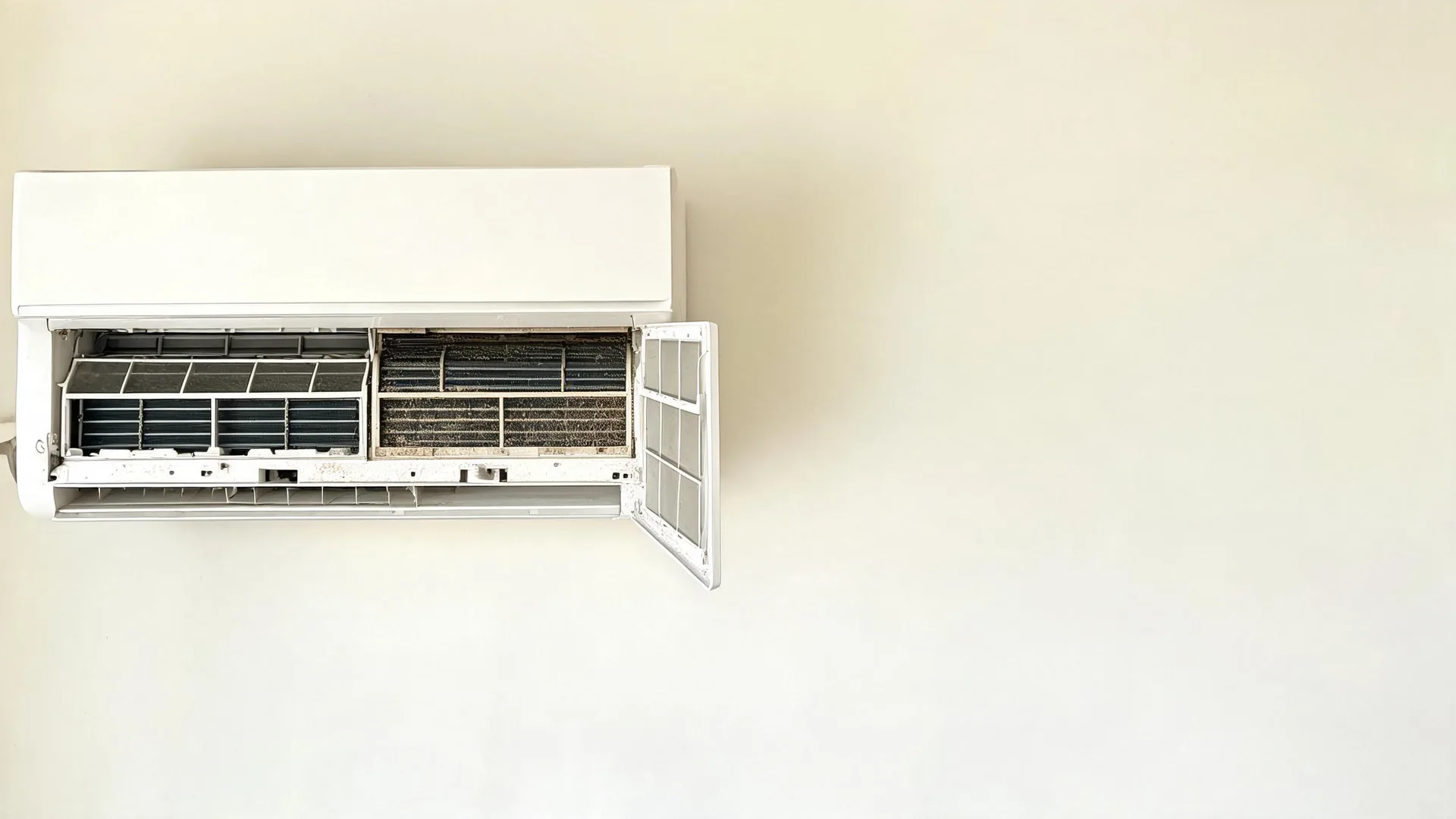
Warm air from the vents, short cycles that stop and start every few minutes, or ice forming on the indoor coil all point to something specific. Warm air can mean the compressor isn't engaging or the refrigerant charge is low. Short cycling often traces back to a failing capacitor or a clogged filter choking airflow. Ice on the coil usually means airflow is restricted or the system is low on refrigerant, either one starving the coil of the warm air it needs to stay thawed. A sound that wasn't there before, grinding, squealing, a hard clunk on startup, is a part wearing out, not the unit settling in.

Why running it longer makes it worse

A struggling AC rarely fixes itself by staying on. A bad capacitor puts extra strain on the compressor every time it tries to start, and a compressor that keeps starting hard is a compressor heading toward failure. A dirty coil or weak airflow makes the whole system work harder to move the same amount of heat, which shortens the life of parts that were otherwise fine. The part that's failing now is almost always cheaper to replace than the parts it takes down with it later.

Overhead view of an outdoor AC condenser unit on a concrete pad next to a house with a dark shingle roof.

A new air conditioner would cut about $30 a year off cooling for a typical Pottawatomie County home.

  • A new one at the federal minimum, 13.4 SEER2$300 a year
  • An older air conditioner$330 a year

Estimates for a typical Pottawatomie County home, compared with an older unit built to the previous federal minimum, from EIA household energy data, Kansas fuel prices and NOAA climate normals. Your home will differ.

Repair makes sense when a part like a capacitor or contactor has failed.

Replacement makes sense when the compressor has failed or the system uses R-22 refrigerant, which is no longer made.

A single repair does not mean the unit is on its way out. Capacitors, contactors, and fan motors are wear parts. They fail on their own schedule, and swapping one out does not say anything bad about the compressor or the coil. The compressor is the part that changes the math. If that fails on an older unit, a new compressor can cost close to what a whole new system runs, and at that point repair stops making sense. What matters more than any one breakdown is the pattern behind it. A unit that has needed a handful of small repairs over a few summers is telling you something different than a unit that ran clean for years and just had its first one. A tech who has opened the cabinet and seen what shape the coil and compressor are in can tell you which story yours is living.