A dark-painted two-story house with white-trimmed windows and a gray shingled roof stands behind a wire fence in a grassy field, backed by tall deciduous trees under an overcast sky.

AC Repair in Wichita, KS

Tell us about the job

Takes about a minute. No obligation.

RepairCentral ACSedgwick County, KS
Step 1 of 2

What ZIP code is the job in?

Storms here hit outdoor units directly

Sedgwick County recorded 268 hail events and 332 damaging wind events between 2015 and 2024. The outdoor unit sits outside with no cover, so hail dents the fins and wind throws branches and debris into the cabinet.


A unit that still runs can still be hurt

An AC can keep blowing cold air after a storm and still have bent fins or a cracked fan blade underneath. Have it looked at after any hail or high wind, even if nothing seems wrong yet.

5 months
May through September, your air conditioner is on duty
90°F
the average summer afternoon it cools against
268 hail events
in ten years, and hail bends the fins on outdoor coils
332 wind events
in ten years, and wind drives debris into outdoor units
Isometric cutaway illustration of a small house showing interior rooms with furniture, an indoor air handler with ducts in the attic space, and refrigerant lines running to an outdoor condenser unit on a pad.
Your air conditioner works hardest from June through August.

NOAA nClimDiv, 1991–2020 normals

Electricity here runs 14.59 cents per kilowatt-hour.

A struggling AC pulls more power to do the same job, and you pay that rate for every extra minute it runs.

May asks a lot of a unit that sat idle since September

Cooling runs May through September
Summer afternoons average 90°F
332 damaging wind events from 2015 to 2024
Five months of 90 degree afternoons wear a unit downJune through August averages a 90°F afternoon high, and the air sits heavy with it, a 65°F dew point.

If your AC is short cycling, blowing warm, or the outdoor fan is struggling, that costs you something every day it runs that way before it gets fixed. A unit working harder than it should pulls more power to put out the same cooling, and that extra draw adds up fast at Wichita rates. It won't fix itself. The longer a strained compressor or a dirty coil keeps working against itself, the more it can cost to repair once someone gets to it. Have it checked as soon as you notice something off, not after a full summer of running that way.

If a storm came through, get it checked before you trust it

If the outdoor unit has taken hail or wind in the past, bent fins and cracked blades do not always announce themselves. It can keep running and still be hurt. Get it looked at now, before summer leans on it.

Find a contractor
An outdoor residential air conditioning condenser unit mounted on a concrete pad, surrounded by gravel with a blue sky in the background.

Five months on, seven off

Cooling runs about five months here, May through September. That's the stretch this unit works, then sits idle the other seven. A machine that gets diagnosed properly early in that run tends to stay fixed. One that gets a quick patch job in June is often back on someone's list by August.

Most failures start with the capacitor or the contactor

The run capacitor holds the charge that keeps the compressor and fan motor turning, and it weakens over time from heat and normal cycling. When it goes, the compressor hums and won't start, or the fan barely turns. The contactor switches power to the compressor on every cycle, and the contacts inside it pit and burn until they stop making a clean connection. Both parts are cheap, both fail often, and both can take the compressor down with them if left alone.

A dirty coil or a low charge makes the compressor work against itself

The outdoor coil has to shed heat, and dirt or bent fins trap it there instead. The compressor keeps running but can't move heat the way it should, so it runs hotter and longer for the same result. A slow refrigerant leak does the same thing from a different angle, starving the system until the compressor is pushing against pressures it wasn't built for. Either one, left running for a season, is how a repair turns into a compressor replacement.

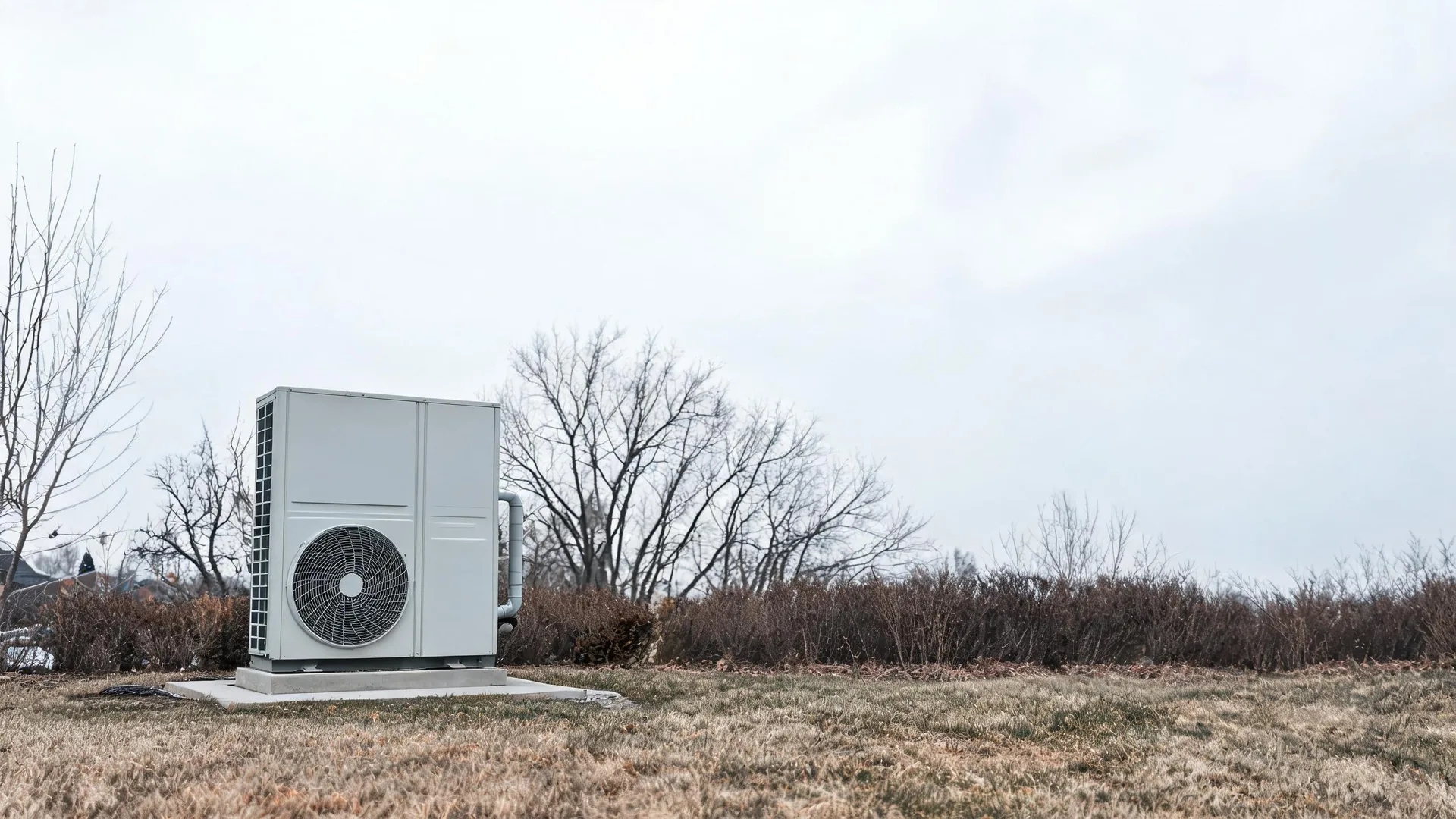
An outdoor air conditioning condenser unit on a concrete pad next to the gray vinyl siding of a residential home.

A new air conditioner would cut about $30 a year off cooling for a typical Sedgwick County home.

  • A new one at the federal minimum, 13.4 SEER2$380 a year
  • An older air conditioner$410 a year

Estimates for a typical Sedgwick County home, compared with an older unit built to the previous federal minimum, from EIA household energy data, Kansas fuel prices and NOAA climate normals. Your home will differ.

Repair makes sense when a part like a capacitor or contactor has failed.

Replacement makes sense when the compressor has failed or the system uses R-22 refrigerant, which is no longer made.

Age and the compressor are the two things worth weighing. A capacitor, a contactor, a fan motor, any of those can be replaced on a unit of any age and it runs like normal again. The compressor is different. If the compressor itself is failing, the cost of replacing just that part starts to close in on a new outdoor unit, and the rest of the system is old enough that something else is likely next. That's the point where most people stop repairing and start pricing a replacement. A unit that's needed two or three separate repairs in as many years is telling you the same thing even if each fix was small. One that's run a long stretch with nothing but a filter change is worth repairing again without a second thought.