One request ends the search for a heat pump installer.
A heat pump in Kansas has to work through real cold, the kind that sits below freezing for days in January. It can still do the job. Most of them hold their output down into the teens and twenties, and when the temperature drops below that, the backup heat kicks in to cover the gap. That's how the system is built to run here.
Where it struggles is when something is already wrong with it. A heat pump low on refrigerant, or with a frozen coil, or a defrost cycle that isn't cutting in right, will fall behind fast once the real cold hits. That's usually when people notice, because the backup heat is running more than it should, or the house just isn't catching up.
If yours feels like that this winter, the fix isn't waiting it out. It's getting someone who works on these year-round in this climate to look at what's actually failing. Kansas winters put a specific kind of strain on a heat pump, and a contractor who services this equipment through those months knows what tends to give out first, whether that's the reversing valve, the defrost control, or the charge.
Send the request and that search becomes someone else's job instead of yours. You're matched with one contractor, local to you, licensed to do the work, not a batch of companies competing for your callback. No sorting through quotes or explaining your situation five times over. Just the one call, from someone who already knows what a heat pump going into a Kansas winter is up against.
That's what the form below is for.
Will my heat pump keep up when it gets really cold in Kansas?
Will my heat pump keep up when it gets really cold in Kansas?
Yes, with backup heat doing the work on the coldest days
A heat pump pulls heat from outside air, and the colder that air gets, the less it has to give. Most heat pumps start losing real capacity somewhere in the teens, and on a January morning in Kansas that can mean the system can't pull enough heat out of the air to keep the house at temperature on its own. That's what the backup heat is built in for. It switches on automatically and covers the gap until the outdoor temperature climbs back up. The system sizing and the backup heat source both have to match what your winters actually do, which is why installation here is worth getting right the first time rather than working around later.
Running normal
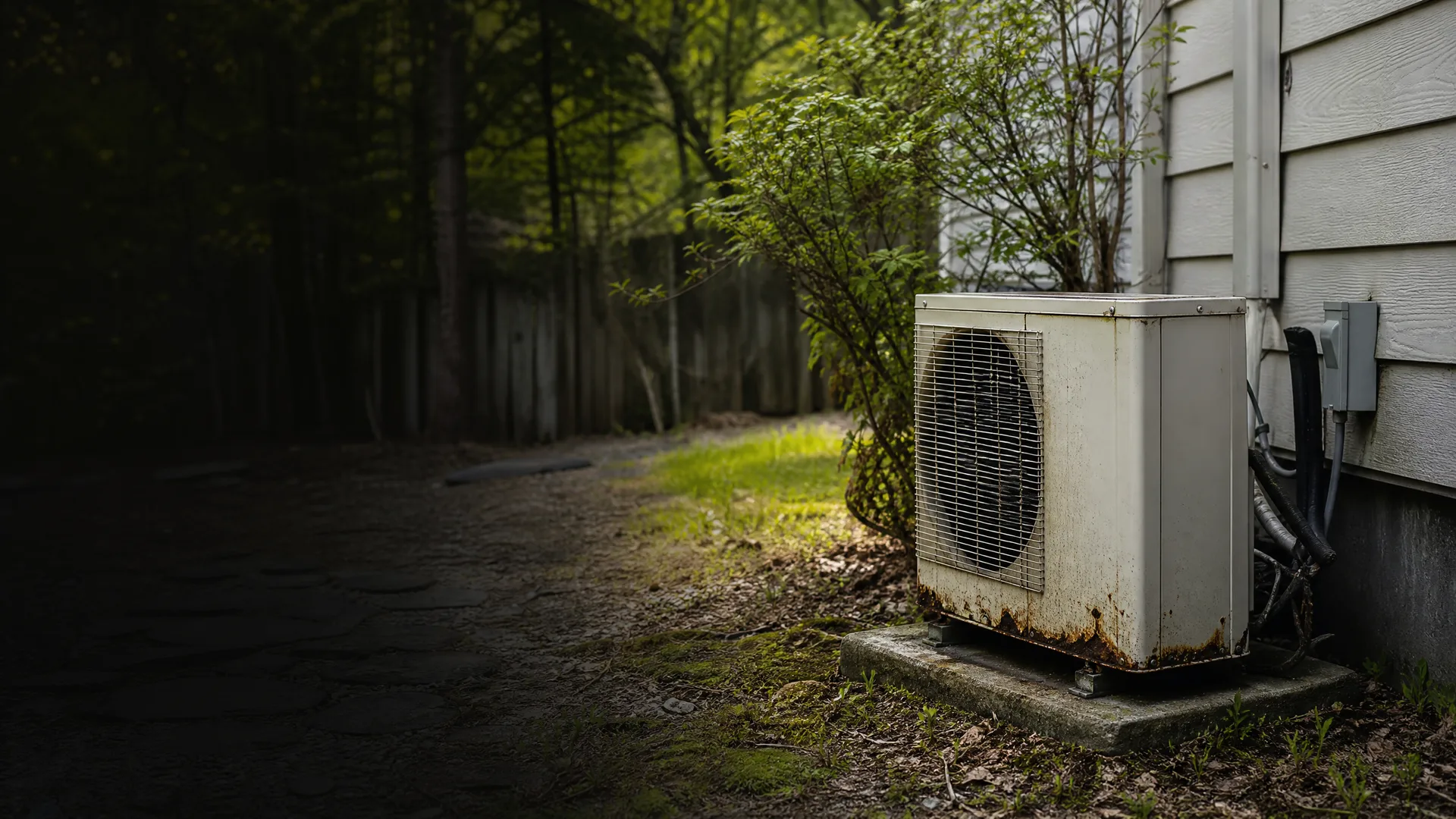
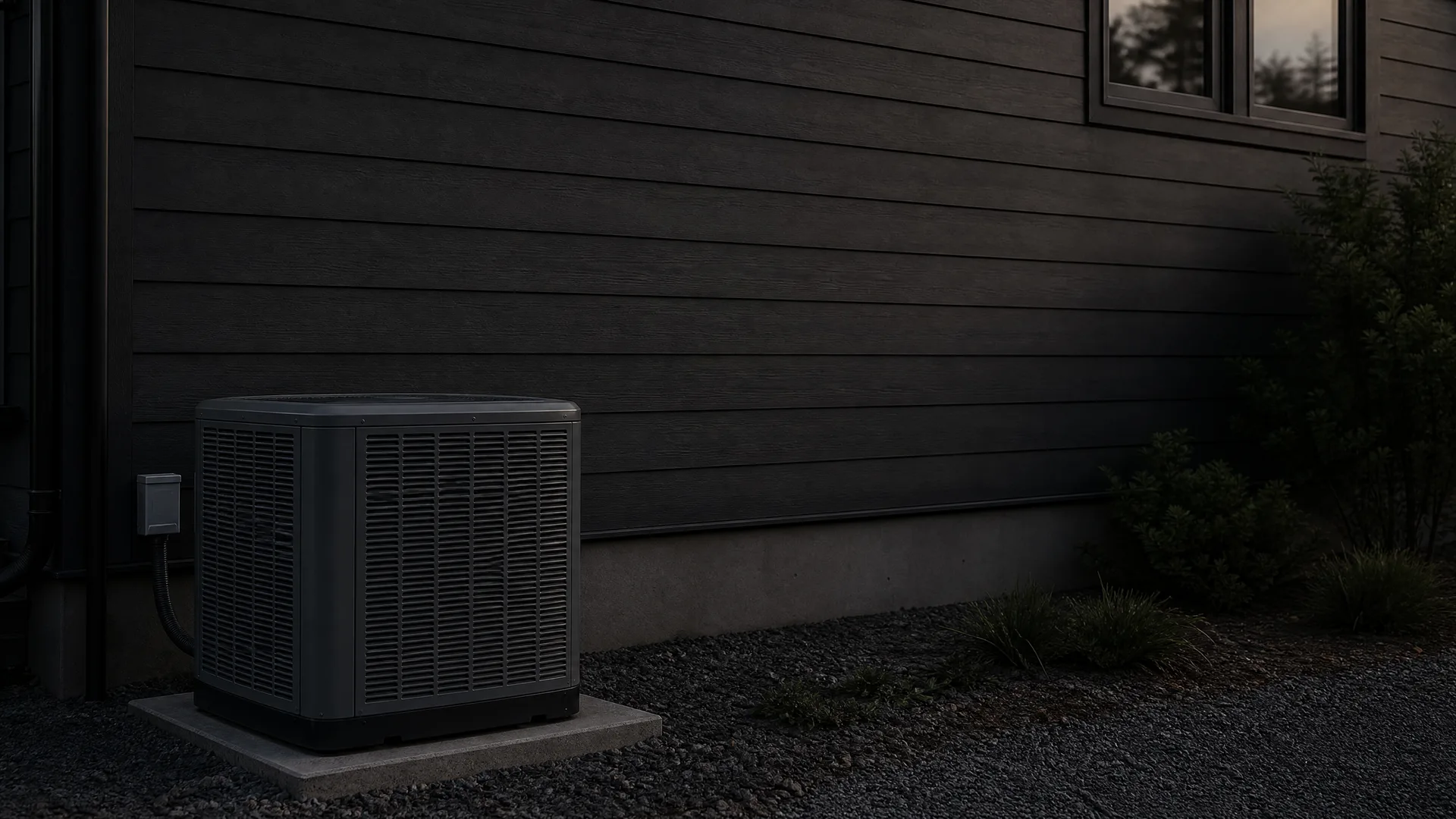
On most Kansas winter days, this is what your heat pump looks like: clean grilles, a steady hum, the fan turning. Below freezing or above it, it's pulling heat out of the air and sending it inside without any strain on the unit itself.
Backup carrying the load
On the coldest nights, the outdoor unit works harder and the backup heat kicks in to make up the difference. A dirty, grime-caked coil like this makes that harder on the system, since it cuts down how much heat the unit can pull from the air in the first place.
A heat pump that's struggling to keep a Kansas house warm usually isn't broken, it's just sized or set up wrong for what January actually does here. That's a judgment call, not a part swap, and it matters who's making it. Most homes around you heat with gas, so a contractor who installs heat pumps in this area is working against the grain a bit, sizing the unit and the backup heat for a house that could have had a furnace instead. That's exactly the experience you want on the job. A local installer who does this every winter knows how these systems behave once the temperature drops and what tends to get undersized when someone's in a hurry. Sending the request means one contractor who fits your situation looks at it, not a handful of companies competing for the call. If your heat pump isn't holding up, that's worth getting in front of before the next cold stretch.
What the balance point means
Every heat pump has a balance point, the outdoor temperature below which it can no longer pull enough heat from the air to match what the house is losing. For most systems that's somewhere in the teens or low twenties. Above it, the heat pump carries the whole load by itself. Below it, backup heat fills the gap, either strip heat built into the air handler or a gas furnace working alongside it. The balance point isn't a flaw. It's just where the physics of pulling heat from cold air stops being enough on its own, and the system is built to hand off at that point.
Why sizing decides how often
A heat pump sized to the house will spend most of January above its balance point, running on its own. One sized too small reaches that handoff point sooner and leans on backup heat more often than it should, even on days that aren't that cold. That's why the sizing matters more than the brand or the model. It's figured from how much heat the house loses, not just its square footage, and a contractor who works on these year-round can look at a January utility bill or run a load calculation and tell you where that balance point should sit for your house specifically.
Before you get your heat pump installationAfter you get your heat pump installation
If your heat pump is undersized or set up wrong for Kansas winters, you'll feel it in the house before you see it on the utility bill: rooms that won't quite get warm, a thermostat that never seems to catch up, backup heat running more hours than it should.
That backup heat costs more to run than the heat pump itself, so a system that leans on it too often is quietly raising your bill all winter, not just on the coldest nights.
Power costs 14.44 cents per kilowatt-hour statewide
At 14.44 cents per kilowatt-hour, every hour your backup heat runs costs more than the hour before it, since that strip heat draws straight electricity with none of the efficiency a heat pump gets from outside air. A system sized right for your house leans on backup heat less, which keeps more of your winter bill at the heat pump's rate, not the backup's.
EIA-861 2025 statewide residential average
The rust caught your eye before anything else, a thin line of it along the base of the unit where the metal meets the pad. It's a mild spring afternoon, warm enough that the heat pump sits quiet in the side yard, no reason to run. You crouch down to look closer. The casing's faded on the side that gets the afternoon sun, and the fan blades have a little give to them now when you nudge the grille. It got through another January, but you're already thinking about the next one, how many more cold snaps this unit has in it before a part gives out on the one week you need it most.
A heat pump sized and installed right will keep a Kansas house warm through January, backup heat picking up only on the days that call for it. That's the whole answer. What decides whether your house actually works that way is the install, the sizing, the balance point set for your home instead of a generic one. A local contractor who installs these every winter around you has seen which setups hold up here and which ones leave a house cold in one bedroom and running strip heat too often everywhere else. You'd be matched with one contractor, not several, someone licensed to do this work in Kansas and familiar with what tends to go wrong in homes like yours when winter actually tests the system. No guessing which company to call back or sorting through competing quotes. Once you send the form, the search is done. You know where you stand: your heat pump can handle a Kansas winter, and getting it set up to do that is the next step, not a mystery.