






A grey outdoor HVAC unit mounted on a concrete pad beside the beige-sided exterior wall of a suburban house.

Heat Pump Repair in Andover, KS

Tell us about the job

Takes about a minute. No obligation.

RepairHeat PumpButler County, KS
Step 1 of 2

What ZIP code is the job in?

A heat pump here runs in two directions most of the year, and both sides get tested. Summer air averages a 65°F dew point through June, July and August, which is heavy air for the outdoor coil to pull moisture from. Butler County also logged 166 hail events and 190 damaging wind events between 2015 and 2024, and the outdoor unit sits outside through all of it. Coils get pitted, fins bend, cabinets take hits you can't always see from the yard. None of that means the unit is done. It means a noise or a weak cycle probably traces back to something specific, and it's worth having a contractor find out what before paying to replace a part that isn't the problem.

7 months
October through April, your system heats
5 months
May through September, it cools
24°F
the average winter night it heats against
89°F
the average summer afternoon it cools against
Isometric illustration of a cutaway single-story house showing interior ductwork and an air handler connected by lines to an outdoor condenser unit on a pad beside the building.
Your system heats October through April and cools May through September.

NOAA nClimDiv, 1991–2020 normals

Butler County logged 379 severe weather events between 2015 and 2024, including 190 damaging wind events and 166 hail events.

An outdoor heat pump unit sits through all of it, so a unit that still runs can still be carrying hidden damage.

Your heat pump switches jobs twice a year, and that's when it fails

Cooling runs May through September
Heat runs October through April
190 damaging wind events from 2015 to 2024
Most of these homes aren't old enough for this to be a lost causeHalf the homes in Butler County were built in 1984 or later.

Electricity in Butler County runs about 14.87 cents per kilowatt-hour, and a heat pump that's struggling pulls more of it every cycle. A weak capacitor makes the compressor work harder to start. A low charge makes it run longer to hit the same temperature. Either one shows up on the bill before it shows up as a breakdown. A unit that's short-cycling or running constantly is spending power on top of whatever's already wrong with it. Getting it looked at now costs less than paying that difference all summer.

Find out what's actually wrong before it gets worse

Whatever is making noise or running weak likely traces back to something specific: a hit coil, a bent fin, a part that's been working too hard. A contractor can find the actual cause and fix that, instead of guessing.

Find a contractor
A gray heat pump outdoor unit mounted on a concrete pad next to a residential house with lap siding and stone accents.

A newer system is worth fixing first

If your heat pump came with the house, there's a good chance it's not old enough to be the problem. Parts wear faster here, but on a newer system that usually means a worn capacitor or a dirty coil, not a unit at the end of its life. That's a repair, not a replacement. Even on a mobile home, which still accounts for a share of the county's housing, the same logic holds: something specific is wearing out, and a contractor can find it and fix it without tearing into a system that still has years left in it.

What you can check yourself

Look at the outdoor unit first. Leaves, grass clippings or a fallen branch against the coil block airflow, and the fix is just clearing space around it. Check that the indoor filter isn't clogged. A dirty filter starves the system of airflow and can make it ice up or blow warm. Inside, check the thermostat is set to the mode you want and the batteries aren't dying. At the breaker panel, see if either the indoor or outdoor breaker has tripped. None of this takes tools, and any of it can be the whole problem.
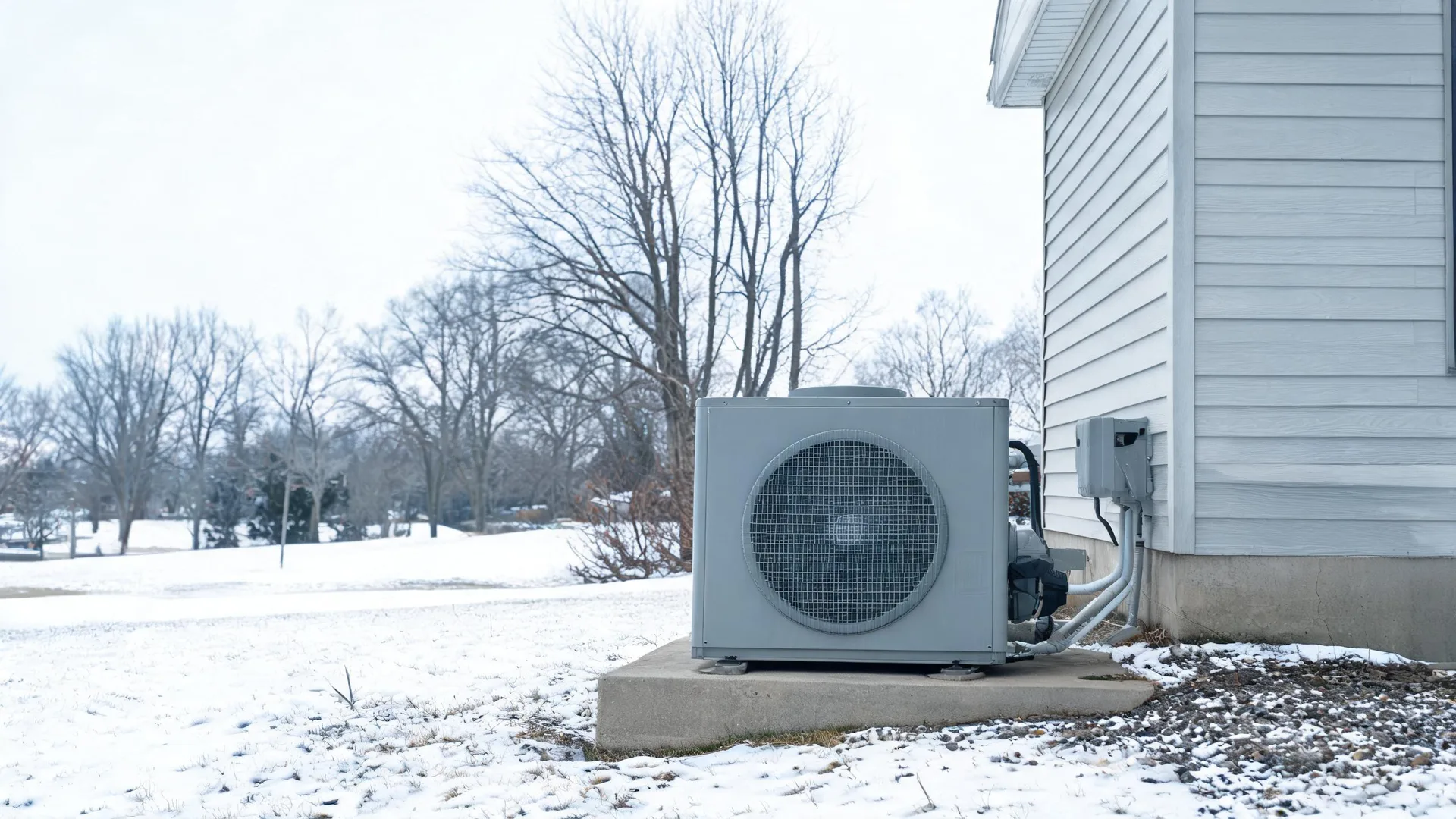
What to leave alone

Don't pull the access panel on the outdoor unit or touch anything inside the cabinet. The capacitor in there can hold a charge even with the power off. Don't add refrigerant or try to top off a line, that's a sealed system and handling it without the right equipment and license isn't something to do yourself. If you see ice on the coil or the lines, don't chip it off. Switch the system to fan only or off and let it melt on its own, then call. Forcing ice off can bend fins or crack the coil underneath.

A heat pump that needs attention usually tells you before it quits outright. In summer, warm air coming out of the vents instead of cool means something is off with the cycle, not just a thermostat setting. In winter, air that feels cool rather than warm can be normal for a heat pump during defrost, but if it stays that way, the system isn't keeping up. Listen for a hard clunk or a hum at startup that wasn't there before. That's often a capacitor or compressor struggling to get going. Ice on the outdoor coil when it shouldn't be there, short cycles where the unit shuts off before the house reaches temperature, or a unit that runs constantly and never quite catches up are all signs worth calling in. None of these mean the whole system is shot. They mean one part is working harder than it should, and that's worth finding before it takes the rest of the system down with it.

A bent fin or a pitted coil doesn't always stop the system right away. It just makes it work harder until something gives. If the outdoor unit took a hit from hail or a falling branch in a recent storm and it's still running, that's not proof it came through fine. Butler County had 14 tornadoes and 8 winter storms between 2015 and 2024, on top of the wind and hail already mentioned, so a unit that's sat outside through a few years here has likely taken something. Worth having a contractor check the cabinet and coil even if the heat pump is still keeping up, especially after a storm that left branches or hail in the yard.