A row of two-story houses with light siding and dark gabled roofs behind a large mown lawn, with a chain-link fence at left and mature leafy trees overhead.

Heat Pump Repair in Arkansas City, KS

Tell us about the job

Takes about a minute. No obligation.

RepairHeat PumpCowley County, KS
Step 1 of 2

What ZIP code is the job in?

The air itself is a load

Summer dew points here average 66°F across June, July and August. That is heavy, damp air, and a heat pump has to wring moisture out of it before it can touch the temperature. That pull adds strain a machine in a drier place never has to deal with.

Rule out the weather before the part

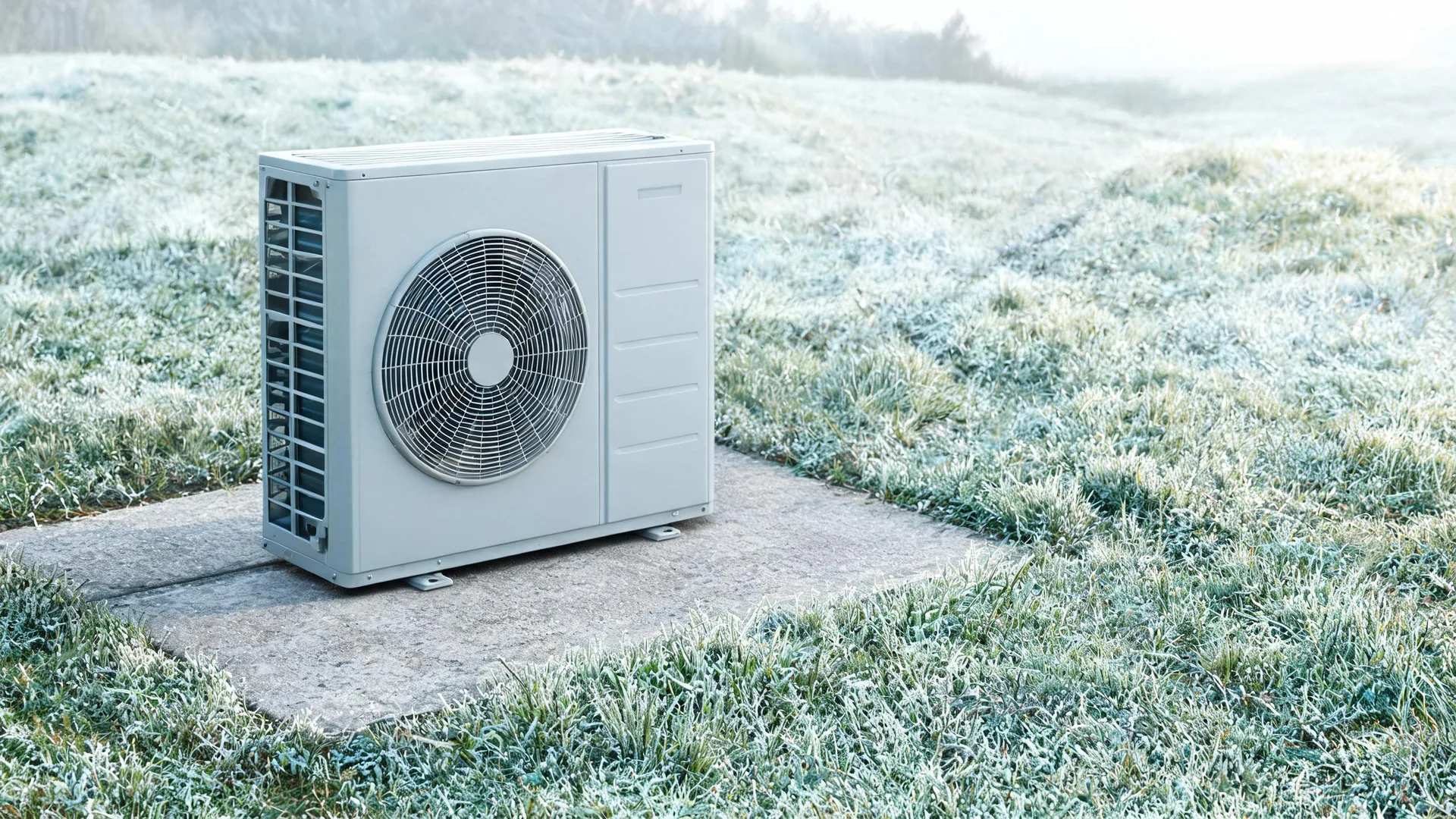
Cowley County logged 123 damaging wind events and 125 hail events between 2015 and 2024. Either one can hit the outdoor unit's coil or fan without leaving a mark you'd notice walking by. A repair that skips checking for that damage can end up replacing a part that was never the real problem.

7 months
October through April, your system heats
5 months
May through September, it cools
25°F
the average winter night it heats against
89°F
the average summer afternoon it cools against
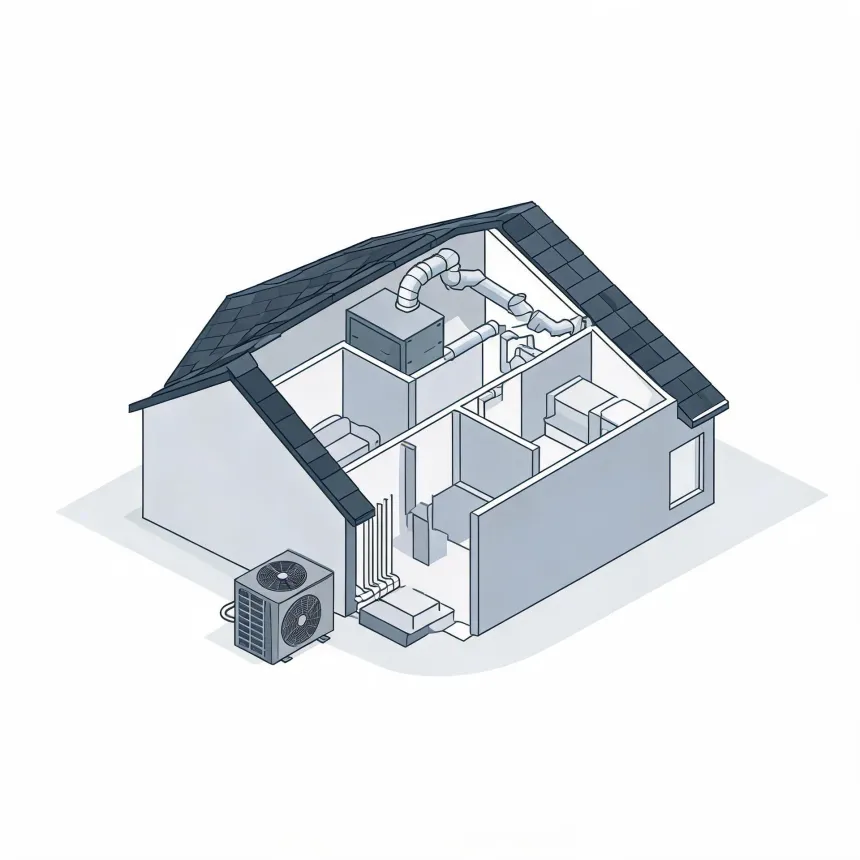
Isometric line illustration of a cutaway house showing interior rooms, an air handler with ductwork in the attic space, and an outdoor condenser unit beside the exterior wall.
Your system heats October through April and cools May through September.

NOAA nClimDiv, 1991–2020 normals

Half the homes in Cowley County were built in 1961 or earlier.

A heat pump in a house that old is more likely nearing the end of its own life, not just due for a repair.

Seven months of heat, five months of cooling, almost no time off

Cooling runs May through September
Heat runs October through April
Climate zone 4A

Cowley County saw 275 severe weather events between 2015 and 2024. That includes 18 tornadoes and 8 winter storms with heavy snow or ice. The outdoor unit sits outside through all of it, with no wall between it and whatever blows through. A heat pump can keep running after a storm and still have a bent fin, a cracked line or a fan blade knocked out of balance. Statewide, 19% of Kansas households lost power for a day or more in 2024, and a heat pump does nothing for heat or hot water until that power is back. If your system has been through a storm, have it looked at even if it still turns on.

Have the cause found, not just the part that failed

Wind and hail have hit this county often enough to reach an outdoor unit without leaving a dent you'd see. Before anything gets replaced, have it checked for that kind of damage. A repair that starts there is one that actually lasts.

Find a contractor
A man in a dark cap, dark long-sleeved shirt and tan work pants walks up porch steps toward a red front door, carrying a worn canvas tool bag.
A gray heat pump outdoor unit mounted on a concrete pad next to the stone-accented exterior wall of a house.

Find out how old this unit really is before you fix it

If your heat pump came with a house built decades ago, the unit itself has probably been swapped out at least once since then. What matters now is how old this one actually is, not how old the house is. Find the install date. It is often on a sticker inside the outdoor cabinet, or on paperwork from the last service call. A repair makes sense on a machine with plenty of life left in it. A machine already old and failing is a different question, and worth asking before any money goes into a fix.

A small fault asks the rest of the system to cover for it

When a heat pump loses refrigerant charge or a sensor starts reading wrong, the system does not just run at half strength. Other parts pick up the slack. The compressor runs longer and hotter trying to reach the setpoint. A low charge that goes unfixed can let the compressor run with refrigerant that is not doing its job, and a compressor is the one part in the system that is not cheap to replace. The sooner that strain stops, the better its odds.

Ice and water don't stay where they start

A heat pump that is low on charge or short on airflow can start icing its outdoor coil, even when it is only moderately cold out. Keep running it and that ice builds until airflow through the coil is blocked almost entirely, which makes the system work harder still. Indoors, a clogged filter or blocked drain can back water up into places it was never meant to reach, including onto the furnace or air handler underneath. Shutting it off when something looks or sounds wrong stops that chain before it reaches the next part.

A heat pump that needs attention usually says so before it quits outright. It might run long stretches without ever hitting the set temperature, or blow air that feels barely warm or barely cool, like it's not really trying. Listen for a new sound: a clicking that keeps repeating instead of stopping after startup, a hard clunk when it switches between heating and cooling, a hiss that was not there before. Watch the outdoor unit too. Frost building up on the coil when the weather is only mildly cold is not normal and will not clear on its own. Short cycling, where it kicks on and off every few minutes instead of running a full cycle, wears on the compressor every time it happens. Any of these is worth a call before it becomes the part that fails completely.

If your heat pump went through one of those storms, the move is simple. Get the outdoor unit inspected before you assume it's fine, even if it's heating or cooling the house right now. Ask whoever comes out to look specifically at the coil fins and the fan blade, since those are what wind and hail reach first. A bent fin or an unbalanced blade can run for weeks before it turns into a bigger repair. If the house lost power during one of those outages, the heat pump should have come back on by itself once power returned. If it didn't, that's worth a call on its own, separate from any storm damage.