





A gray outdoor HVAC condenser unit mounted on a concrete pad in the front yard of a two-story suburban house.

Heat Pump Repair in Atchison, KS

Tell us about the job

Takes about a minute. No obligation.

RepairHeat PumpAtchison County, KS
Step 1 of 2

What ZIP code is the job in?

A heat pump doesn't fail all at once. It wears down, and the question is whether what's wrong is one part or the whole system getting tired. A bad capacitor, a stuck reversing valve, a failed defrost sensor, those are worth fixing no matter the age of the unit, because the compressor and coils are still sound underneath. What changes the math is a refrigerant leak in the coil itself, or a compressor that's starting to go. Once those are failing, you're paying to patch something that's already breaking down somewhere else. A tech who's been in the cabinet can usually tell you which kind of problem you've got, and that matters more than how old the unit is.

7 months
October through April, your system heats
4 months
June through September, it cools
21°F
the average winter night it heats against
86°F
the average summer afternoon it cools against
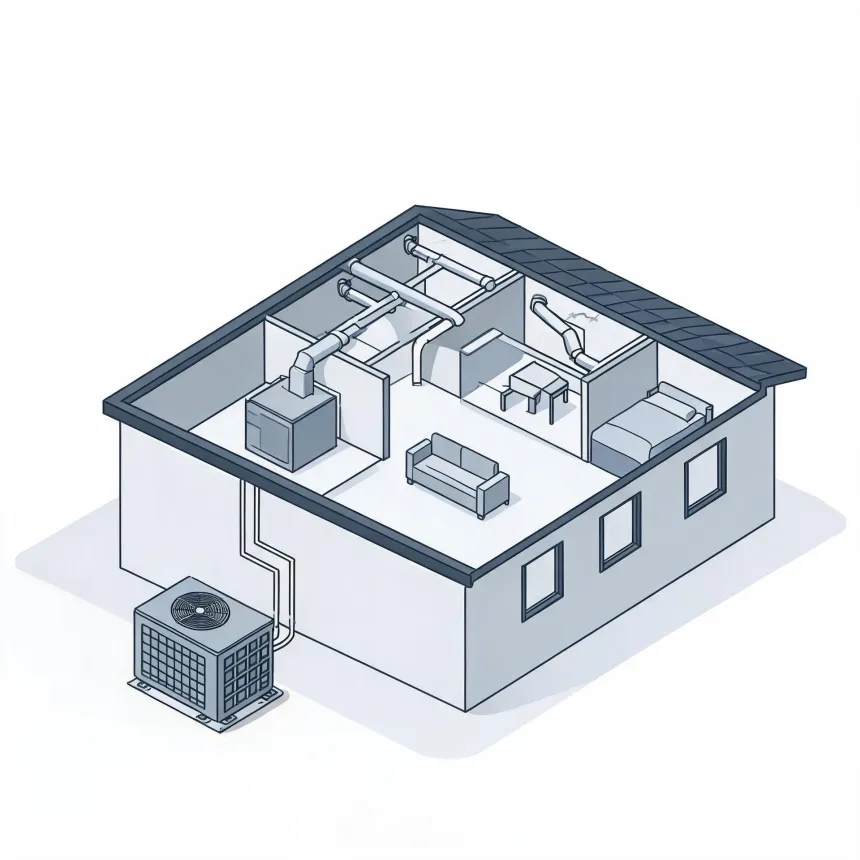
Isometric line illustration of a cutaway single-story house showing interior rooms with ducted air distribution, an indoor air handler, furniture, and an outdoor condenser unit connected by lines outside the wall.
Your system heats October through April and cools June through September.

NOAA nClimDiv, 1991–2020 normals

Electricity in Kansas ran 14.15 cents a kilowatt-hour in 2024.

A heat pump that's stuck on backup heat or short-cycling costs real money every day it runs that way.

Half the homes here are old enough that this repair could be the last one worth paying for

Half the homes here were built by 1968
Power costs 14.15 cents a kWh statewide
Climate zone 4A

The signs usually show up at the thermostat before they show up anywhere else. Heat that never quite catches up to the setting, so the house runs a couple degrees cold all day. Air blowing from the vents that feels cool instead of warm, which often means the system has slipped onto backup heat because it can't get the job done on its own. A unit that short cycles, running for a few minutes, shutting off, starting again, instead of settling into a steady run. Listen for it too. A clicking that repeats every time it tries to start, a hum with no fan turning, a new rattle from the outdoor unit that wasn't there before. Any of those is the system telling you something failed before it tells you the whole thing is failing.

Get the usual fix

Nothing about this area is especially hard on it. It's most likely the usual problem with the usual fix.

Find a contractor
A man in a cap, dark jacket and tan work pants carries a worn duffel bag as he steps up onto a porch toward a red front door, with a potted shrub beside the entry.
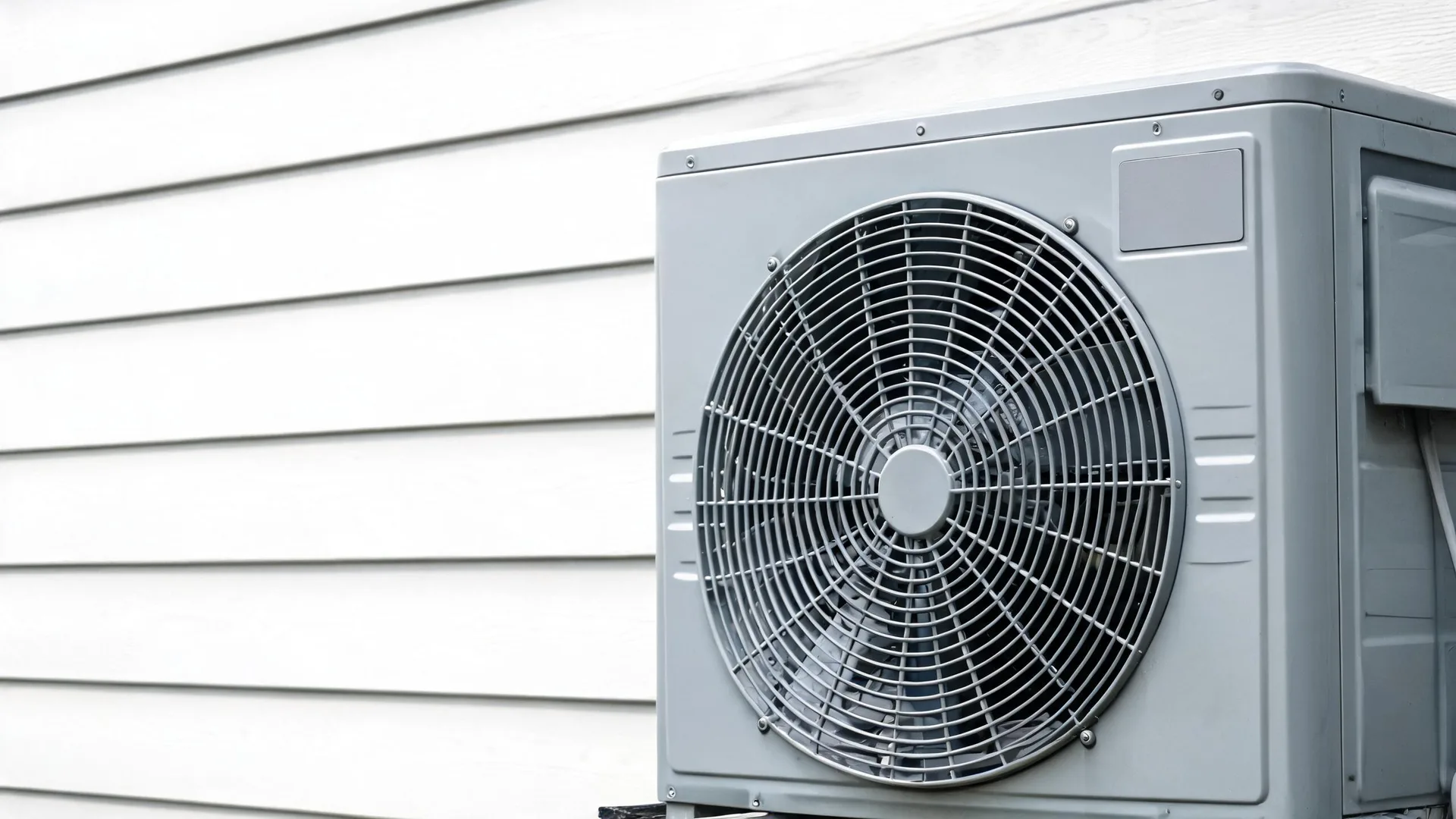
A gray outdoor HVAC unit mounted on a concrete pad beside a house with gray lap siding and a stone foundation.

Running it another week can turn a small problem into a bigger one

A heat pump that's struggling doesn't just hold steady until someone gets to it. Keep running it with a weak capacitor and the compressor pulls harder on every start, until it strains a winding that was fine a month earlier. Keep running it low on refrigerant and the compressor runs hotter than it should, because refrigerant is what carries heat away from it. Ice on the outdoor coil that isn't clearing in defrost builds on itself, blocking more airflow each cycle until the system can't move heat in or out. None of that happens the first day. It happens on the day after the day someone noticed the unit sounded off and figured it could wait.

What you can check yourself

Look at the outdoor unit. If it's caked in ice outside of a defrost cycle, or the fan isn't spinning while the unit is clearly running, that's worth noting. Check the thermostat is set to heat and the temperature is actually above room temp. Go to the breaker panel and look for a tripped breaker before assuming the worst. Change the air filter if you can't remember the last time you did. A dirty filter chokes airflow and can be the whole problem.
What to leave alone

Don't open the outdoor cabinet or touch the refrigerant lines. Don't pour water on the coil to melt ice faster, that can crack it. Don't keep flipping the breaker back on if it trips a second time, that's the system telling you something's wrong downstream. These are jobs for someone who's opened that cabinet before, not a weekend fix.

Most heat pump failures trace back to a handful of parts. The reversing valve sticks and the system heats when it should cool or won't defrost when it should. A capacitor weakens and the compressor or fan motor struggles to start, pulling harder every time until something gives. The defrost board or sensor fails and ice builds on the outdoor coil instead of clearing on schedule. Refrigerant leaks slowly from a coil joint, and the system keeps running but moves less and less heat as the charge drops. Contactors pit and stick from years of switching, and a fan motor or blower motor wears out after enough hours turning. None of these mean the whole system is done. They mean one part gave out before the rest.

A diagnostic visit starts outside, at the unit itself, before any panel comes off. A tech will usually watch it run a full cycle if they can, because some problems only show up when the system switches between heating and defrost. Readings come next. The pressure on both sides of the line. The temperature of the air going in against the air coming out. The amps the compressor is actually pulling while it runs. Those numbers point to a part faster than guessing does. A failing capacitor shows up as a motor pulling more amps than it should. A low charge shows up as a pressure lower than it ought to be for the conditions. Only once the numbers point somewhere does the cabinet come off and the actual part get tested or swapped.