




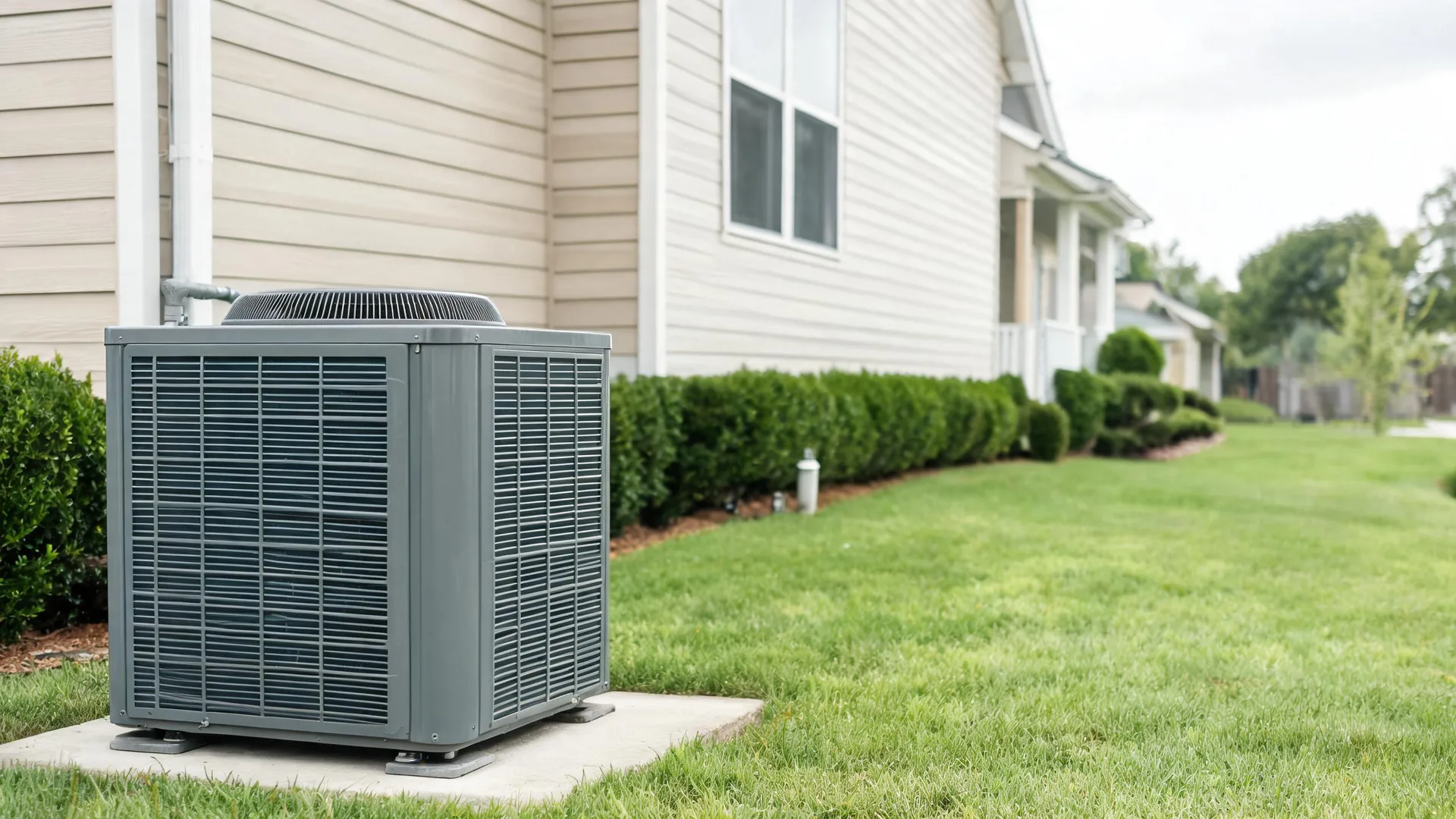
A grey residential air-conditioning condenser unit mounted on a concrete pad beside a house, photographed at sunset.

Heat Pump Repair in Emporia, KS

Tell us about the job

Takes about a minute. No obligation.

RepairHeat PumpLyon County, KS
Step 1 of 2

What ZIP code is the job in?

A heat pump around Emporia earns its keep in the summer humidity. The dew point averages 65°F across June, July and August, which is the number that tells you how heavy the air feels, and the system has to pull that moisture out along with the heat. That is steady work on the coil and the compressor, day after day. The outdoor unit sits outside exposed to real weather here too. Lyon County has seen 90 damaging wind events and 85 hail events between 2015 and 2024. A unit running hard through weather like that tends to show wear sooner than one in a calmer spot. When it starts acting up, that is usually what is behind it, and a proper diagnosis is the only way to know if a fix will hold.

7 months
October through April, your system heats
4 months
June through September, it cools
23°F
the average winter night it heats against
88°F
the average summer afternoon it cools against
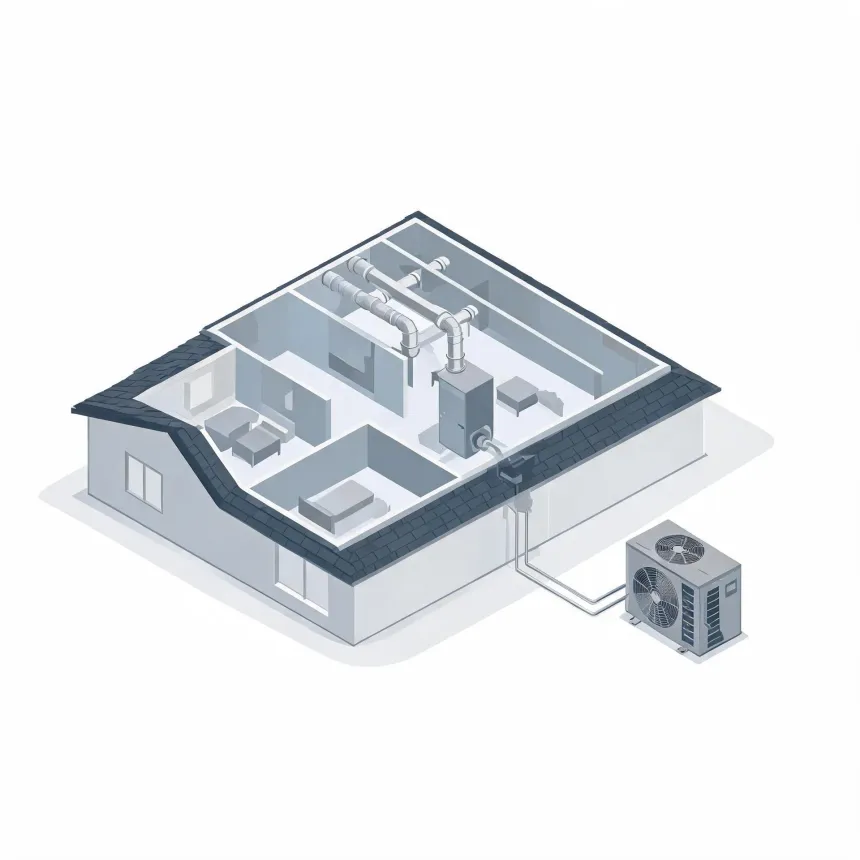
Isometric cutaway illustration of a single-story house showing interior rooms with ductwork, a furnace or air handler, and refrigerant lines running outside to a condenser unit on a pad.
Your system heats October through April and cools June through September.

NOAA nClimDiv, 1991–2020 normals

Half the homes in Lyon County were built in 1970 or earlier.

A heat pump in a house that old is more likely nearing the end of its working life.

This county sees more storms than most, and this unit sits outside for all of them

194 severe weather events from 2015 to 2024
19% of homes statewide lost power a day or more in 2024
90 damaging wind events from 2015 to 2024

Heat here switches over in October, and from there this unit runs straight through to April. That is seven months of work once the cold sets in, with overnight lows averaging 23°F across December, January and February. A part that is already worn tends to give out early in that run, often in the first cold snap rather than the dead of winter. The same thing happens in reverse come June, when the system switches to cooling after sitting idle since September. If yours is acting up now, that is likely the weak spot showing itself before the season asks for everything it has.

Find out what's wrong before you fix it

Get the problem looked at before you decide anything else. A unit that has taken this much wind and hail, on top of a full summer and winter workload, can be acting up for more than one reason. A proper diagnosis tells you what's actually wrong and whether a repair will hold.

Find a contractor
A white mini-split heat pump outdoor unit mounted on a concrete pad beside a gray-sided house, surrounded by gravel and green shrubs.

How old is the one you have

If your heat pump came with the house, ask the contractor how much life is left in it before you pay for the repair. A unit that needs a real fix, a compressor or a reversing valve, is worth weighing against the cost of starting fresh. One with a bad capacitor or a blown fuse is a different conversation. Either way, get the age and the diagnosis before you decide, not after.

What you can check yourself

Look at the outdoor unit first. If leaves, grass clippings or ice are packed against the coil, clear them away so air can move through it. Check that nothing is stacked against it or planted too close. Inside, pull the filter and hold it up to light. If you can't see through it, swap it or clean it. Check your thermostat batteries and make sure it's set to the mode you want, heat or cool, not just fan. Look at your breaker panel for a tripped switch. These take a few minutes and rule out the simplest causes before anyone comes out.
What to leave alone

Don't take the outdoor panels off or touch anything inside the unit. Don't pour water or anything else on a coil you think is frozen, and don't try to chip ice off it. If the system is making a grinding, screeching or banging sound, shut it off at the thermostat rather than let it keep running. Refrigerant lines, the compressor and the reversing valve all need a gauge set and training to work on safely. Calling with what you checked and what you heard or smelled gets a contractor to the real problem faster than guessing at a fix yourself.

A heat pump that's struggling doesn't fix itself by staying on. If the compressor is low on refrigerant, running it longer just makes it work harder to move heat that isn't there, and that strain is what burns a compressor out for good. A failing capacitor makes the motor labor to start each cycle, and every extra cycle under that strain shortens what's left of its life. Ice on the outdoor coil is another one. A unit that can't defrost properly and keeps running will pack more ice on with every cycle, and ice on the coil blocks the airflow the whole system depends on. None of these get better with time. Shutting it off and getting a contractor out stops a bad part from taking a good one down with it.

Electricity here runs 14.73 cents a kilowatt-hour. A heat pump that's low on refrigerant or losing capacitor strength pulls more power to do the same job, and that shows up on every bill until it's fixed. This isn't a unit you want limping along through a long summer or a cold winter. The longer a bad part keeps forcing the system to work harder, the more it costs you before it finally quits.