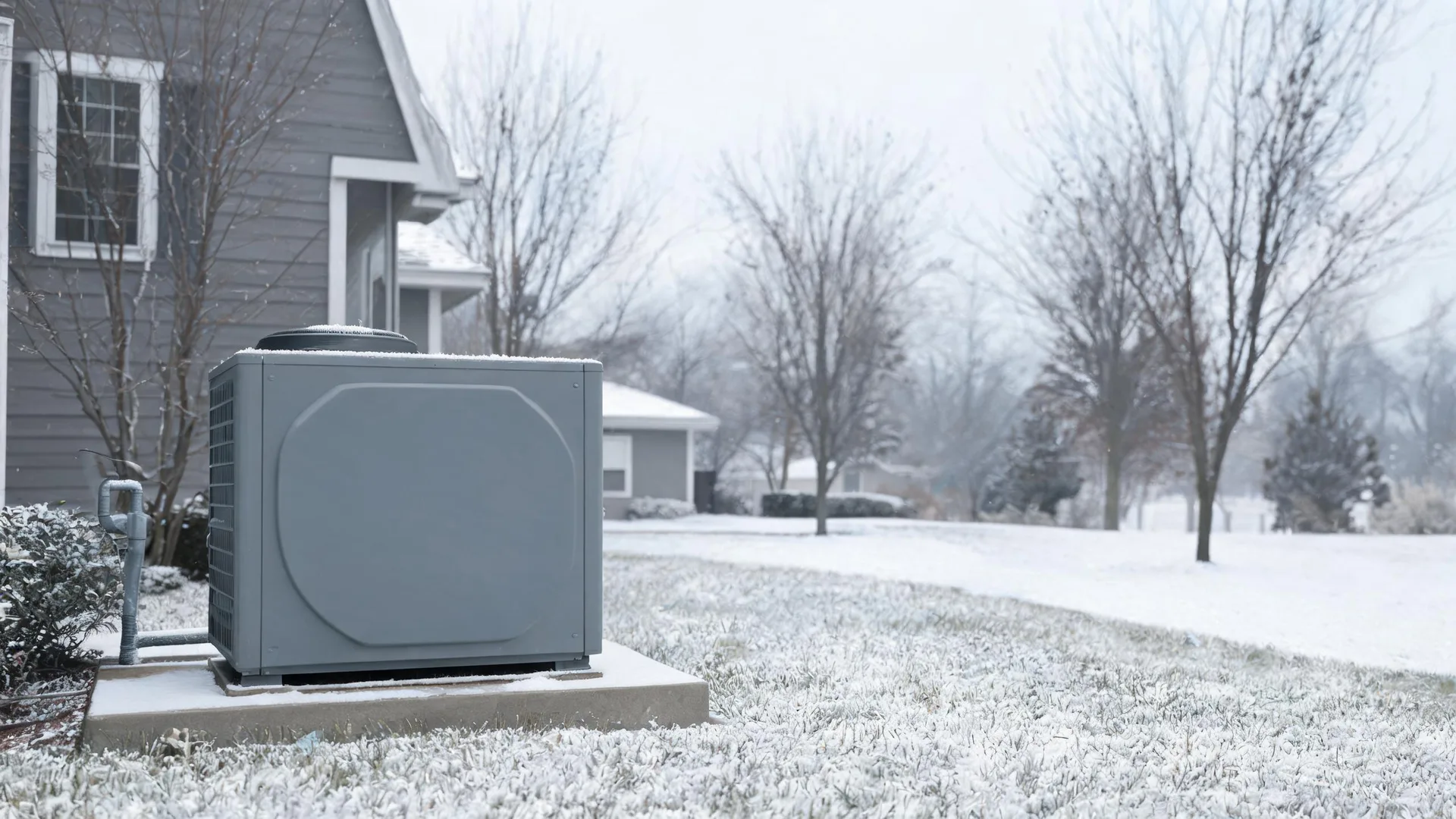
October is when it gets tested
Your heat pump switches over to heating in October and runs that way through April. Whatever was borderline in spring shows up fast once it has to pull heat from cold air instead of just moving warm air around.
Takes about a minute. No obligation.
Your heat pump switches over to heating in October and runs that way through April. Whatever was borderline in spring shows up fast once it has to pull heat from cold air instead of just moving warm air around.
A heat pump that struggled at the end of last winter doesn't fix itself over the summer. If it's short cycling, running constantly, or blowing cool air once October hits, that's a part that was already failing, not bad luck.
NOAA nClimDiv, 1991–2020 normals
A heat pump that blows air but doesn't change the temperature much is usually low on refrigerant or stuck in the wrong mode.
Ice building up on the outdoor unit past the point where the defrost cycle clears it means that cycle isn't working anymore.



Problems tend to show up in the first weeks of the season, when the load hits a part that was already weak.
Find a contractorCheck the thermostat first. Make sure it's set to heat, not cool, and the temperature is set above room temperature. Go outside and look at the outdoor unit. Clear away leaves, mulch or anything piled against it, the coil needs open air on all sides to pull heat from the air. If you see a thick layer of ice covering the coil rather than a light frost, that's worth noting for whoever comes out, but don't chip at it or spray it. Check your air filter and replace it if it's gray or clogged, a blocked filter starves the whole system of airflow. Walk through the house and check that supply vents are open and not blocked by furniture or rugs. Look at the breaker panel and make sure the breakers for the outdoor unit and the air handler haven't tripped. If the system is running but the air coming out doesn't feel warm, that's useful to say out loud when you call, it points away from a simple airflow problem and toward something electrical or in the refrigerant circuit.
When a compressor is weak, the system tries to make up for it by running longer to hit the setpoint. That extra run time is what finishes off a compressor that still had some life left if it had been shut down and looked at instead.
If the system is low on charge, running it doesn't move more refrigerant, there's just less to go around. The compressor keeps working against a charge it doesn't have, and that's how a slow leak turns into a seized compressor.
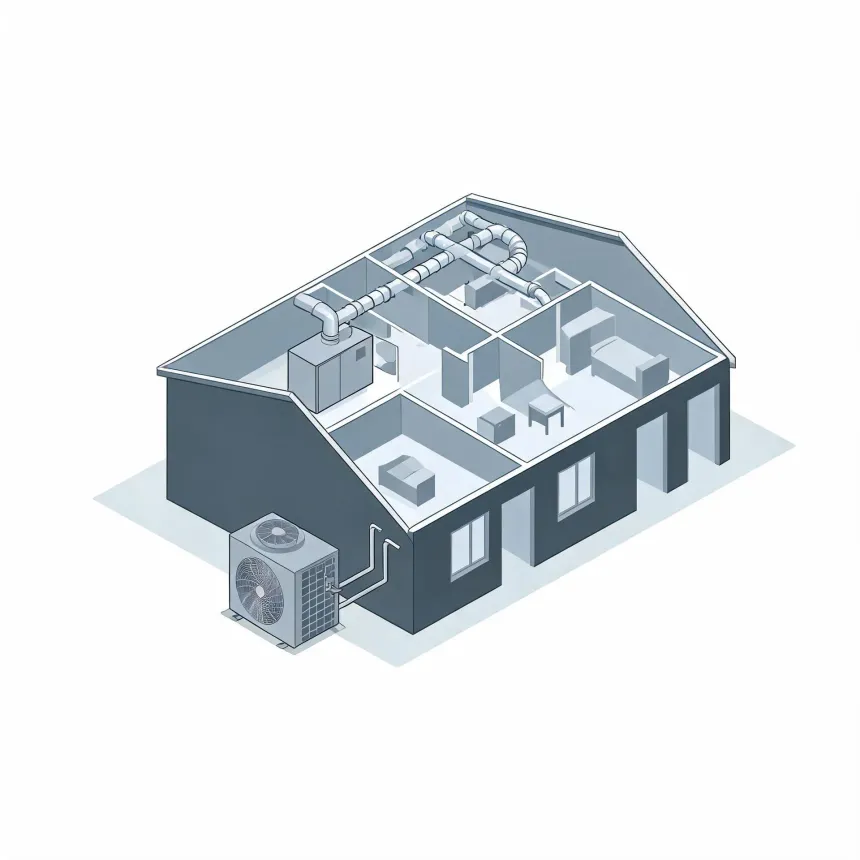
Most heat pump failures trace back to a handful of parts that do the hardest work. The reversing valve is the one that's unique to a heat pump, it's what switches the system between heating and cooling, and when it sticks, the system runs but blows the wrong temperature air. The defrost control board and sensor are another common failure point, since they're what tells the unit to melt off frost before it builds into a block of ice. Capacitors wear out on a schedule of their own, they weaken slowly until the compressor or fan motor can't get the jolt it needs to start. Contactors pit and burn from constant cycling until they stop making contact at all. None of these parts announce themselves ahead of time. They work fine until they don't, and the system tells you with ice, warm air that isn't warm, or a unit that won't start.
A diagnostic visit starts with the thermostat and the electrical panel, the same things you already checked, confirmed with meters rather than eyes. From there a gauge set goes on the refrigerant lines to read the charge and the pressures on both sides. A clamp meter checks what the compressor and fan motor are actually drawing against what they're rated for. The reversing valve gets tested by forcing a switch between heating and cooling to see if it actually moves. If the outdoor coil had ice on it, that gets looked at alongside the defrost board and sensor, since a board that won't trigger defrost looks the same from outside as a dirty coil. The visit ends with a cause, not a guess, because every one of those parts can be measured directly.