A black two-story house with a gabled roof and wood siding stands at the edge of a mown lawn, backed by tall deciduous trees, with a wire fence on posts at left.

Heat Pump Repair in Garden City, KS

Tell us about the job

Takes about a minute. No obligation.

RepairHeat PumpFinney County, KS
Step 1 of 2

What ZIP code is the job in?

This county sees serious storms

Finney County recorded 363 severe weather events between 2015 and 2024, including 252 cases of damaging wind, 75 hail events and 15 tornadoes. An outdoor heat pump unit sits outside through all of it, exposed to wind-driven debris and hail.

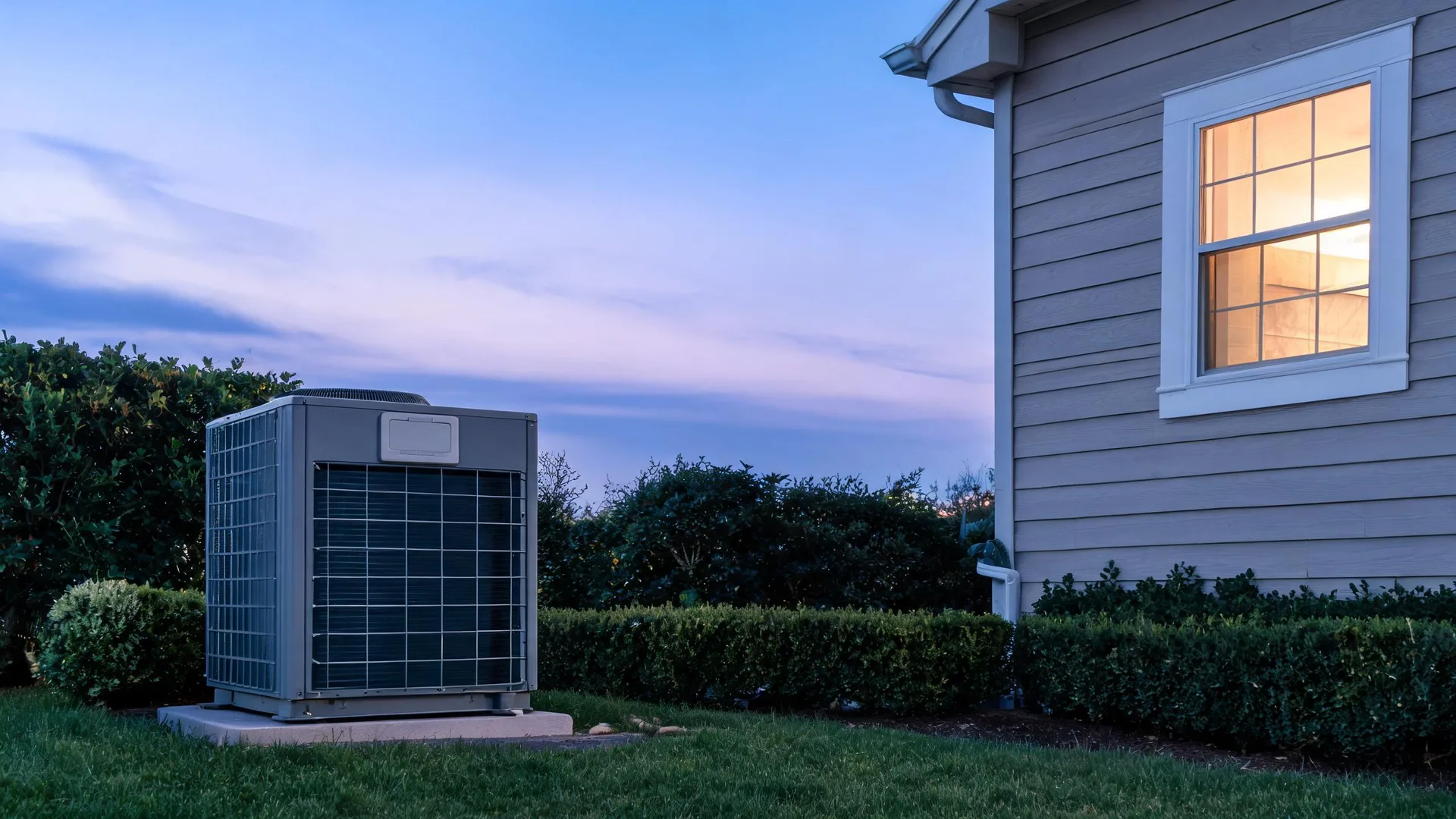
A unit can take a hit and keep running

Hail can dent the cabinet or bend the fins on the outdoor coil without stopping the heat pump right away. If a storm has come through, that's reason enough to have the unit looked at, even if it still seems to be working fine.

7 months
October through April, your system heats
4 months
June through September, it cools
20°F
the average winter night it heats against
91°F
the average summer afternoon it cools against
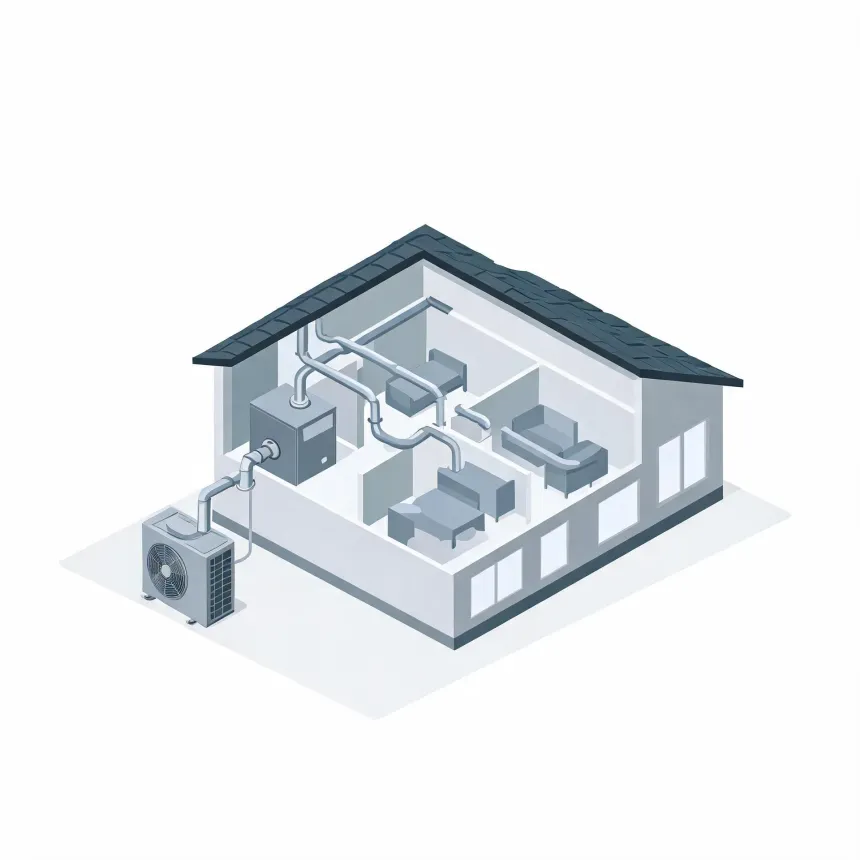
Isometric cutaway illustration of a single-story house showing an indoor air handler, branching ductwork through rooms with furniture, and an outdoor condenser unit connected by a line outside the wall.
Your system heats October through April and cools June through September.

NOAA nClimDiv, 1991–2020 normals

Finney County gets hit with damaging wind, hail and winter storms on a regular basis.

A heat pump that keeps running through 252 wind events and 75 hail events has earned a proper look when it starts acting up.

Heat pump trouble shows up fast when October heat or June cooling hits a part that was already weak

Cooling runs June through September
Heat runs October through April
252 damaging wind events from 2015 to 2024

If your heat pump is acting up now, a storm may not be the reason, but years of wind and hail take a toll you don't see from the kitchen window. A bent fin or a dented cabinet panel can sit there for months before it turns into a real problem. When a technician comes out for a repair, have them check the outdoor unit over, not just the part that's failing. Catching a weak spot now costs less than waiting for it to take the whole system down on a hard winter day.

Had a storm come through? Get the outdoor unit checked before it fails

A storm doesn't have to knock a heat pump out to leave a mark on it. If the outdoor unit has taken wind or hail this year, get it looked over now instead of waiting for the breakdown it causes later.

Find a contractor
A man in a cap, brown work jacket and tan cargo pants carries a canvas tool bag as he climbs wooden porch steps toward a red front door, with a potted evergreen shrub beside the entry.
A gray air-source heat pump mounted on a concrete pad next to a house with gray vinyl siding, surrounded by gravel and flanked by green shrubs and white hydrangea flowers.

A Heat Pump Works Year-Round, So Its Problems Don't Wait for a Season

A heat pump runs in both directions, so it never really gets a break the way a furnace or an air conditioner does sitting idle half the year. That means the reversing valve, the defrost board and the outdoor fan motor all see steady use across seasons instead of resting half of them. Short cycling is one of the first signs something is off: the unit kicks on, runs a few minutes, shuts off, then starts again. Ice building up on the outdoor coil that doesn't clear during the defrost cycle points to a bad defrost board or a stuck reversing valve. Warm air blowing when the system should be heating, or the outdoor unit running constantly without the house catching up, both mean something inside isn't switching the way it should. A heat pump that's losing refrigerant will often ice over even in mild weather, not just on the coldest days. None of these problems fix themselves, and running the system while they go on tends to wear out the compressor faster, which is the one part worth protecting most.

Check the obvious things first

Look at the thermostat before anything else. Make sure it's set to heat or cool as needed and the batteries aren't dead. Check the breaker panel for a tripped breaker, especially after a storm or power blip. Walk outside and look at the unit itself. Leaves, grass clippings or a plastic bag pulled against the fins will choke airflow and make the system struggle. Clear anything blocking the sides or top of the outdoor unit, and pull the air filter to see if it's packed with dust. A clogged filter can cause problems that look a lot like a bigger mechanical issue.

Know what not to touch

Ice on the outdoor coil or the refrigerant lines is a sign to call someone, not chip away at. Breaking ice off by hand can bend the fins or crack the coil underneath. Don't keep flipping the system between heat and cool trying to force a fix. If the outdoor fan isn't spinning but the unit is making noise or humming, leave it alone and get it looked at rather than reaching in. A heat pump has electrical and refrigerant components that aren't safe to open up without the right tools, and poking at them can turn a simple repair into a bigger one.

Most heat pump failures trace back to a handful of parts that wear out from steady use. The capacitor that gives the compressor and fan motors their starting push loses strength over time and eventually can't get them going at all. Contactors pit and burn from constant switching, which leaves the outdoor unit not starting or not shutting off when it should. The reversing valve, the part that switches the system between heating and cooling, can stick in one position after years of shifting back and forth. Refrigerant leaks develop slowly at fittings and joints, and a system low on charge has to work harder while cooling or heating less. Outdoor fan motors wear out from running in all weather, and a motor that's struggling makes the whole unit overheat and shut down to protect itself.

A repair is worth making when the part that failed is small next to the system around it. A new capacitor or contactor is a quick fix on a unit that's otherwise sound, and it buys that system years more. The question changes when the compressor itself is the problem, since that's the most expensive part to replace and the labor to get at it isn't cheap either. Age matters too, though not on its own. A heat pump that's needed two or three service calls in as many years is telling you something different than one that's never had trouble and just hit its first snag. If a technician finds the refrigerant circuit low and the leak is in a spot that's hard to reach, that's a different conversation than a leak at an accessible fitting. Ask what's failing and what else on the unit is close behind it before deciding which way to go.