





A row of two-story houses with gray siding and shingled roofs behind a wide mown lawn, with a chain-link fence at left and tree branches overhanging a pale sky.

Heat Pump Repair in Great Bend, KS

Tell us about the job

Takes about a minute. No obligation.

RepairHeat PumpBarton County, KS
Step 1 of 2

What ZIP code is the job in?

Barton County saw 295 severe weather events between 2015 and 2024. Hail showed up 146 times in that stretch, and damaging wind hit 126 times. A heat pump's outdoor unit sits right in the path of both. Hail can dent the cabinet and bend the fins that let it shed heat. Wind-driven debris does the same, or worse, to the coil and the fan. None of that always stops the unit from running right away. But a system that took a hit and still turns on isn't the same as one that's fine.

7 months
October through April, your system heats
4 months
June through September, it cools
21°F
the average winter night it heats against
90°F
the average summer afternoon it cools against
Isometric line illustration of a cutaway single-story building showing interior rooms, ceiling ductwork, an indoor air handler, and an outdoor condenser unit connected by refrigerant lines.
Your system heats October through April and cools June through September.

NOAA nClimDiv, 1991–2020 normals

Barton County's outdoor unit sits through hail and wind most of the country doesn't see.

A heat pump that's been through that needs a real diagnosis, not a guess.

Heat here comes on in October, after a heat pump sat idle all summer taking hail and wind

Cooling runs June through September
Heat runs October through April
126 damaging wind events from 2015 to 2024

Half the homes in Barton County were built in 1959 or earlier. A heat pump that came with a house that age has likely been replaced at least once, but if yours hasn't, it may be past due. Compressors and outdoor coils wear out over time even without a hard hit, and the hail and wind this county sees adds to that wear instead of starting fresh on a new unit. An older heat pump that breaks down isn't always worth a big repair bill. Worth asking the contractor straight out how many years they think it has left before you pay to fix it.

A heat pump that took a hit still needs a look

If hail or wind has come through recently and the outdoor unit still turns on, that's not the same as it being fine. Have it checked before the next storm finds the weak spot.

Find a contractor
A man in a dark long-sleeve shirt and tan work pants, seen from behind, steps onto a porch toward a red front door while carrying a worn leather tool bag, with a shrub in a red planter beside him.
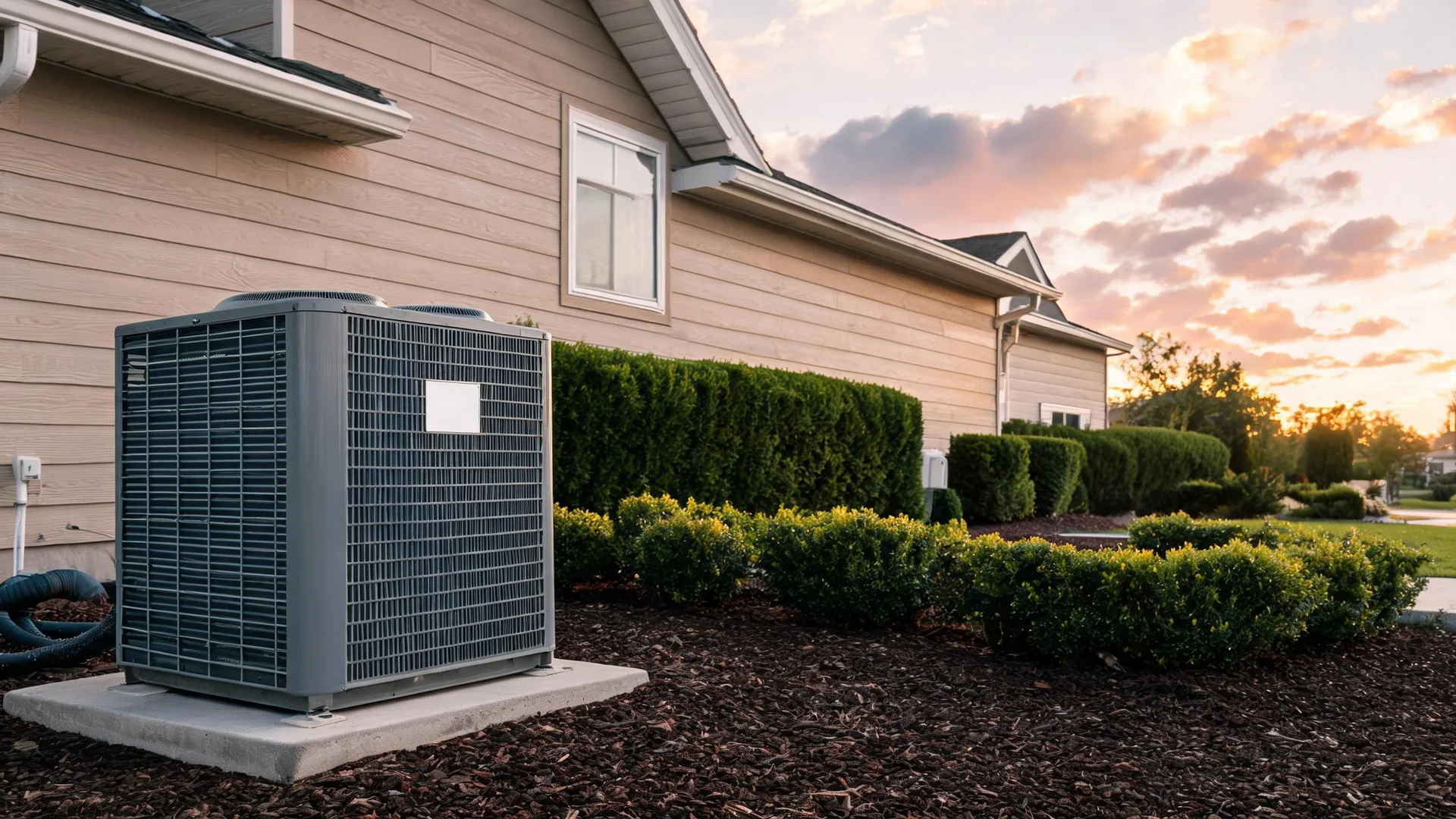
A gray heat pump condenser unit mounted on a concrete pad against the gray lap-siding exterior wall of a house.

Running through whatever the sky sends

The outdoor unit doesn't get a break between storms. One pass of hail can bend a fin, and the next one finds the spot already weak. If the heat pump is cycling on and off, blowing warm air, or tripping its breaker, a tech needs to see what's actually going on inside the cabinet, not just reset it and hope. A real diagnosis checks the coil and the fan for damage you can't see from the yard, not just whether the unit powers on.

A refrigerant leak gets worse with every hour it runs

A heat pump low on refrigerant still blows air, so it keeps running instead of shutting down. Without enough refrigerant, the compressor works harder to move the same amount of heat, and it runs hotter doing it. That heat breaks down the oil that's supposed to be protecting the compressor's moving parts. A leak that would have been a simple repair caught early can end with a compressor that has to be replaced.
A frozen coil needs the system off, not pushed harder

When airflow or refrigerant is low, the outdoor coil can start icing over even while the unit keeps trying to run. Ice on the coil blocks the airflow it needs even more, so the problem feeds itself. Left alone, the ice works into the fan and can crack it or seize the motor. Shutting the system off and calling for a diagnosis stops that chain before it reaches the fan motor.

A heat pump usually tells you something is wrong before it quits outright. It might run long stretches without ever reaching the temperature on the thermostat, or it might short cycle, kicking on and off every few minutes instead of running a normal stretch. Air coming out of the vents that's lukewarm instead of properly warm or cool often means the system is struggling to move heat, not just adjust it. A hissing or bubbling sound near the indoor or outdoor unit can mean refrigerant escaping somewhere in the lines. Ice on the outdoor coil when the unit is supposed to be heating is never normal, and it won't clear on its own. If the outdoor fan isn't spinning while the compressor is clearly running, that's worth a look before the compressor takes the damage instead.

A straight answer on age is worth more than a guess once the system is down. If the heat pump has never been replaced, a contractor can look at the compressor and coil and tell you whether this repair buys a few more years or just delays the next breakdown. That's a different question from whether it can be fixed. Ask for both answers before you approve the work, not just the price. A unit near the end of its life sometimes isn't worth saving even when the fix itself is simple.