





A snow-covered suburban street at dusk with lit houses and bare trees under a twilight sky.

Heat Pump Repair in Hays, KS

Tell us about the job

Takes about a minute. No obligation.

RepairHeat PumpEllis County, KS
Step 1 of 2

What ZIP code is the job in?

Hays doesn't go easy on a heat pump. Ellis County saw 141 hail events and 136 damaging wind events, and that's the warm months alone. The outdoor unit sits outside through all of it, coils exposed to hail, fan motor running through whatever the wind throws at it. Then winter storms move in on top of that, and the unit has to keep pulling heat from air that's working against it. A heat pump out here earns its wear. If yours is short cycling, running nonstop, or not putting out warm air like it used to, that weather history is probably part of why.

7 months
October through April, your system heats
4 months
June through September, it cools
20°F
the average winter night it heats against
90°F
the average summer afternoon it cools against
Isometric line illustration of a cutaway house showing interior rooms with furniture, ceiling ductwork, and an outdoor condenser unit connected by lines along the exterior wall.
Your system heats October through April and cools June through September.

NOAA nClimDiv, 1991–2020 normals

October is the first cold month here, and it's when a heat pump finds out what didn't survive summer.

A heat pump limping into fall usually needs a look before it has to work a full day on it.

Half the heat pumps in Hays are older than they look

Half the homes here were built by 1973
Climate zone 4A
Power costs 14.15 cents a kWh statewide

Get it looked at before it has to prove itself again

A heat pump that's been through this much hail and wind damage doesn't need guesswork, it needs someone to check what the weather actually did to it. A proper diagnosis finds the real cause instead of just the symptom, so the fix holds.

Find a contractor
A gray air-source heat pump mounted on a concrete pad next to a house with gray vinyl siding, surrounded by gravel and flanked by green shrubs and white hydrangea flowers.

Ask what's left in it, not just what's wrong

A heat pump installed when a lot of these houses were built has already put in decades of work. If yours came with the house, ask whoever looks at it how much life is left in it before you put real money into a repair. Sometimes the fix is small and worth doing. Sometimes the unit is old enough that the repair just buys a few more months.

A struggling compressor still tries to keep up

When a heat pump can't pull enough heat from the outdoor coil, it doesn't stop, it just runs longer to get the house to temperature. That extra runtime puts more hours on a compressor that may already be running on low charge or a weak start capacitor. A part that was marginal keeps working until it isn't.
Ice on the coil feeds on itself

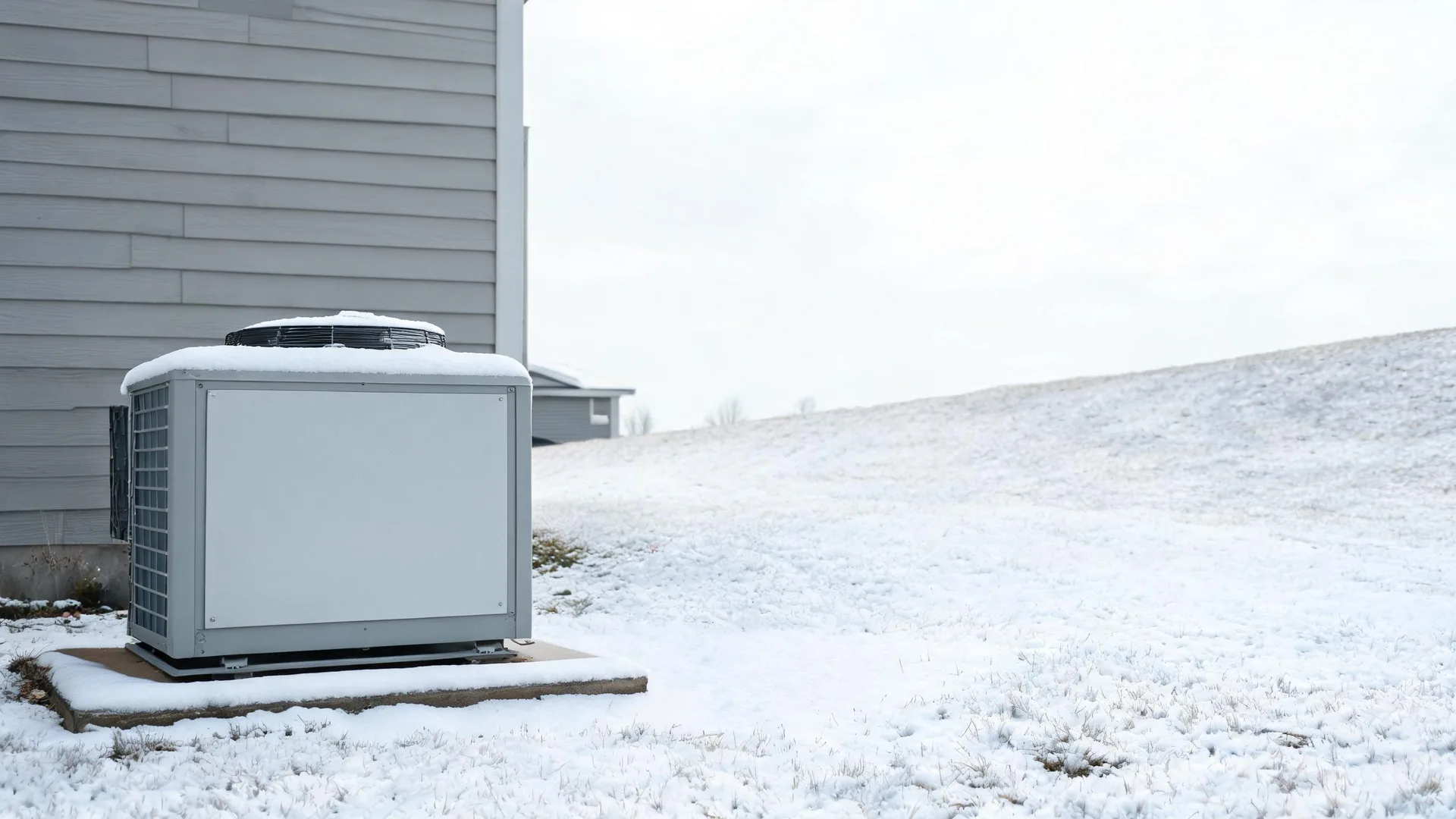
A heat pump that isn't defrosting properly builds ice on the outdoor coil. Ice blocks airflow across the coil, and poor airflow makes the next defrost cycle less effective. Left running that way, liquid refrigerant can work its way back toward the compressor instead of boiling off like it should, and a compressor is not built to handle liquid.

Before calling anyone, go outside and look at the unit. Clear away leaves, mulch or anything stacked against the cabinet, since the outdoor coil needs open air on all sides to work at all. Check the coil itself for a heavy coat of ice or frost. A little frost in cold weather is normal, a solid white block is not, and means the defrost cycle isn't keeping up. Inside, pull the filter and hold it up to a light. If you can't see through it, air isn't getting through it either, and that alone can make a heat pump run long and still fall short. Check the thermostat is set to heat and the batteries aren't dying, since a thermostat that's lost its mind looks exactly like a broken heat pump. If the outdoor fan isn't turning at all while the system is calling for heat, stop there and get someone out, since that's not something to keep running.

A diagnostic visit starts outside, at the unit itself. The tech checks refrigerant pressures, because a system low on charge will run long and still come up short on heat. They'll pull the capacitor and test it under load rather than just look at it, since a capacitor can read fine sitting still and still fail to start the compressor. They'll watch a full defrost cycle if the coil had ice on it, to see whether the reversing valve is actually switching and whether the sensor is telling the board what it needs to know. Airflow gets checked on both sides, the filter and the ductwork, because weak airflow shows up looking like a failing part when the part itself is fine. None of this is guessing. It's ruling things out in order until what's left is the actual cause.