A snow-covered residential street at twilight with illuminated houses, bare trees, and an orange horizon glow beneath a deep blue sky.

Heat Pump Repair in Hiawatha, KS

Tell us about the job

Takes about a minute. No obligation.

RepairHeat PumpBrown County, KS
Step 1 of 2

What ZIP code is the job in?

Winters here test the heat pump the normal way

Overnight lows in Brown County average 20°F through December, January and February. That's the stretch where a heat pump has to work hardest, and it's also when a weak capacitor, low refrigerant charge, or a failing defrost control shows up. None of that is unusual for the area. It's the same cold-weather strain any heat pump sees.

Hail isn't the likely cause

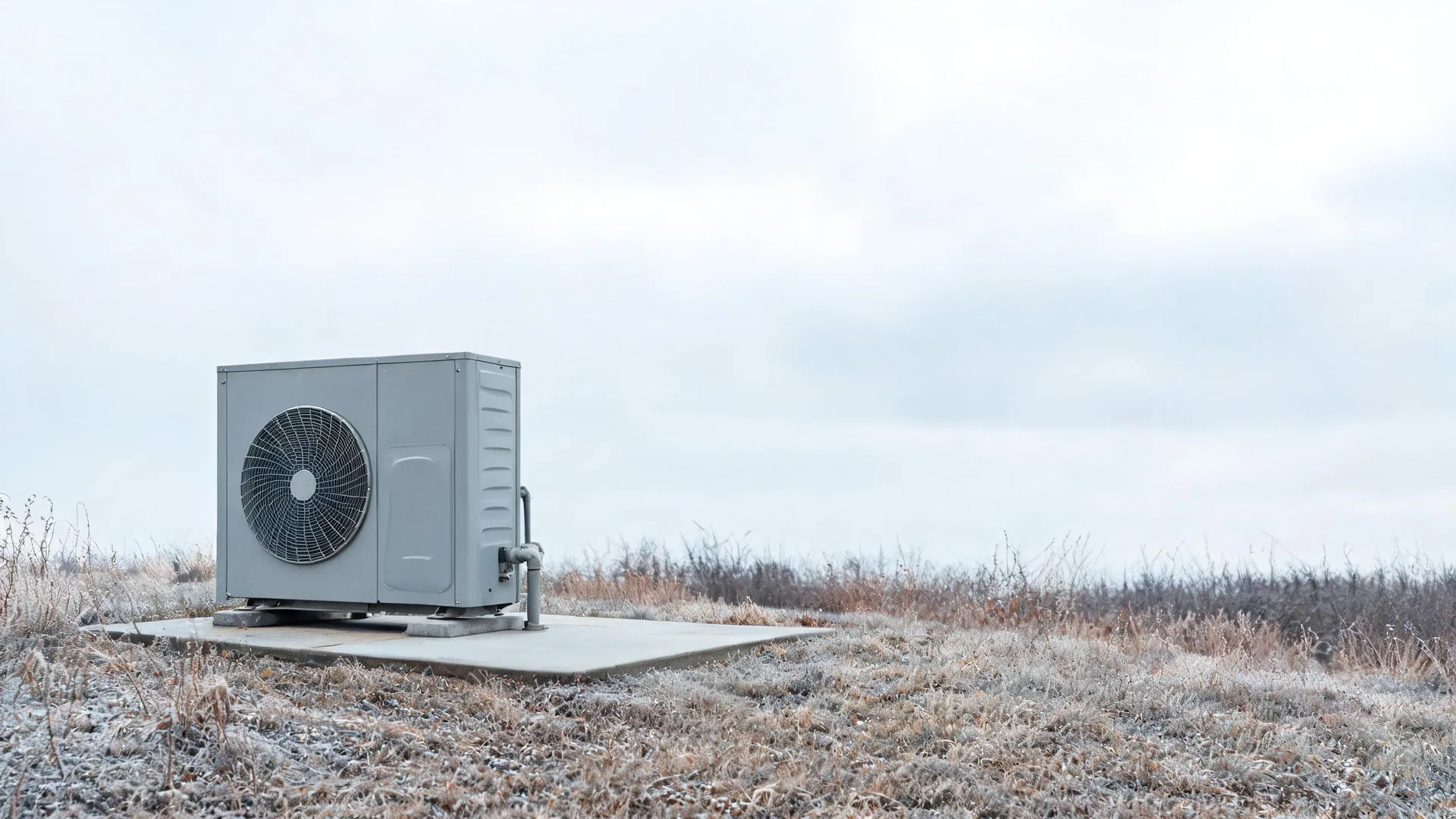
Brown County had 35 hail events between 2015 and 2024, which can dent an outdoor unit's cabinet or fins. But bent fins alone rarely stop a heat pump from running. If yours is acting up, the cause is more likely something inside the system wearing out than storm damage, and that's worth ruling out before assuming the worst.

7 months
October through April, your system heats
4 months
June through September, it cools
20°F
the average winter night it heats against
86°F
the average summer afternoon it cools against
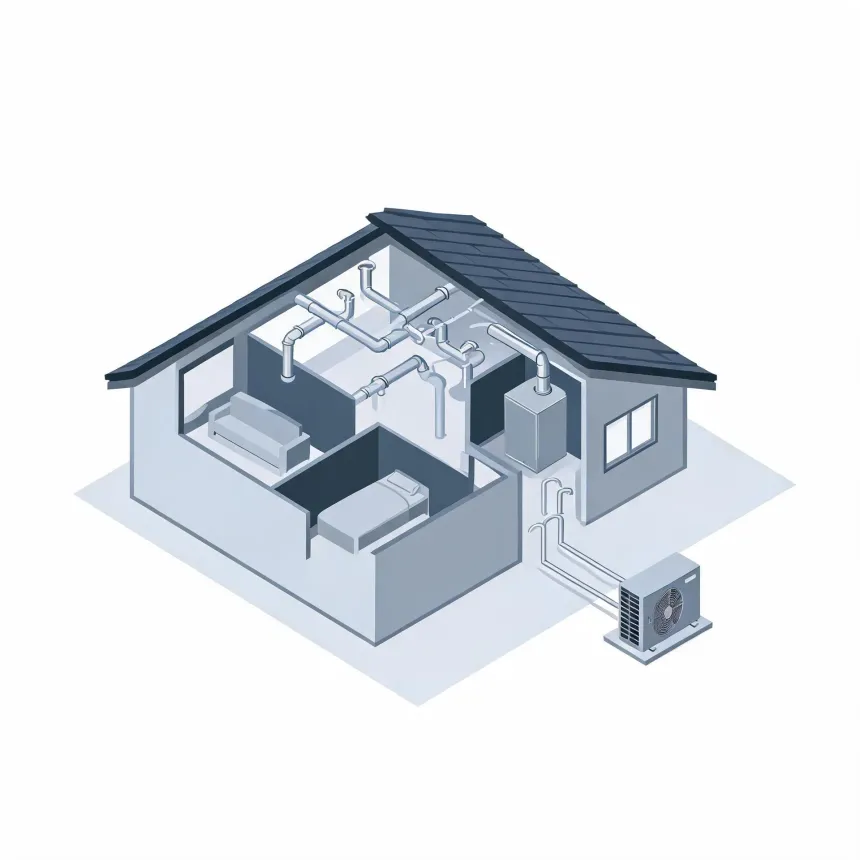
Isometric cutaway illustration of a small house showing ducted air distribution, an indoor air handler, and an outdoor condenser unit connected by lines, with a sofa and bed in the rooms.
Your system heats October through April and cools June through September.

NOAA nClimDiv, 1991–2020 normals

Heat pumps here run from October through April, seven months of the year.

September is worth a check before the first cold snap hits and the system has to run nonstop.

Half the homes in Brown County were built by 1964, and the heat pump often doesn't outlast the house

Half the homes here were built by 1964
35 hail events from 2015 to 2024
Winter nights average 20°F

Kansas homes paid 14.15 cents per kilowatthour in 2024, on the higher side for this part of the country. A heat pump that's low on charge or running with a weak capacitor doesn't just work harder, it pulls more power doing less heating, and that shows up on the bill every month it runs. A problem that would be a minor annoyance somewhere with cheap power costs real money through a Kansas winter. Getting it looked at sooner rather than later is the cheaper path either way.

Before you pay for a repair, ask what it's a repair of

If your heat pump came with the house, it could be older than this repair is worth fixing. Ask the contractor for a straight answer on what's wrong and how much life the unit has left before you pay for the fix.

Find a contractor
A gray heat pump outdoor unit mounted on a concrete pad next to the stone-accented exterior wall of a house.

What to check before you call

Before anyone comes out, there are a few things worth checking yourself. Look at the outdoor unit and clear away any leaves, grass clippings or ice built up around it so air can move through the coil. Check the thermostat is set to heat and the batteries aren't dead, since a blank or sluggish display can look like a dead system. Go to the air handler or furnace closet and pull the filter. If it's gray and clogged, swap it, because restricted airflow makes a heat pump work harder and can trip it off on its own safety switch. Check that the breaker for both the outdoor unit and the indoor air handler haven't tripped. In cold weather, a thin, even coat of frost on the outdoor coil is normal and the system should clear it on its own during a defrost cycle. A heavy buildup of solid ice, or the outdoor fan not turning at all, is not normal and means it needs a real look. None of this tells you what's broken inside the system, but it rules out the easy stuff before you pay someone to find it.

Warm air that isn't warm enough

A heat pump blowing air that feels cool to the hand isn't necessarily broken. It heats by moving warmth rather than burning fuel for it, so air from the vents runs cooler than skin temperature even when the system is working right. What's worth noticing is a steady slide. Rooms that used to hold their temperature stop holding it, or the system runs long stretches without the house catching up. That points to lost refrigerant charge or a compressor losing its ability to move heat. It isn't just the normal feel of heat pump air.

What the outdoor unit is telling you

The outdoor unit talks before it quits. Short cycling, where it kicks on and off every few minutes instead of running a steady stretch, usually means a failing capacitor or a control board that can't keep the compressor running. A unit that won't switch out of defrost, or keeps icing over faster than it clears, points to a bad defrost sensor or reversing valve. Grinding, clicking, or a hard metallic bang at startup means a compressor or fan motor is wearing out. That's not noise worth waiting on.

Most heat pump failures trace back to a handful of parts, and they wear out in predictable ways. The capacitor gives the compressor and fan motor the jolt they need to start, and it weakens with age until the motor struggles to turn over or stops starting at all. The reversing valve is what switches the system between heating and cooling, and if it sticks, the unit can get stuck in one mode or lose the ability to defrost itself. Refrigerant charge is supposed to stay sealed for the life of the system, so a system that's low almost always has a leak somewhere in the lines or coil, not just a unit that needs a top-off. The defrost control board reads the outdoor coil temperature and tells the system when to clear frost, and when that sensor fails, ice builds up faster than the system can shed it. A failing contactor can cause the same kind of short cycling, the compressor kicking on and off instead of running a steady stretch, and that strain is what eventually wears the compressor out.

A diagnostic visit starts outside at the unit. A tech checks the refrigerant pressures and the amp draw on the compressor and fan motor. Low pressure on the suction side points to a leak. A compressor pulling too many amps is dragging against something, often a bad start capacitor or a motor on its way out. The tech also watches how the system responds when it's told to switch between heating and defrost, since a reversing valve that won't throw shows up right away on the gauges. Inside, the tech checks airflow at the air handler and the temperature split across the coil. A system can test fine outside and still leave the house underheated if air isn't moving through the coil the way it should. None of this is guesswork. The readings either match a healthy system or they don't, and that's what points to the failing part before anything gets opened up or replaced.