A dark-clad two-story house with a metal gable roof stands in front of tall evergreen trees, viewed low across a mown green lawn.

Heat Pump Repair in Hillsboro, KS

Tell us about the job

Takes about a minute. No obligation.

RepairHeat PumpMarion County, KS
Step 1 of 2

What ZIP code is the job in?

Half the homes here were built in 1957 or earlier

That's old enough that the heat pump itself is almost never original to the house. If yours came with the place, there's a good chance it's already logged a lot of hours, and parts for an older unit get harder to source.


An aging heat pump changes the math on a repair

A compressor or control board replacement can cost close to what's left of the unit's life. Before paying for a big repair, it's worth asking a contractor how many years the system has left in it.

7 months
October through April, your system heats
5 months
May through September, it cools
23°F
the average winter night it heats against
89°F
the average summer afternoon it cools against
Isometric cutaway illustration of a single-story house showing interior ductwork, an indoor air handler and furnace unit, and an outdoor condenser connected by a line, on a white background.
Your system heats October through April and cools May through September.

NOAA nClimDiv, 1991–2020 normals

A dew point around 64°F all summer means your heat pump runs long hours just to keep the house comfortable.

That kind of steady load wears parts down faster, so a repair call here is often about something worn out, not something broken by accident.

Cooling starts in May, heat starts in October, and this unit runs most months between

Cooling runs May through September
Heat runs October through April
69 hail events from 2015 to 2024

Marion County logged 159 severe weather events between 2015 and 2024, and 75 of those were damaging wind. Hail hit the county 69 times in that same stretch. An outdoor heat pump unit sits through all of it, with coils and fan blades exposed to whatever comes through. A unit can take a hit and keep running for a while before the strain shows up as a failed part. If yours has been through a hailstorm or a bad windstorm recently, it's worth having someone look at the outdoor unit even if it still seems to work fine.

Find out how much life is left before you pay for the repair

A compressor or control board job is a big bill to put on a unit that may already be past its prime. Get a contractor out to look at it, and ask straight whether the repair makes sense or the unit's closer to the end than you'd think.

Find a contractor
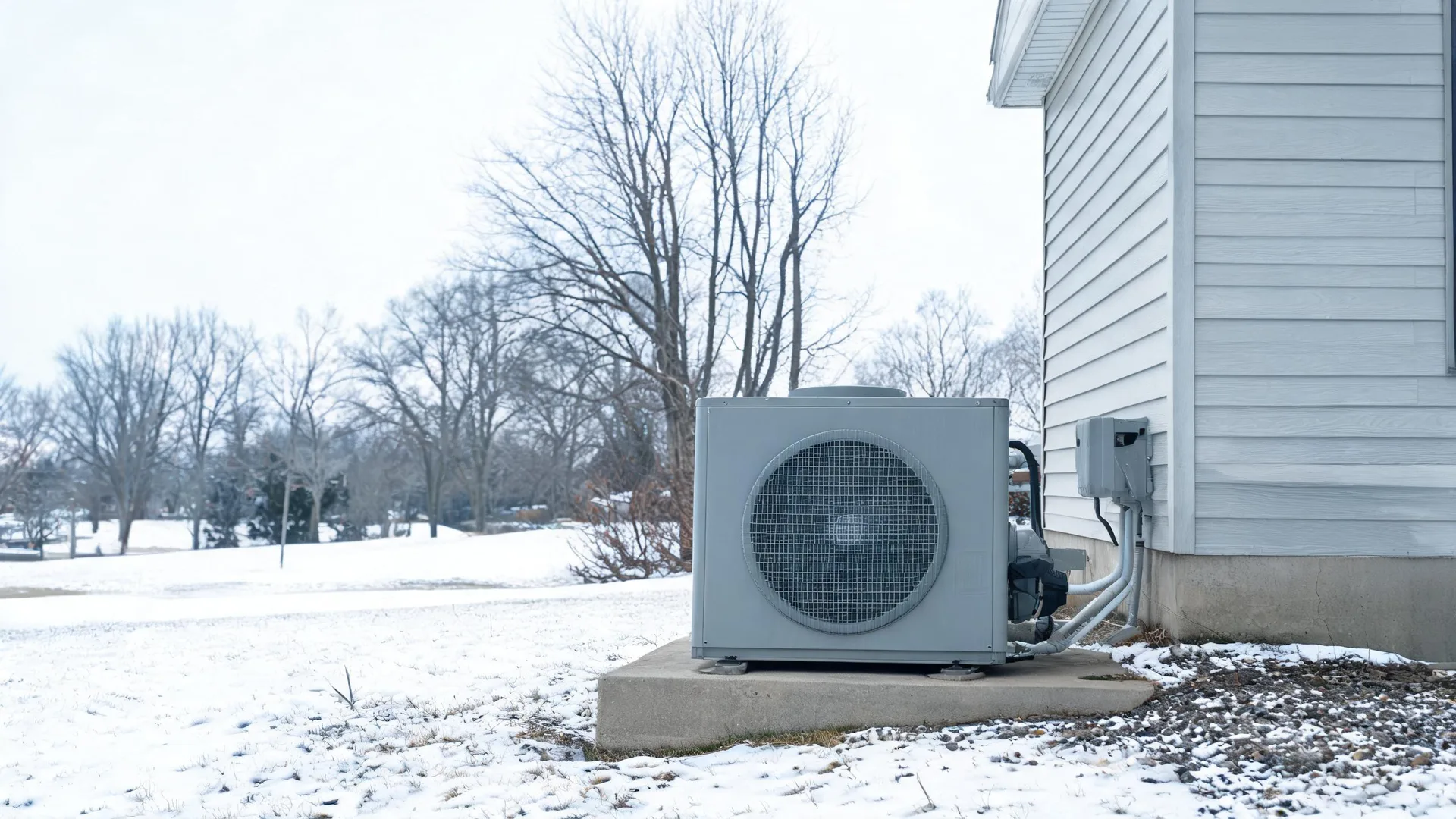
A gray heat pump outdoor unit mounted on a concrete pad next to a residential house with lap siding and stone accents.

This unit has been working long hours, year after year

Long runtimes add up to a lot of cycles on the compressor and the fan motor over a year. When a contractor comes out for a repair, ask them to check the outdoor unit over, not just fix the one part that quit. A worn contactor or a failing capacitor often isn't the only part close to done if the system has been running this hard for years.

A refrigerant leak doesn't fix itself

If a heat pump is low on charge, the compressor keeps working to make up for it. Running low on refrigerant makes the compressor run hotter than it should, and that heat breaks down the oil that's supposed to keep it lubricated. A small leak left alone usually ends with a compressor that has to be replaced instead of a line that just needed patching.

A weak part makes the others pick up the slack

When a capacitor starts to go, the motor it feeds has to pull harder to start and keep spinning. That strain shows up as heat in the motor windings, and heat is what wears a motor out before its time. Letting a cheap part limp along is often what turns into a motor replacement a few months later.

Before you pick up the phone, there are a few things worth checking. Look at the thermostat first. Make sure it's set to heat or cool as needed and that the batteries aren't dead, since a blank or unresponsive display sometimes isn't the heat pump at all. Check the air filter next and swap it if it's gray with dust, because a clogged filter chokes airflow and can make the whole system struggle. Walk outside and look at the outdoor unit. Clear away any leaves, grass clippings or debris piled against the cabinet, and make sure nothing is blocking airflow into the coil. Check your breaker panel too. A tripped breaker will shut the whole system down and is something you can reset yourself. If the outdoor fan isn't spinning, or you hear a hum but nothing moves, or the unit is frosted over outside the normal winter defrost cycle, stop checking and call. Those point to something electrical or a refrigerant problem, and that's not a homeowner fix.

If hail or wind has already hit your unit this year, don't wait for it to fail before calling. Ask the contractor to check the coil fins and the fan blades for bent metal, since that's where a hit shows up first. Bent fins choke airflow over the coil, and a blade that's slightly out of balance will wear the fan motor down faster than normal use would. None of that stops the unit from running today. It just means the part that gives out next might trace back to a storm from months ago, not to age or routine wear.