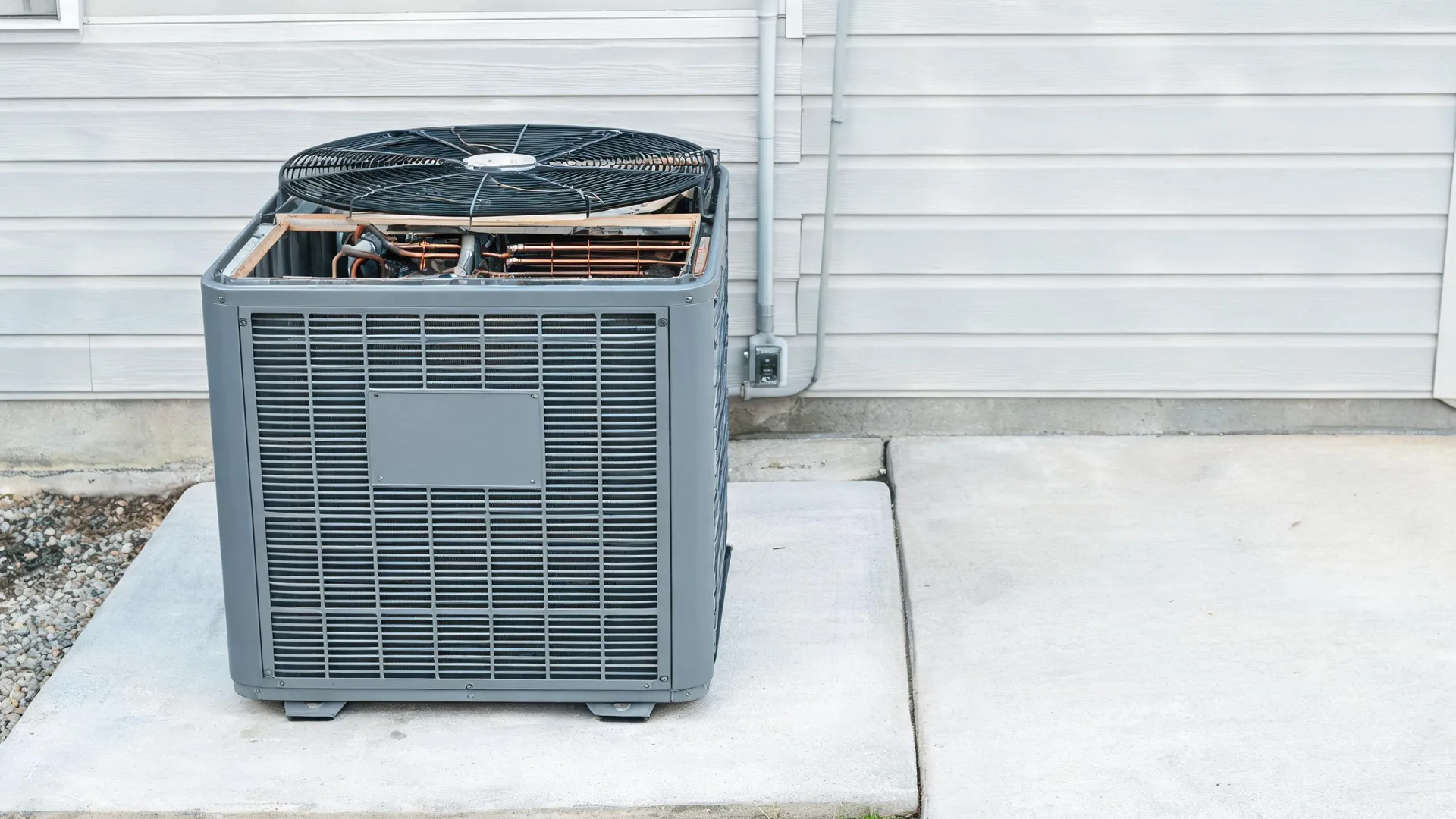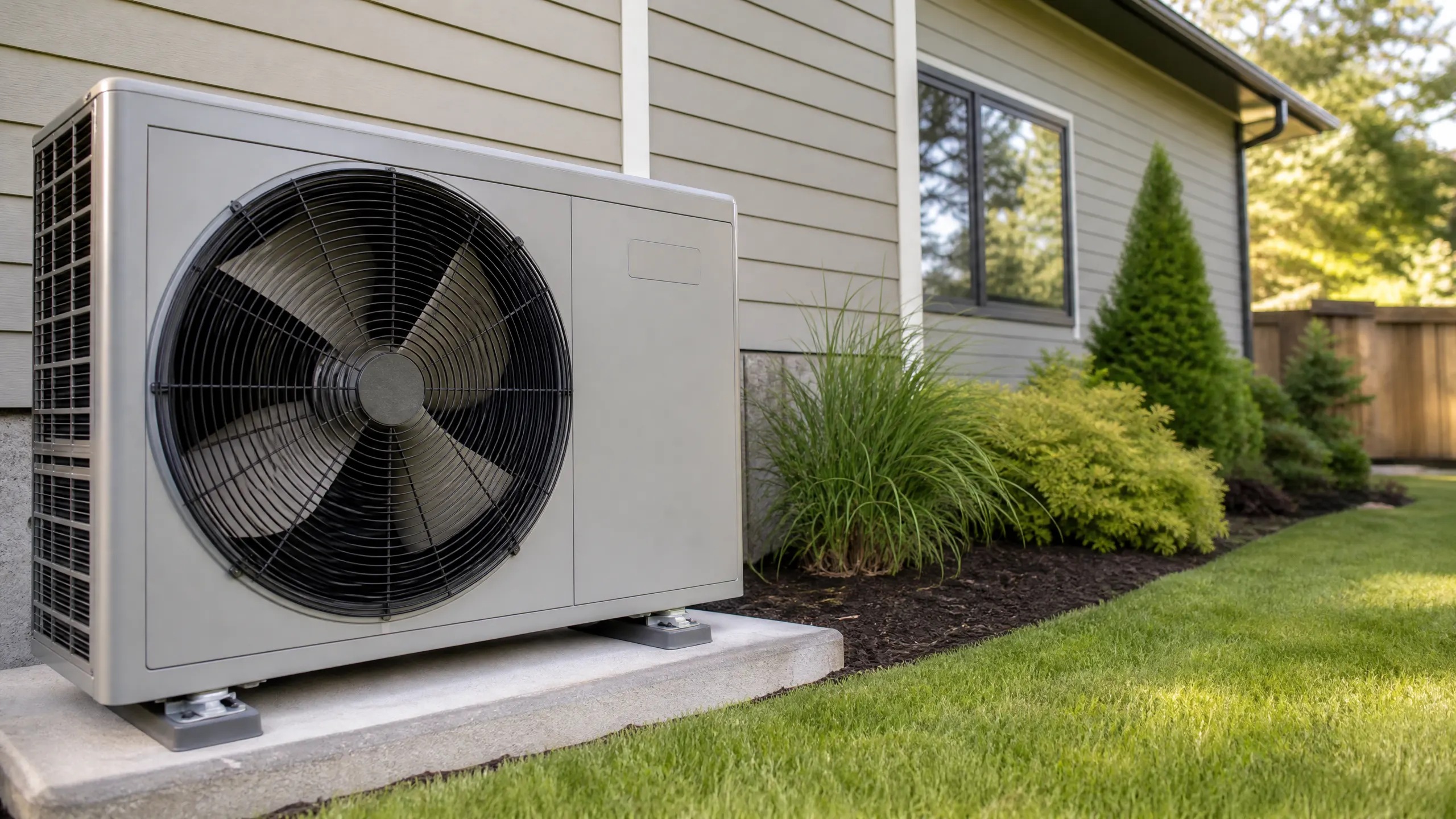
An outdoor heat pump unit mounted on a concrete pad beside a house with beige siding and a landscaped garden bed.

Heat Pump Repair in Holton, KS

Tell us about the job

Takes about a minute. No obligation.

RepairHeat PumpJackson County, KS
Step 1 of 2

What ZIP code is the job in?

September is when a weak heat pump shows itself

Heat in Jackson County starts running in October, and September is when homeowners turn it on to check. A heat pump that struggled last winter will often show the same signs again right when the load picks up.

Waiting until the cold sets in makes the job harder

A heat pump with a worn part can usually limp through mild days. Once temperatures drop and it has to run longer to keep up, that same part is more likely to fail outright, often on the coldest day of the stretch.

7 months
October through April, your system heats
4 months
June through September, it cools
20°F
the average winter night it heats against
87°F
the average summer afternoon it cools against
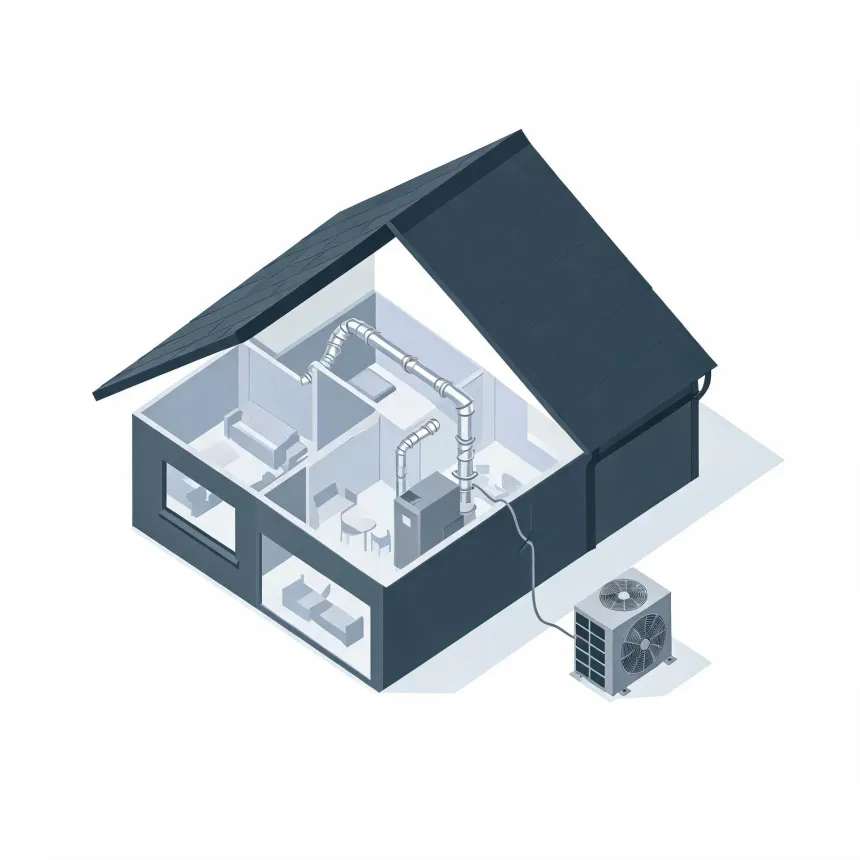
Isometric illustration of a cutaway house showing interior rooms with furniture, a furnace and ductwork, connected by a line to an outdoor condenser unit on the ground outside.
Your system heats October through April and cools June through September.

NOAA nClimDiv, 1991–2020 normals

A heat pump that keeps needing repairs is telling you something about what's coming next.

If the compressor is failing or the system runs on an older refrigerant, a repair bill now often just leads to another one later.

Jackson County weather is normal for Kansas, so a struggling heat pump is almost always a parts problem, not a weather problem

98 severe weather events from 2015 to 2024
19% of homes statewide lost power a day or more in 2024
42 damaging wind events from 2015 to 2024

Holton doesn't put anything unusual on a heat pump. Winters here get cold enough that the system leans on its backup heat strip on the hardest nights, same as anywhere else in this part of Kansas, and that's normal operation, not a sign of strain. So when a heat pump is short cycling or running constantly or blowing air that isn't warm enough, the cause is almost always a part wearing out, not the weather asking too much of it. A failing capacitor, a low refrigerant charge, a reversing valve stuck in one position. Those are the usual suspects, and they're worth fixing right because electricity in Kansas ran 14.15 cents per kilowatt-hour in 2024, and a heat pump working harder than it should to cover for a bad part shows up on that bill.

Get the heat pump looked at before it has to work harder

Half the homes in Jackson County were built in 1976 or earlier, half later. Either way, the age of the house isn't why a heat pump breaks down. A worn part doesn't fix itself once the weather turns, and the longer it runs on the bad part, the more likely it fails on the coldest night of the stretch. Get the real cause found now, while it's still an easy visit.

Find a contractor
A man in a cap, dark shirt and tan cargo pants, seen from behind, climbs porch steps toward a red front door while carrying a worn canvas duffel bag, with a potted shrub in a red planter beside him.
A residential heat pump outdoor unit mounted on a concrete pad next to a house with gray vinyl siding.

A heat pump works year round, and that catches up with certain parts first

A heat pump runs the compressor nearly year round, cooling in summer and heating in winter, so its moving parts see more hours than almost anything else in the house. The reversing valve is the part unique to a heat pump, and it's often the first to stick, leaving the system stuck in cooling or heating no matter what the thermostat asks for. Capacitors weaken with heat and age and eventually can't give the compressor or fan motor the kick it needs to start. Refrigerant charge drops only if there's a leak somewhere in the lines or coil, and a low charge makes the whole system work harder while doing less. The outdoor unit also takes the brunt of the weather, so its coil and fan motor tend to wear faster than the parts tucked inside.

What you'll actually notice first

Air coming out that's cooler than it should be when the system is supposed to be heating. A system that runs long stretches without shutting off, or one that shuts off and restarts every few minutes. Sometimes it's a smell when it kicks on, or a new sound from the outdoor unit, a clicking or a grinding that wasn't there before. These signs usually show up before the system quits entirely.

Why it's worth calling before it quits completely

A heat pump making noise or running strange is usually still running, just running wrong, and that's the easier job. A tech can find the failing part while the system is still limping along and working at all. Once it stops heating altogether, the diagnosis is the same, but now the house has no heat until the part gets replaced.

A heat pump that's struggling usually keeps running anyway, because the thermostat just keeps calling for heat until it gets satisfied. That's what turns a small problem into a bigger one. A compressor pulling hard to start on a weak capacitor heats up more every time it tries, and that heat damages the windings a little more with each cycle. A system low on refrigerant runs longer to make the same heat, and that extra runtime puts more hours on a compressor that's already working against a leak. Frost on the outdoor coil works the same way. Once ice builds up, the unit can't pull heat from the air, so it runs longer to compensate, and that lets more ice form. Left alone, that cycle ends with the compressor itself failing, which is a bigger repair than whatever part started it.

A diagnostic visit starts outside, at the unit itself, since that's where a heat pump does most of its work. A tech checks refrigerant pressures first, because that number tells them whether the system has a leak before they touch anything else. They'll test the capacitor under load, not just look at it, since a capacitor can read fine sitting still and still fail to kick the compressor on. The reversing valve gets checked by watching whether the system actually switches between heating and cooling when it's told to, not just by looking at the part. Airflow across the indoor coil matters too, so expect them to check the filter and the blower along with everything outside. Most of this gets done with the system running, because a part that fails under load often looks fine sitting idle.