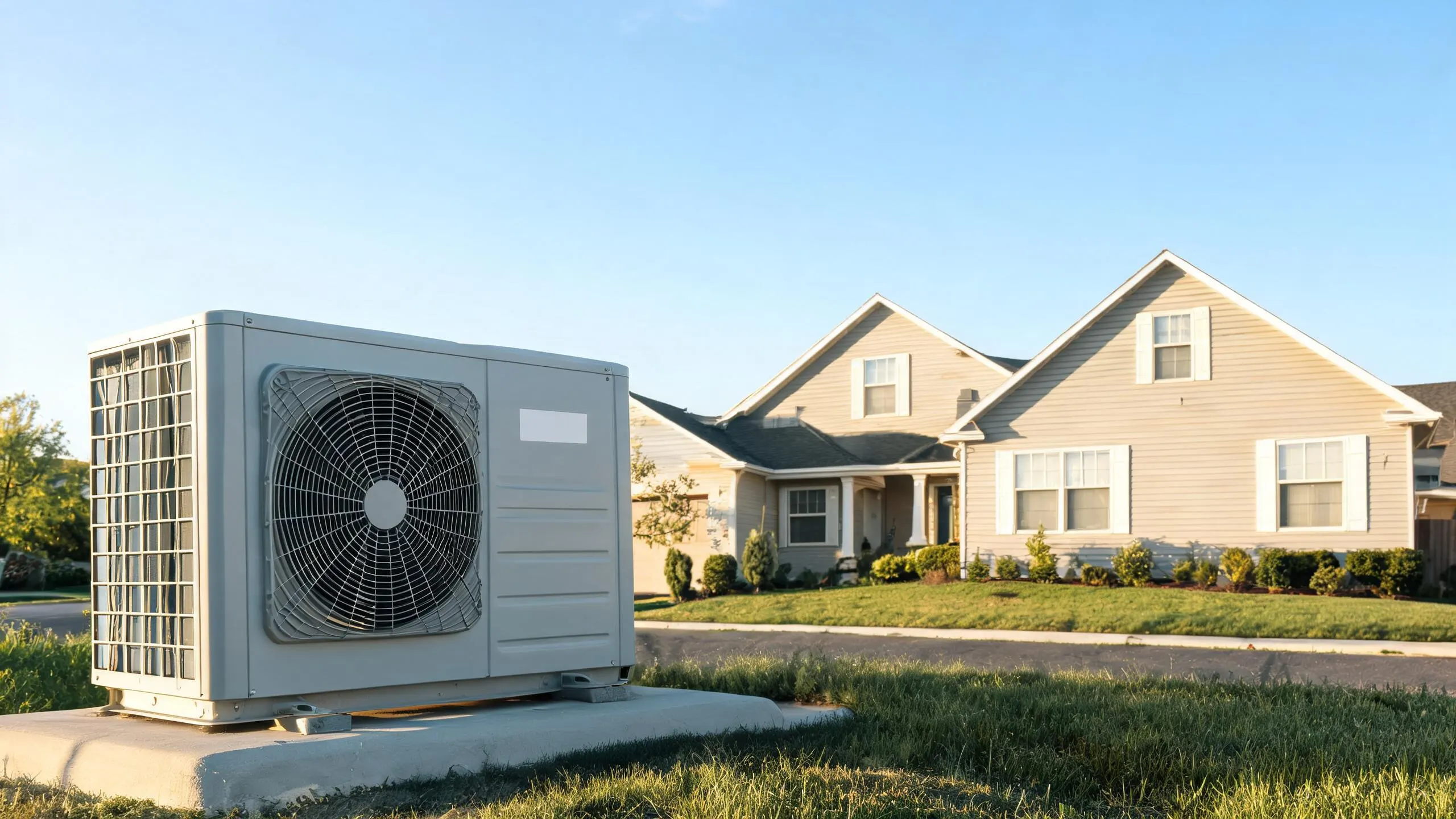







An outdoor heat pump unit mounted on a concrete pad in front of a two-story suburban house.

Heat Pump Repair in Iola, KS

Tell us about the job

Takes about a minute. No obligation.

RepairHeat PumpAllen County, KS
Step 1 of 2

What ZIP code is the job in?

Allen County recorded 47 hail events over the years tracked, so hail is the one weather event on record here. That's worth knowing but it doesn't point at your heat pump. Hail can dent the outdoor cabinet and bend the coil fins, but it rarely touches what actually makes the unit run. If your heat pump isn't heating or cooling right, the cause is almost always a low refrigerant charge, a failing capacitor, a dirty coil, or a reversing valve stuck in one position. A contractor checking yours will start there, not with the weather.

7 months
October through April, your system heats
5 months
May through September, it cools
25°F
the average winter night it heats against
88°F
the average summer afternoon it cools against
Isometric cutaway illustration of a single-story house showing interior rooms with furniture, an attic duct network connected to a furnace or air handler, and an outdoor condenser unit linked by lines outside the wall.
Your system heats October through April and cools May through September.

NOAA nClimDiv, 1991–2020 normals

An older heat pump nearing the end of its working life costs more to run and breaks down more often.

If the compressor is failing, a repair bill can land close to what a new system costs, so it's worth asking a contractor for both prices before deciding.

Allen County weather doesn't single out your heat pump

108 severe weather events from 2015 to 2024
19% of homes statewide lost power a day or more in 2024
56 damaging wind events from 2015 to 2024
Allen County weather doesn't single out your heat pumpElectricity in Kansas ran 14.15 cents per kilowatt-hour in 2024

Half the homes in Iola were built in 1965 or earlier. If yours is one of them, the heat pump itself is almost certainly newer than the house, since these units don't last that long. But if your system came with the house, or was installed a long time ago, it may already be past the point where repairs make sense. Heat pumps lose efficiency as they age even when nothing has failed yet. A contractor can tell you how many years a unit like yours typically has left, and whether what's going wrong now is worth fixing on a machine that's already most of the way through its life.

Ask how much life it has left before you fix it

Ask a contractor how many years this unit has left before you approve the repair. If it's already most of the way through its life, that answer matters more than what's wrong with it today.

Find a contractor
A man in a dark shirt and tan work pants carries a worn canvas tool bag up concrete steps toward a red front door of a gray clapboard house, with a potted shrub in a red planter beside the entry.
A gray heat pump condenser unit mounted on a concrete pad against the gray lap-siding exterior wall of a house.

Running it while something's wrong rarely helps

A heat pump that's struggling still tries to reach the thermostat setting, so it keeps calling for more runtime to make up the difference. That extra runtime is hard on whatever is already failing. A compressor working against a low charge runs hotter than it should, and heat is what wears a compressor down over time. A reversing valve stuck halfway strains the compressor on every cycle instead of just some. A coil caked with dirt makes the whole system labor to move heat at all, and that labor falls on the compressor too. None of these get better the longer the unit runs. They get worse, and the compressor is the part nobody wants to see fail. Shutting the system off once something is clearly wrong, and getting it looked at, stops the damage from spreading to parts that were still fine.

Most failures start with the refrigerant charge

A heat pump moves heat by compressing and releasing refrigerant, and the whole cycle depends on having the right amount of it. A slow leak at a fitting or coil joint lets the charge drop gradually, so the system keeps running but moves less and less heat. Low charge also makes the compressor run hotter than it should, which shortens its life. A heat pump can seem to be working while it quietly does less every week.
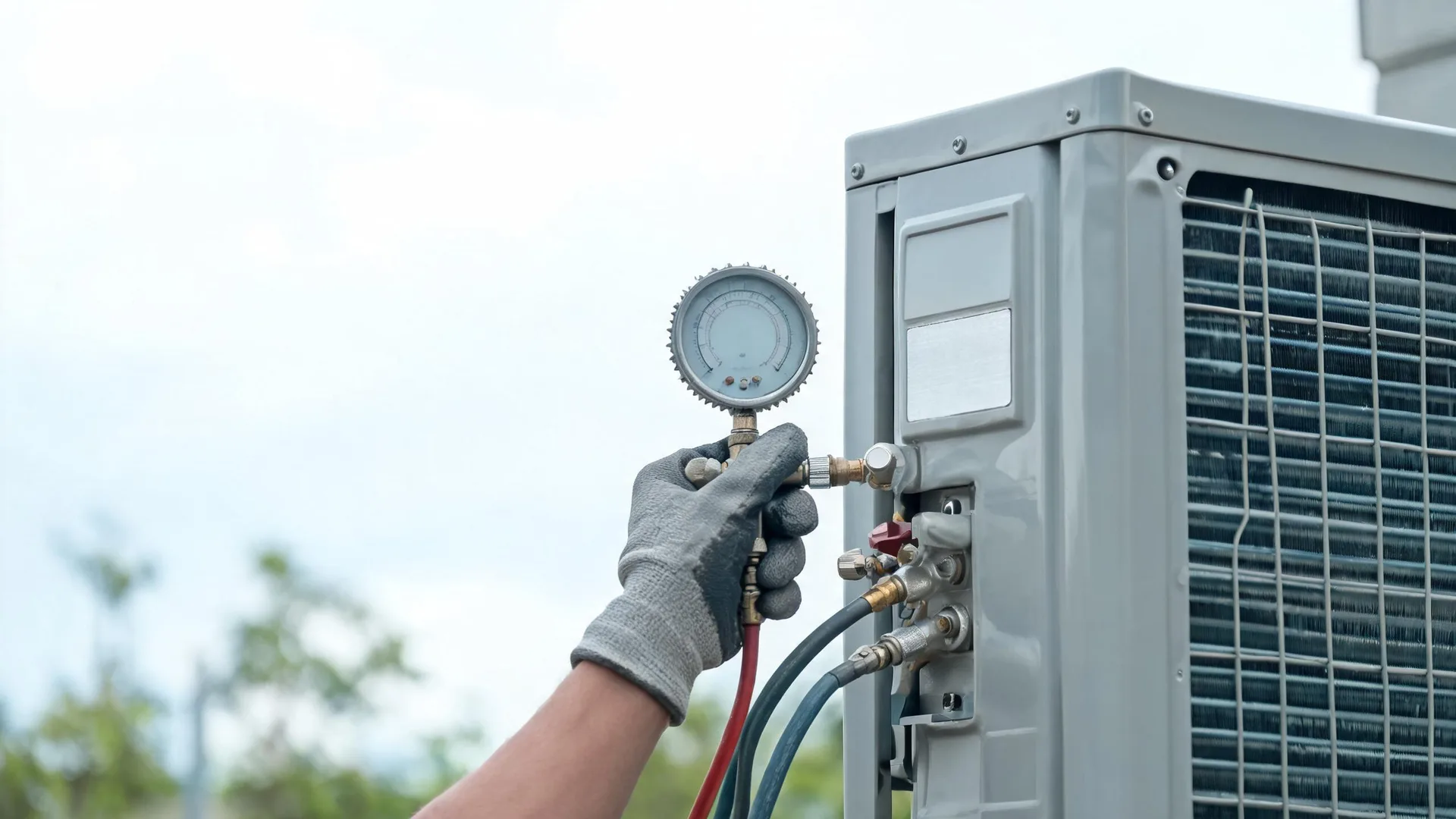
The reversing valve decides which mode you get

A reversing valve is what switches a heat pump between heating and cooling, and a plain air conditioner or furnace doesn't have one. When it sticks, the unit can get stuck in one mode, blow air that isn't the temperature you set, or strain the compressor on every cycle instead of switching cleanly. A valve that's starting to fail doesn't always announce itself right away, so if heating and cooling stopped working around the same time, that part is worth asking about.

Most of the warning signs show up at the thermostat, not the unit itself. The system runs but the air coming out doesn't feel like it should, cool air during a heating call or warm air when it should be cold. That points to the reversing valve or a charge problem rather than anything mechanical. Short cycling, where the unit kicks on and off every few minutes instead of running a full cycle, usually means a sensor or control issue making the system think it's done before it is. Ice on the outdoor coil when it shouldn't be there, or the outdoor fan running while the compressor stays silent, are both things worth calling in. A unit that runs constantly without ever satisfying the thermostat is telling you it can't keep up, and that's worth checking before it runs that way all season.

A diagnostic visit starts with questions. When did this start, does it happen in heating mode or cooling mode or both, has the thermostat setting stopped matching what you feel at the vents. Then the contractor checks pressures on the refrigerant lines, because that number says more about what's wrong than anything the unit is doing on the outside. They'll run the system in both modes if they can, since a heat pump that heats fine but won't cool points somewhere different than one that's weak in both directions. They'll check the capacitor and the contactor, look at the outdoor coil for dirt or ice, and listen to how the compressor sounds under load. Electrical readings catch problems before they get bad enough to hear or feel, which is part of why this takes a kit and not just a look.