





A snow-covered small-town street at dusk, with lit white clapboard houses, bare trees, and a grain elevator silhouetted against an orange and blue twilight sky.

Heat Pump Repair in Kansas City, KS

Tell us about the job

Takes about a minute. No obligation.

RepairHeat PumpWyandotte County, KS
Step 1 of 2

What ZIP code is the job in?

September is when a weak heat pump usually shows its hand. The system has sat idle for months, then gets asked to switch over and run hard as the weather turns. A part that was marginal all summer, a contactor, a capacitor, a low charge, is what fails first under that load. Once heat season settles in and runs through April, the same unit is working seven months straight with no real break. Getting it looked at before that stretch starts, or right at the first sign of trouble, means the repair happens on your terms instead of on a cold morning.

7 months
October through April, your system heats
5 months
May through September, it cools
23°F
the average winter night it heats against
87°F
the average summer afternoon it cools against
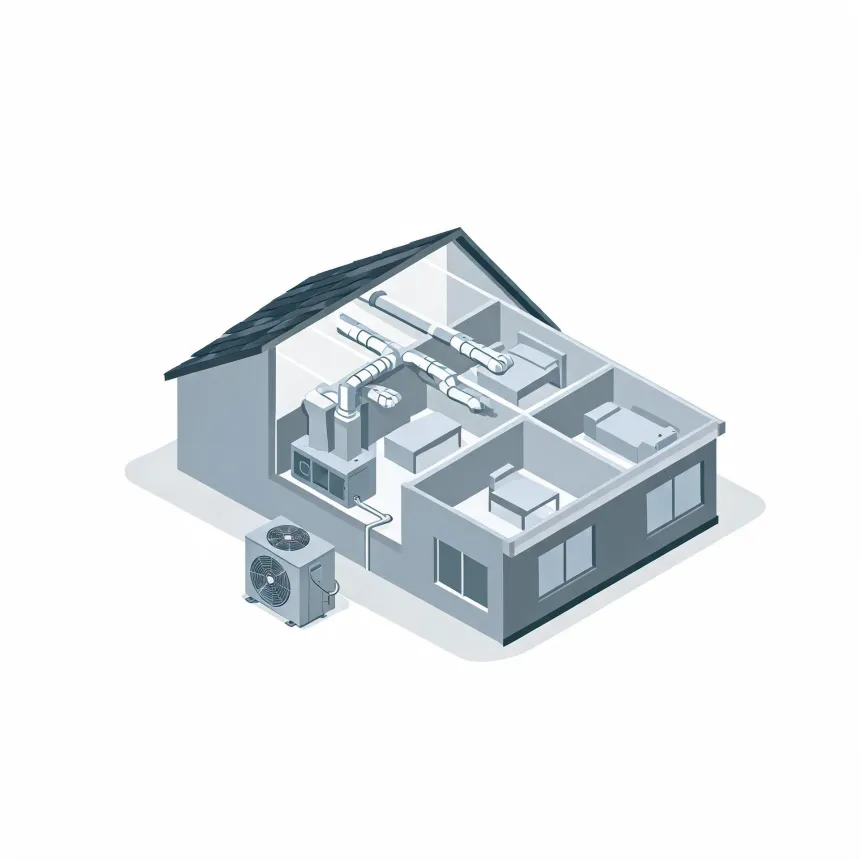
Isometric grayscale illustration of a cutaway house showing interior rooms, ceiling ductwork connected to an indoor air handler, and an outdoor condenser unit beside the exterior wall.
Your system heats October through April and cools May through September.

NOAA nClimDiv, 1991–2020 normals

Wyandotte County recorded 43 hail events between 2015 and 2024.

Hail wears on a roof and siding, not on the parts inside a heat pump.

Half the homes in Wyandotte County date to 1962 or earlier, and an older house often means an older heat pump

Half the homes here were built by 1962
43 hail events from 2015 to 2024
Power costs 14.15 cents a kWh statewide

Before you pay for the repair, ask what it's buying you

If the heat pump in your home is the one the house was built with, it could be decades old. A repair on a unit that old might only hold until the next part gives out. Ask the contractor straight whether it's worth fixing or close to done.

Find a contractor
A man in a dark jacket, cap and tan work pants climbs porch steps toward a red front door, carrying a canvas tool bag in his right hand, with a potted shrub at left.
A gray air-source heat pump mounted on a concrete pad next to a house with gray vinyl siding, surrounded by gravel and flanked by green shrubs and white hydrangea flowers.

Why a small problem now can mean a bigger one by the time it's found

A refrigerant leak is the clearest case. A system low on charge has to run longer to reach the set temperature, and the compressor keeps working against a charge it can't make up on its own. Left alone, that compressor runs hotter than it should for as long as the system keeps cycling. Compressors don't recover from that kind of wear. A failing capacitor behaves the same way. It's weak, so the motor it's supposed to help start draws more current trying to get going, and that extra draw shortens what's left of the motor's life. A clogged filter or blocked coil is no different in principle. Airflow drops, the system runs longer to move the same amount of heat, and every part downstream of that restriction works harder the whole time the unit is on. None of these fail outright on day one. They just get asked to do more than they're built for, every hour the system runs, until the part that was already weak is the part that quits.

What you'll actually notice first

A heat pump in trouble rarely just shuts off. It blows air that isn't warm enough, runs long stretches without hitting the set temperature, or cycles on and off more than it used to. Outside, the unit might ice over in a way that doesn't clear on its own, or you'll hear it straining, a hum before it starts, a clank when it kicks on. Any of those is the system telling you something inside isn't working the way it should.
Don't wait out a sound or a smell

A burning smell, a breaker that trips and keeps tripping, or a hard metallic noise from the outdoor unit means stop running it and get it looked at. Those point to an electrical fault or a motor on its way out, and running the system in that state turns a part replacement into a bigger repair. Warm air that's just a little off, or a longer run time, can wait. A smell or a breaker that won't stay on can't.

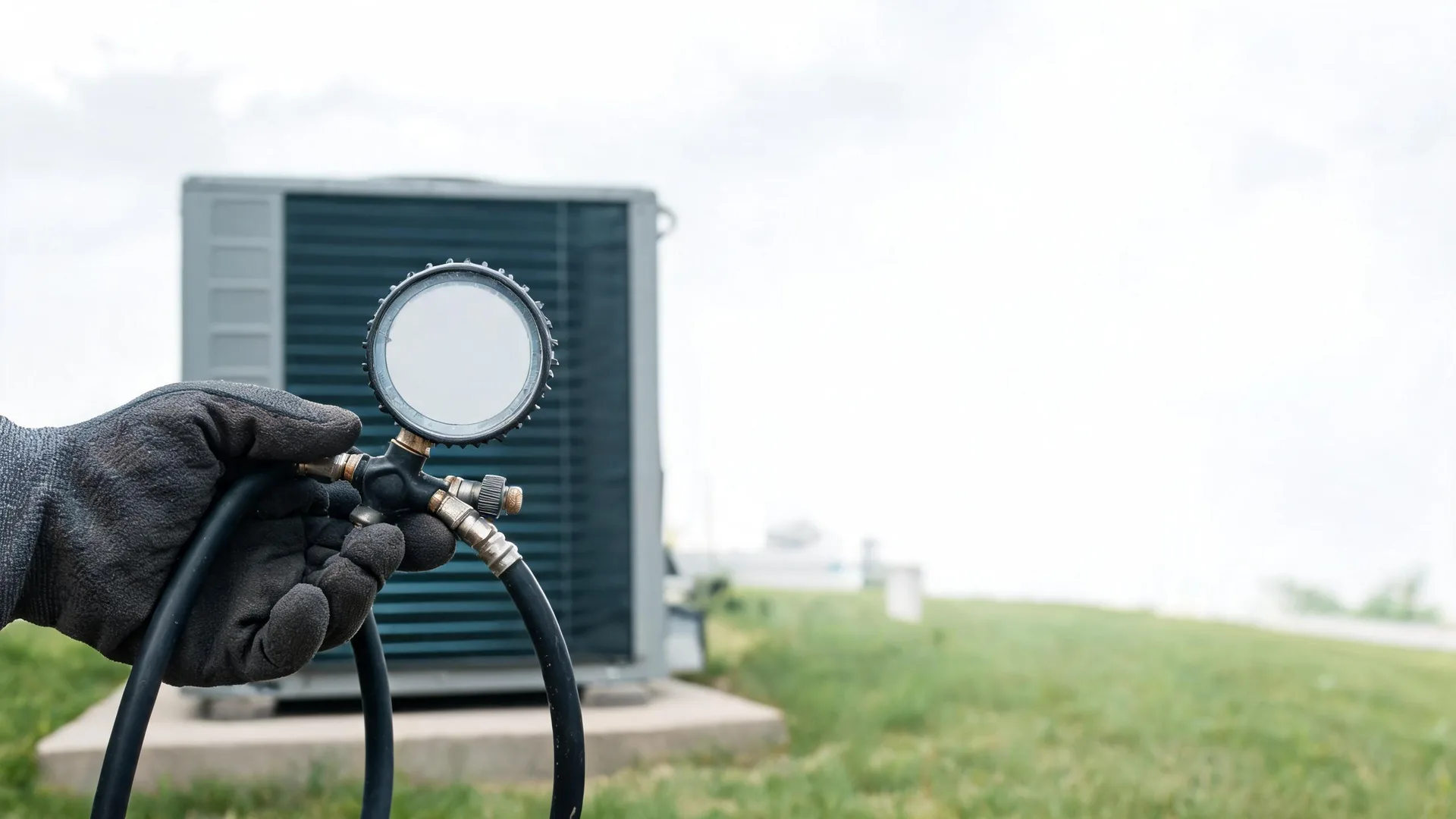
A few checks take a minute before anyone needs to come out. Start at the thermostat. Make sure it's set to heat, not cool, and that the set temperature is actually above room temperature. A dead or dim screen usually means the batteries, worth swapping before anything else. Pull the air filter and hold it up to a light. If you can't see through it, that's blocking airflow right there, and a clean one might be all the system needed. Outside, clear away leaves, mulch or anything stacked against the unit, and check that it isn't buried in ice that hasn't melted off on its own. Check the breaker panel too. A tripped breaker looks just like a dead system, and resetting it once is reasonable. If it trips again, leave it alone and don't reset it a second time.

A diagnostic visit starts before any panel comes off. A tech will ask what you noticed first, when it started, and whether it's constant or comes and goes. That matters because a system that struggles only on the coldest mornings points somewhere different than one that's been off all along. Inside, they'll check the thermostat call, the air temperature coming out of the vents, and how the system responds when it switches between heat and cool. Outside, they're looking at the unit itself, checking refrigerant pressures, reading the amp draw on the compressor and fan motor, and checking the contactor and capacitor under load rather than just by sight. A weak part can look fine sitting still and fail the moment it's asked to do its job. The goal is to find the one thing actually causing what you're seeing, not to replace parts until something changes.