




How long a heat pump lasts in Kansas City, KS

New system or replacementHeat PumpWyandotte County, KS
Step 1 of 2

What ZIP code is the job in?

A heat pump in Kansas City, Kansas lasts about 15 years, sometimes a few more with steady care. Your system works harder here than it would somewhere milder. It runs the air conditioning through the long sticky stretch of summer, then switches over and carries the heating through a cold winter, often dropping below freezing. Most homes nearby lean on gas furnaces for backup heat or for the coldest days, but the heat pump itself is still cycling on and off for most of the year, and that steady back and forth wears on the compressor over time. Once a unit passes the 12 to 15 year mark, breakdowns start costing more than they used to, and repairs on an older system start to feel like money spent toward a replacement you'll need anyway. If your heat pump came with the house, it's worth finding out how old it actually is.

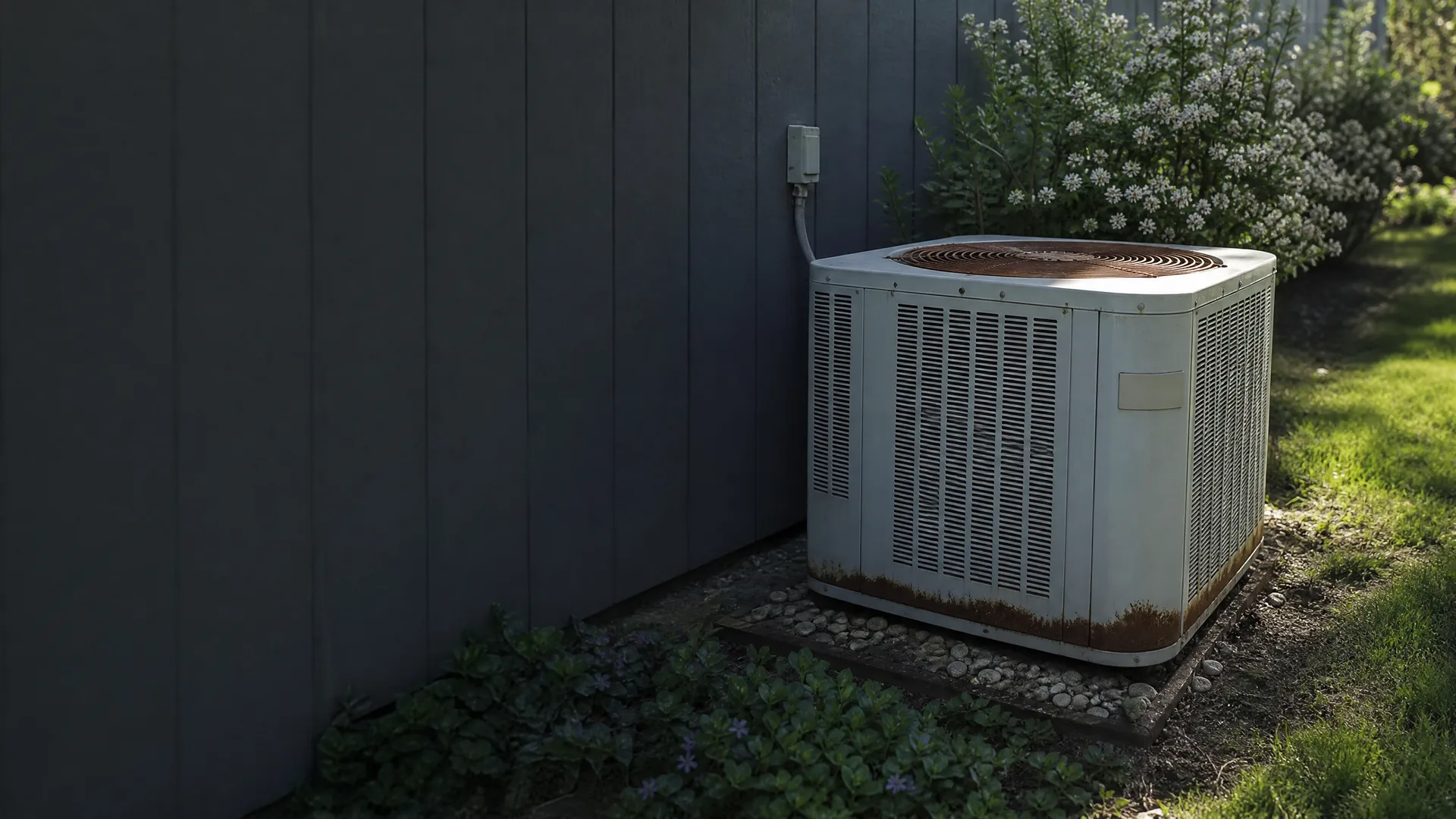
An outdoor air conditioning condenser unit with rust stains sits on a concrete pad beside a dark gray vertical-board house wall, surrounded by gravel, groundcover plants, a flowering shrub, and grass.

You're out in the side yard in April, coiling up the garden hose, and you notice the outdoor unit sitting there against the fence. Rust has worked its way along the base of the cabinet, flaking where the metal meets the ground. It's been fifteen years since it went in. You crouch down and press a thumb to the rust, and a little of it crumbles off. The unit still runs. It kicked on yesterday when the house felt cool in the morning. But you stand there a minute longer than you meant to, looking at the base of it, thinking about how it sounded a little different switching on last week than it used to.

What does Kansas City weather ask of a heat pump all year?

  • Winter nights average 23°F

    Nights this cold mean the heat pump leans on backup heat often, and that extra strain adds up over the unit's life.

  • Heat runs October through April

    Seven months of heating is more than half the year. That's a long stretch for one system to carry alone.

  • Cooling runs May through September

    Five months of cooling on top of seven of heat means the unit barely gets a season off to rest.

NOAA nClimDiv 1991-2020

A man in a gray quarter-zip sweater sits with closed eyes and a slight smile in a dark leather armchair in a wood-paneled room, with a window, framed picture, bookshelf and a table holding a mug and papers nearby.
A man with greying hair and a beard, wearing a dark blue sweater, reclines with closed eyes and a slight smile in a brown leather armchair in a room with a bookshelf, houseplant, window, and a folded newspaper on a wooden table.
A man in a dark green sweater reclines with eyes closed in a brown leather armchair beside a wooden table holding a dark mug and a folded newspaper, with houseplants, a framed picture and a bookshelf in the background.
A man in a dark blue sweater reclines with closed eyes in a brown leather chair, beside a side table with a mug and folded newspaper, a potted plant and shelving in the background.

Repair It or Replace It

Repair

  • A single repair, like a failed capacitor or a stuck reversing valve, is cheaper up front than a new system.
  • If the heat pump is under ten years old, a repair gets you back to full life expectancy without starting over.
  • Parts for a unit still under warranty may cost nothing beyond labor, which narrows the gap with replacement.
  • Repairs buy time if you're not ready to plan a full installation this year.
  • A unit that's been maintained each year is more likely to be worth repairing than one that hasn't.

Replace

  • A heat pump past 15 years here has already outlasted or matched what Wyandotte County winters and summers usually allow.
  • Rust at the cabinet base or a compressor that's failed once already points to a unit near the end, not a temporary setback.
  • A new system is built for the same long heating stretch and muggy summer, so it starts that 15-year clock fresh.
  • Repeated repairs on an old unit add up and still leave you with the same worn compressor and coils underneath.
  • Replacing before a midwinter breakdown means you choose the timing instead of losing heat on the coldest night.
A gray outdoor air conditioner condenser unit on a concrete pad beside a house with horizontal lap siding and a stone veneer base, with a conduit running to a wall-mounted disconnect box and shrubs and evergreen trees to the left.

Running the way it should

This is a heat pump doing its job. The pad is clean, the lines run straight to the disconnect, and nothing around the cabinet is rusted or caked with dirt. A unit kept this way through fifteen Kansas City winters still has a shot at a few more years before it needs to be replaced.


An outdoor air conditioner condenser unit with rust spots on its top grille sits on a concrete pad beside a house with light horizontal siding, with conduit lines and an electrical box on the wall and a mulch bed to the right.

Showing its age

Rust along the top grille and dirt packed around the base are signs a unit has been fighting Wyandotte County weather for a long time. Once the cabinet corrodes and the fins stay dirty, the heat pump has to work harder to move the same amount of air, and that wear doesn't reverse itself.

An outdoor air conditioner condenser unit on a concrete pad beside a house with horizontal siding, with conduit, cables and an electrical box on the wall and mulch beds at either side.
Before you get your heat pump installation
A gray outdoor condenser unit on a concrete pad beside a house with horizontal lap siding, with a metal disconnect box and refrigerant lines on the wall, river rock and mulch to the sides, and a green shrub at right.
After you get your heat pump installation

Finding a pro stops being your job

If your heat pump is pushing past fifteen years, or you're already patching it together through one Wyandotte County winter after another, the math stops favoring another repair. A new system means backup heat that doesn't have to carry the whole January night, and an outdoor unit that isn't fighting rust and a worn-out compressor at the same time. Getting the install right matters as much as getting it done. A local contractor who works on heat pumps in this area every season knows what this climate wears down first and how to size a system for a Kansas City winter instead of a milder one somewhere else. You send the request once, and it goes to that one contractor instead of a handful of companies competing for your number. From there it's off your plate. You don't have to spend your evenings calling around town while the unit outside keeps aging and the next cold snap or the next humid stretch gets closer.

What a Kansas City Heat Pump Needs

  • A heat pump in Kansas City, Kansas runs about 15 years with normal care and attention.
  • Seven months of heating a year and a long muggy summer both add real wear to the system.
  • A repair under ten years old is usually the right call and keeps the unit on track.
  • Past fifteen years, repeated repairs stop making sense next to the cost of a new system.
  • Rust on the cabinet, a reversing valve that sticks, or backup heat running too often are signs of age catching up.
  • Keeping the unit clean and serviced is what gets a system to the far end of that range.

Fifteen years is the number to plan around if you own a heat pump in Kansas City, Kansas. It gets there by doing real work twice over, cooling the house through a long muggy summer, then carrying most of the heat load through a winter that asks for seven months of it. That's not a mild climate for a heat pump, and the system shows it eventually, in a cabinet that rusts, a reversing valve that starts to stick, or backup heat that kicks on more than it used to.

What you do with those signs depends on where the unit is in its life. Under ten years old, a repair is almost always the right move. You fix the capacitor or the valve, and the system goes back to doing what it was built to do, for close to its full stretch. Past fifteen, that math changes. You're not restoring a system anymore, you're buying time on one that's already near the end, and the next repair after this one is never far off.

None of that means the clock runs the same for every unit. A heat pump that gets cleaned and serviced on a regular schedule holds up better than one that doesn't, and that difference is often what separates a system that quits at twelve years from one still running fine past fifteen. Where your unit falls in that range comes down to how it's been kept, not just how long it's been out there.

An older man with gray hair in a dark blue henley sweater leans back on a beige sofa with his eyes closed, beside houseplants and bright windows.
A woman in a cream knit sweater sits with eyes closed in an armchair beside an open window showing orange and yellow autumn foliage, with a mug and books on a small side table.

Let someone else find the pro

A heat pump installed now should see you through about 15 years of Kansas City winters and summers, longer if it's looked after. When it's time to replace rather than repair, you don't need to spend your evenings calling around Wyandotte County for quotes. Send the form and the search is done. One licensed local contractor who installs these systems all year, in this weather, gets in touch. No list of companies competing for your attention, just the one who knows what a unit here needs to last.

Hand it off

The pro who gets in touch is licensed in Kansas and works in Wyandotte County.

Sending the form costs nothing.