
When to replace a heat pump in Overland Park, KS

Send the form and stop researching installers for the new heat pump.

Hand it over

When should I replace my heat pump in Overland Park?

Your heat pump works harder here than it would almost anywhere else, since it covers both your heat and your air conditioning. When it struggles, you feel it twice: once in July and once in January. You're probably noticing higher bills, a system that runs longer than it used to, or a repair bill that made you stop and wonder if this is the last one you want to pay for.

Replace it once repairs get frequent or the unit is past 10 to 15 years old

Most heat pumps last 10 to 15 years, and in Johnson County that clock runs fast because the unit works all year instead of half of it. A heat pump here doesn't get an off season. It's cooling your house through the long muggy summer and then switching over to heat it through a cold winter, with no real break in between. That year-round load wears down the compressor and the outdoor coil faster than it would in a place with a shorter summer or a milder winter. If yours is near the end of that range and you're calling for repairs more than once a year, replacing it costs you less over time than patching a system that's already worn down.

A gray outdoor condenser unit on a concrete pad beside a beige vinyl-sided house, with a wall-mounted disconnect box, flexible conduit, mulch bed, shrubs and a concrete walkway in front.

Still keeping up

Your heat pump cycles on, runs its course, and shuts off without a fight. The coil stays clean, the pad underneath is clear, and the disconnect box and lines look the way they did when it went in. It holds temperature through a muggy July afternoon and a cold January morning alike.


An outdoor air conditioner condenser unit on a gray composite pad beside a house with horizontal lap siding, with refrigerant lines and a conduit running to a wall-mounted disconnect box, and a shrub at left.

Losing the fight

Grime cakes the coil and the cabinet sweats dust and yard debris into its fins. It runs long stretches trying to reach the thermostat setting and still falls short. Ice shows up on the unit outside in weather that never used to cause it. That's a heat pump telling you it's done compensating.

How hard does your heat pump actually work here?

  • Winter nights average 23°F

    Winter nights average 23°F, so your heat pump leans on its backup heat strips on the coldest nights to keep up.

  • Heat runs October through April

    Heat runs October through April. That's seven months where your heat pump can't take a break.

  • Cooling runs May through September

    Cooling runs May through September. Add it to the heating months and the compressor barely gets a rest all year.

NOAA nClimDiv 1991-2020

Why age catches up with it

A heat pump has a compressor running nearly year round here, since it's the one part handling both your January heat and your July cooling. That's double the run time of an AC that only works summers. Most heat pumps are built to last 10 to 15 years, and once one passes that mark here, it's already logged more hours than the same unit would in a place with a shorter summer. Past that point, the compressor and the reversing valve have earned their wear, and a breakdown in January isn't a risk worth carrying.

Why the repair bill matters more

A furnace only has to earn its keep in winter, but your heat pump is on the hook every month of the year. That means a cracked component or a failing capacitor shows up twice as often as it would on a system that only runs half the year. Get a repair quote before you commit to it. If it runs past a few hundred dollars on a unit already past 10 years, that money is going into a machine that's going to need the next repair soon after, not into more years of service.

A man in a blue denim shirt sits in an armchair with his eyes closed, beside a side table with a lamp and a folded newspaper, in a room with shelving and a window seat.
A bearded man in a blue sweatshirt sits in an armchair with his eyes closed and head tilted back, beside a side table with a mug and folded newspaper, with a potted plant, window and bookshelf behind him.
A bearded man in a gray pullover reclines with closed eyes on a brown leather sofa in a sunlit room with a window, framed picture, potted plant, and a wooden cabinet holding papers and a dark mug.
A man in a blue sweatshirt reclines with closed eyes in a brown leather armchair in a living room with a bookshelf, houseplant, sofa, window, and a side table holding newspapers and a dark mug.
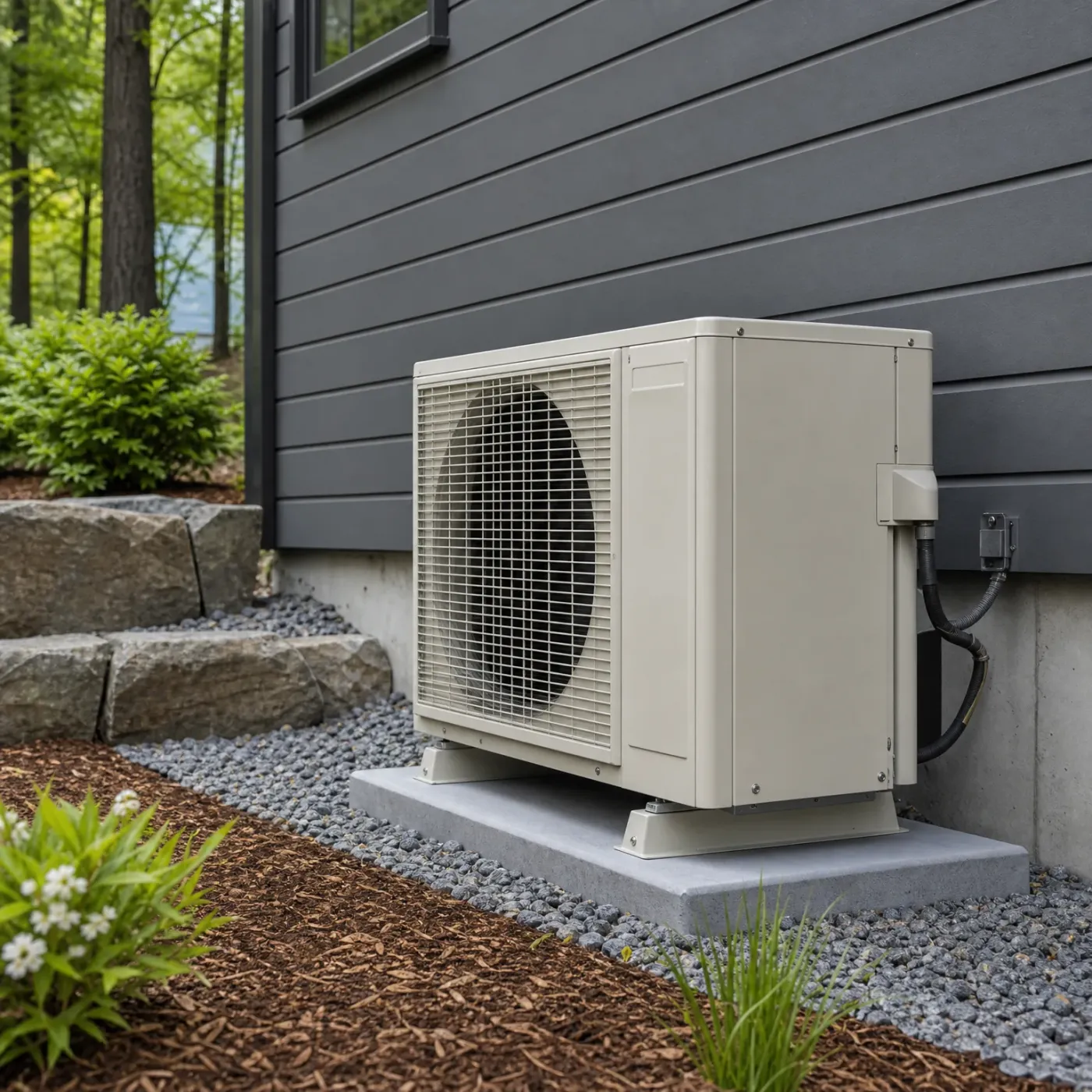
A beige outdoor heat pump unit on a concrete pad beside a gray horizontal-siding house, with refrigerant lines and an electrical disconnect box on the wall, surrounded by gravel, mulch and green plants.

Done looking for a heat pump pro

Skip the round of in-home estimates for a new heat pump.

One request ends the search for a heat pump installer.

Hand off my installation

No fee to send it, and nothing to sign.

Repair It or Replace It

Repair

  • The compressor still starts right up and holds its charge, with no hissing or ice on the lines.
  • A single part failed, like a capacitor or a contactor, and the rest of the system tested fine.
  • The unit is young enough that a repair bill doesn't compete with the cost of replacing the whole system.
  • It's kept its refrigerant charge, so there's no slow leak forcing a tech back out every few months.
  • Your gas furnace carries most of the winter load, so the heat pump isn't leaning on backup strips to get through January.
  • One repair this year, not a string of them, so there's no pattern of the system wearing down.

Replace

  • It's needed a service call every season for the last couple of years, each one a different part.
  • The compressor is struggling to start or cycling off before the house reaches temperature.
  • A refrigerant leak keeps coming back, which usually means the coil itself is failing, not just low charge.
  • Your power bill has climbed the last two summers without anything else in the house changing.
  • It can't keep up on the coldest nights anymore and leans hard on backup heat strips to close the gap.
  • Parts for this model are getting harder to find, and a tech has mentioned it more than once.
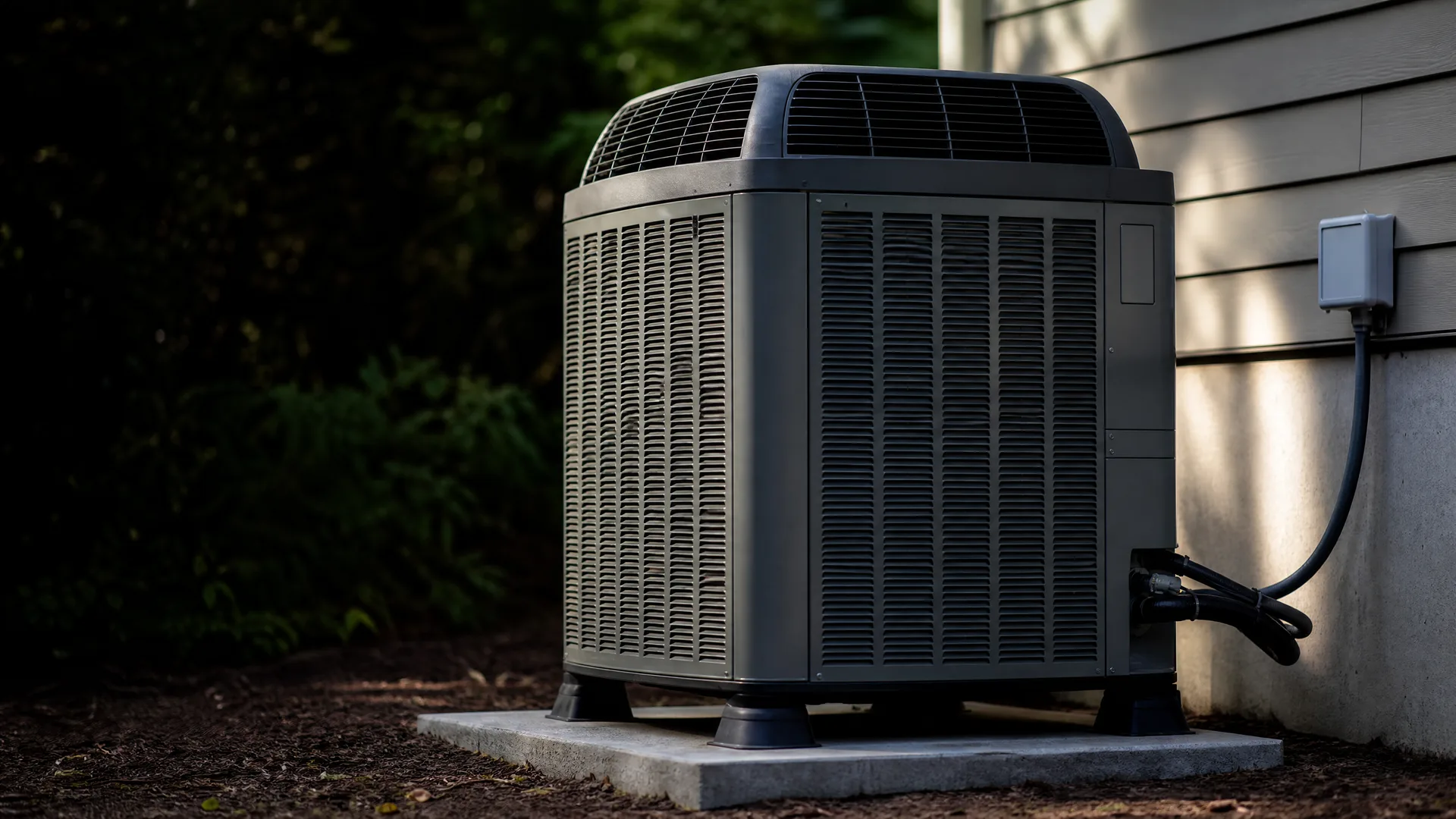
A gray outdoor condenser unit on a concrete pad beside a house with horizontal lap siding, a conduit and disconnect box on the wall, a shrub with white flowers at right and evergreen foliage at left.

Running clean

The pad is clear and the grilles are free of grime. The disconnect box and lines look the way they did on day one. A unit that still looks like this is still doing its job without a fight.

A weathered outdoor condenser unit on a concrete pad beside a house with white horizontal vinyl siding, with refrigerant lines and conduit running to a wall-mounted electrical box.

Worn down

Grime has built up thick on the grilles and the cabinet shows real weathering. When a heat pump looks like this outside, the coil behind that grime is losing the airflow it needs, both for your July cooling and your January heat.

A kitchen interior with a wooden table in the foreground holding a closed laptop, a ceramic mug and a potted plant, with a wood-fronted counter, sink with black faucet, bowl of green fruit, vase of branches and a window showing a sunset sky behind.

What an aging heat pump costs you at home

A heat pump on its way out shows up in your bill before it shows up as a breakdown. You'll run the thermostat at the same setting you always have and still feel a chill near the windows in January, or notice the upstairs rooms staying warm in July no matter how long the system runs. The backup heat strips kick in more often to cover what the compressor can't, and those strips use far more power than the heat pump itself. That difference lands on your January bill whether you've noticed the system struggling or not.

There's also the risk of timing. A heat pump that's been limping along tends to quit on the day it's working hardest, a 23°F night or a stretch of July heat, not some mild afternoon in April. If yours is getting old, it's worth lining up a contractor before that happens rather than after, so you're not stuck calling around and explaining the situation from scratch while your house sits at 60 degrees.

A gray upholstered sofa with a textured cushion sits beside a dark round side table holding a vase of green foliage, with a table lamp and sheer-curtained window behind.
  1. A contractor pulls your home's heating and cooling load for its square footage.

  2. They size the new heat pump to match that load, not the old one.

  3. They check your ductwork can handle the new unit's airflow.

  4. They set the backup heat strips to kick in at the right temperature.

A beige outdoor air conditioning condenser unit on a concrete pad beside a house with horizontal vinyl siding, with refrigerant lines and a disconnect box on the wall, surrounded by dark mulch and a green shrub at left.
Clean fins, clear pad, a unit moving air the way it should.
An outdoor air conditioning condenser unit on a concrete pad beside a house with light horizontal siding and a concrete block foundation, with bare soil and small green plants around it.
Fins packed with dirt and grime, a sign the system's straining to pull air through.

Power here costs 13.46 cents per kilowatt-hour

At 13.46 cents a kilowatt-hour, your backup heat strips cost you something real every time they kick in on a cold night. An older heat pump that's lost efficiency leans on those strips more often, and that shows up on your bill before it shows up as a breakdown.

EIA-861 2025

Where that leaves your heat pump

  • A heat pump running clean, holding temperature, and showing no wear on the coil or pad still has life left in it.
  • A unit past 10 to 15 years that leans hard on its backup heat strips is costing you more each winter it stays in.
  • One failed part on an otherwise sound system, like a capacitor, is a repair, not a reason to replace.
  • Grime on the grille, ice on the lines, or a compressor that struggles to start are signs the unit is working against itself.
  • Sizing the replacement to your home's actual load, not the old unit, is what keeps the next one from costing you the same way.
  • Getting a straight answer on your own means calling around, explaining your system twice, and sorting through quotes on your own time.

A heat pump here earns its keep twice over, carrying your January heat and your July cooling both. That's what makes the call on it different from an AC that only works half the year. If yours still starts up quiet, holds its temperature, and shows a clean coil and a clear pad, it's still doing the job it was built for, whatever its age. The ones worth replacing tell you so directly: a compressor that hesitates before it catches, backup strips kicking in more nights than they used to, a bill that climbs while the thermostat setting hasn't moved. A single bad capacitor or contactor on a system that's otherwise sound is a repair bill, not a verdict on the whole unit. What tips it toward replacement is age stacked on strain, a unit past the years a compressor like this is built to run, working harder than it should to keep up with a Johnson County winter. When it is time, the fix isn't just swapping boxes. The new unit has to be sized to your home's actual load and your ductwork, or it'll struggle the same way the old one did. Sorting that out on your own means calling contractors, explaining your system each time, and weighing quotes against each other with no way to know who's right. Sending one form hands that work to someone else.

An outdoor air conditioning or heat pump condenser unit on a concrete pad beside a house with horizontal siding, with a wall-mounted disconnect box and refrigerant lines, and dark shrubs to the left.

It's off your list after this

New system or replacementHeat PumpJohnson County, KS
Step 1 of 2

What ZIP code is the job in?