





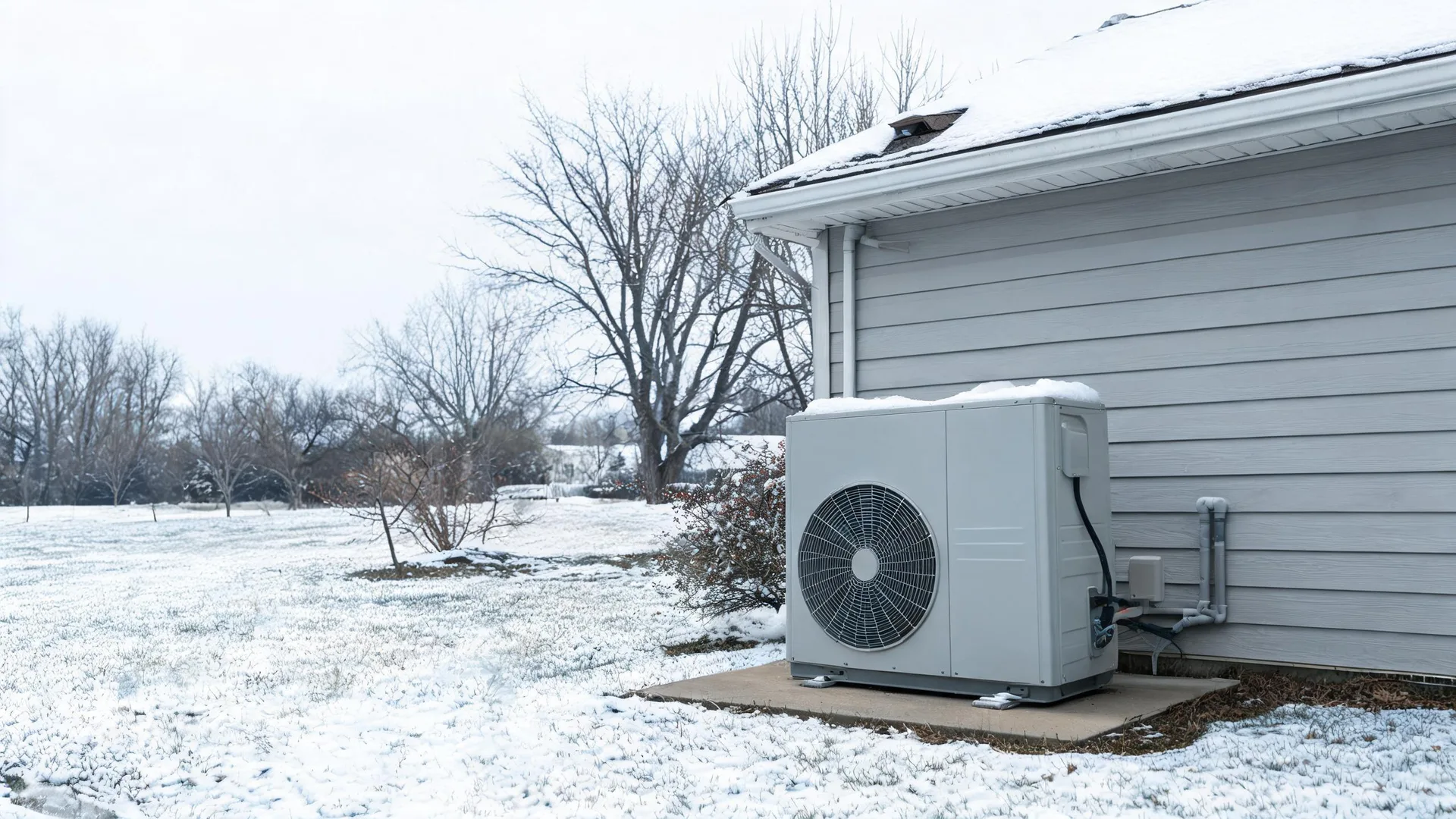
A grey heat pump outdoor unit mounted on a concrete pad against the exterior wall of a house with grey siding and stone veneer.

Heat Pump Repair in Lawrence, KS

Tell us about the job

Takes about a minute. No obligation.

RepairHeat PumpDouglas County, KS
Step 1 of 2

What ZIP code is the job in?

A heat pump in Lawrence earns its keep working against that summer air. A dew point averaging 65°F across June, July and August means the outdoor coil is pulling moisture as well as heat, every hour it runs. That's more load on the compressor than a dry-climate system ever sees. The weather doesn't help it along either. Damaging wind has hit Douglas County 140 times and hail 52 times between 2015 and 2024, and the outdoor unit sits right out in it. A heat pump acting up here is usually just a machine that's been working harder than most, long enough for something to give. Worth having it looked at properly rather than guessed at.

7 months
October through April, your system heats
5 months
May through September, it cools
23°F
the average winter night it heats against
87°F
the average summer afternoon it cools against
Isometric grey-toned illustration of a cutaway house showing interior rooms, ceiling ductwork and an air handler, connected by lines to an outdoor condenser unit beside the building.
Your system heats October through April and cools May through September.

NOAA nClimDiv, 1991–2020 normals

A heat pump in Lawrence switches to heat come October and stays on it through April.

A weak part usually holds through the easy months and fails once the cold settles in.

Power here runs 14.77 cents a kilowatt-hour, so a struggling heat pump is worth catching now

Power here costs 14.77 cents per kilowatt-hour
140 damaging wind events from 2015 to 2024
52 hail events from 2015 to 2024

Electricity here runs 14.77 cents per kilowatt-hour. A heat pump that's lost its charge or is icing up has to run longer to make the same heat or cooling, and every one of those extra hours shows up on the meter at that rate. It won't fix itself and it won't get cheaper to ignore. A system struggling along keeps drawing power the whole time it struggles. Getting it looked at stops that before another bill comes due.

Get the real cause found before you pay for a fix

A heat pump out here puts in more hours than most, and that catches up with it. When something stops working right, it's worth finding the actual part at fault instead of guessing and hoping. A proper diagnosis means the repair holds.

Find a contractor
A gray outdoor HVAC unit mounted on a concrete pad beside a house with gray lap siding and a stone foundation.

A newer system is worth fixing

If your heat pump came with the house, check what year that was. A system installed within the last decade or so still has most of its working life ahead, and a broken part is just a broken part, not a sign to replace the whole unit. Repairing it is the right call when the machine underneath is still good.

The reversing valve is usually the first thing to go

A heat pump switches direction every time it moves between heat and cooling, and the reversing valve is what does that switching. The constant back and forth wears at the valve more than almost any other part in the system. When it sticks, the unit can blow cold air when it should be heating, or it can run nonstop without hitting the temperature set on the thermostat.
A refrigerant leak explains most of the rest

The outdoor coil, the line set and the fittings between them all hold refrigerant under pressure, and any small crack or loose joint lets it escape slowly. A heat pump low on charge still runs, but it has to work longer to move the same amount of heat, and ice can start forming on the outdoor coil even though nothing looks obviously broken. Chasing the actual leak matters, since just adding refrigerant without finding it means the same failure comes back.

Before calling anyone, look at the outdoor unit. If the coil is caked in ice, flip the thermostat to off and let it thaw rather than chipping at it, then see if it runs clean once it's clear. Check that nothing is blocking airflow around the unit, no leaves packed against the coil, no snow piled against the side. Inside, check the thermostat is actually set to heat or cool as you expect and the batteries aren't dead, since a blank or frozen display can look like a bigger problem than it is. Look at the air filter. A filter choked with dust chokes airflow across the whole system, and that alone can cause icing or weak output. Check the circuit breaker the unit runs on hasn't tripped. None of this fixes a bad reversing valve or a refrigerant leak, but it rules out the simple stuff first.

Storms get counted here too. Douglas County logged 208 severe weather events between 2015 and 2024, including 5 tornadoes and 11 winter storms with heavy snow or ice. The outdoor unit sits outside through all of it, with no wall between it and hail or wind-blown debris. A dented cabinet or a bent fin along the coil doesn't always stop the system from running, so it can take the hit and keep going for a while before anything acts up. If a storm has come through and the unit got hit, it's worth having someone check it even if it still seems to heat or cool fine.