A dark-painted two-story house with white-trimmed windows stands behind a wire fence and tall evergreen trees, photographed low to the ground with blurred green grass in the foreground.

Heat Pump Repair in Leavenworth, KS

Tell us about the job

Takes about a minute. No obligation.

RepairHeat PumpLeavenworth County, KS
Step 1 of 2

What ZIP code is the job in?

Check the thermostat and the breaker first

Make sure the thermostat is set to heat or cool as needed and the temperature is actually calling for one or the other. Then check the breaker panel for your outdoor unit and your air handler. A tripped breaker or a thermostat bumped into the wrong mode causes a lot of calls that look like bigger problems.

Look at the outdoor unit before you decide it needs a repair

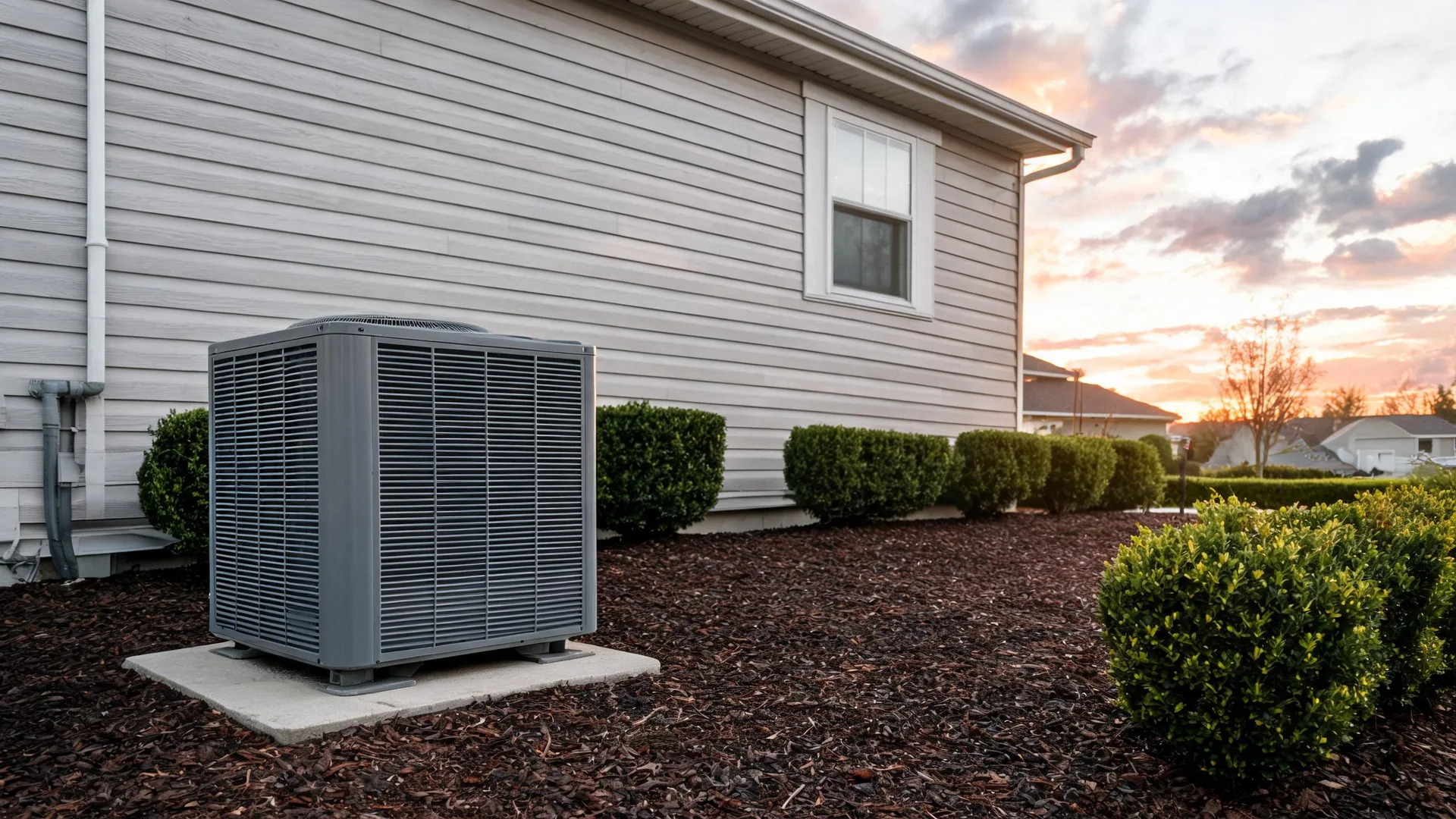
Walk outside and check if the unit is caked in ice or buried in leaves and debris. Some frost in cold weather is normal since heat pumps defrost themselves on a cycle, but a unit fully coated in ice that never clears on its own points to a real problem. Clearing debris away from the unit is safe to do yourself and sometimes solves the issue outright.

7 months
October through April, your system heats
5 months
May through September, it cools
23°F
the average winter night it heats against
87°F
the average summer afternoon it cools against
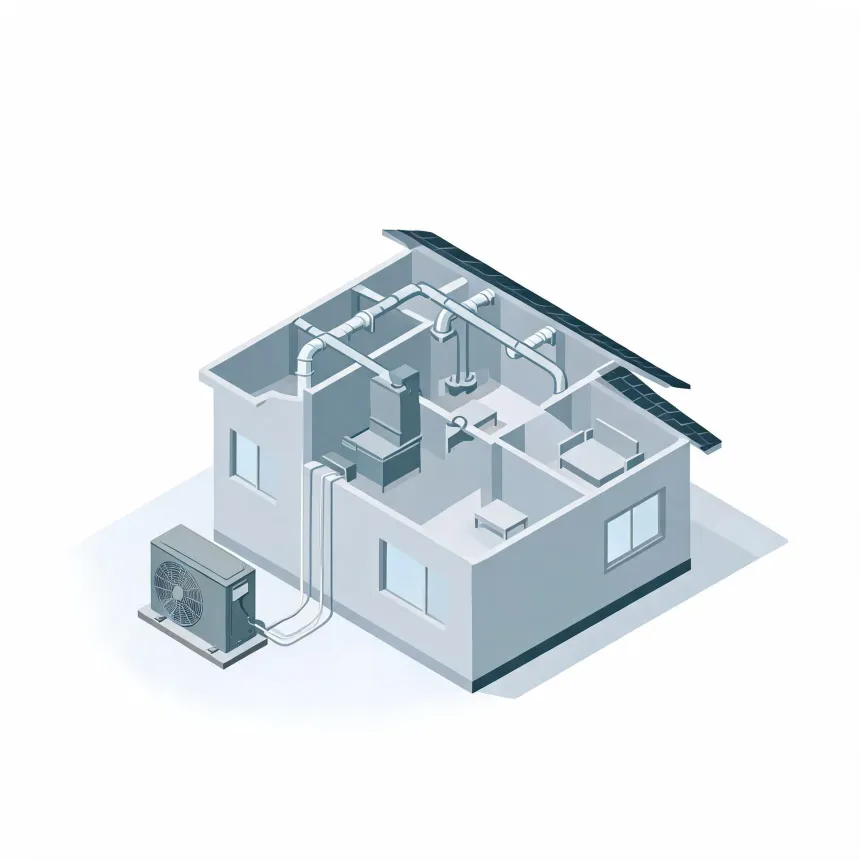
Isometric cutaway illustration of a single-story house showing interior ductwork, an air handler and rooms, with an outdoor condenser unit connected by refrigerant lines on a plain white background.
Your system heats October through April and cools May through September.

NOAA nClimDiv, 1991–2020 normals

A compressor failure on an old heat pump is usually where repair stops making sense.

Everything else on the unit, the fan motor, the reversing valve, the board, is worth fixing on its own merits.

Leavenworth gets its share of wind and hail, nothing that singles out a heat pump

137 severe weather events from 2015 to 2024
19% of homes statewide lost power a day or more in 2024
92 damaging wind events from 2015 to 2024
Leavenworth, KSKansas homes paid 14.15 cents per kilowatthour in 2024, same meter as anywhere else running a heat pump.

Half the homes in Leavenworth County were built in 1982 or later. If your house falls on that side, there's a decent chance your heat pump is newer too, even if it's not the original unit. That's worth knowing before you decide whether a repair makes sense. A compressor failure on a unit with a lot of life left behind it is worth fixing. The same goes for the smaller stuff, a fan motor or a control board, no matter how old the system is.

If your heat pump is newer, repair is the right call

Get a real diagnosis before you write off the unit. Most of what goes wrong on a heat pump, a fan motor, a board, even a compressor on a newer system, is worth fixing rather than replacing.

Find a contractor
A man seen from behind in a gray long-sleeve shirt and dark pants carries a canvas duffel bag up a porch step toward a red front door of a gray shingled house, with a potted shrub to the right.
A gray outdoor HVAC unit mounted on a concrete pad beside a house with gray lap siding and a stone foundation.

It runs both directions, all year

A heat pump runs in both directions, all year, so its parts wear differently than a furnace or an AC that rests part of the year. The reversing valve is the part unique to this machine, and it earns its keep every time the system switches between heat and cool. Over time the valve can stick or fail to shift fully, and when that happens the unit blows air that feels wrong for the mode it's in. The outdoor coil takes the brunt of the weather since it works as both an evaporator and a condenser depending on the season, and years of exposure leave it dirty or bent enough to choke airflow. Defrost cycles add wear too. Every heat pump melts frost off the outdoor coil on a timer or sensor, and when the defrost board or sensor goes bad, the unit either never defrosts or runs defrost too often, and ice builds up where it shouldn't. The compressor is the part that ends the conversation if it fails, since it runs more total hours over a year than a cooling-only system's compressor does. None of this means a heat pump fails sooner. It means the parts that fail are the ones doing double duty.

Air that's the wrong temperature for the mode it's in

If the system is set to heat but blows cool air, or set to cool but blows warm, that usually points to the reversing valve not shifting all the way. It can also run louder or hum when it tries to switch. This is worth a call even if the air is still moving fine, since the valve won't fix itself.

Short cycling or a unit that won't stop running

A heat pump that shuts off a few minutes after starting, or one that runs constantly and never seems to catch up, is telling you something is off with the controls, the refrigerant charge, or the compressor itself. Either pattern wears the compressor down faster the longer it goes unaddressed.

A heat pump that's struggling still tries to do its job, and that's what causes the damage. A low refrigerant charge makes the compressor work harder to move heat either direction, and that extra strain is what burns a compressor out early. A coil that's iced over or caked in debris blocks airflow, and the system responds by running longer and harder to hit the setpoint, which stresses the fan motor and the compressor both. A reversing valve that's starting to stick gets worse with use, not better, since it's the repeated switching that wears on it. None of these start as compressor problems. They turn into one if the unit keeps running on a fault instead of getting looked at.

A diagnostic visit starts outside at the unit, checking refrigerant pressure and the amp draw on the compressor and fan motor. From there a tech checks the reversing valve under a meter, watching whether it shifts fully in both directions rather than going by how the air feels. The control board and defrost sensor get checked too, since a bad sensor can make a working compressor look like the problem. Much of this is ruling things out one at a time. Warm air in cooling mode or a unit that won't stop running can come from more than one part, and testing is the only way to know which one. Once the bad part is found, a tech can say plainly whether it's worth fixing.