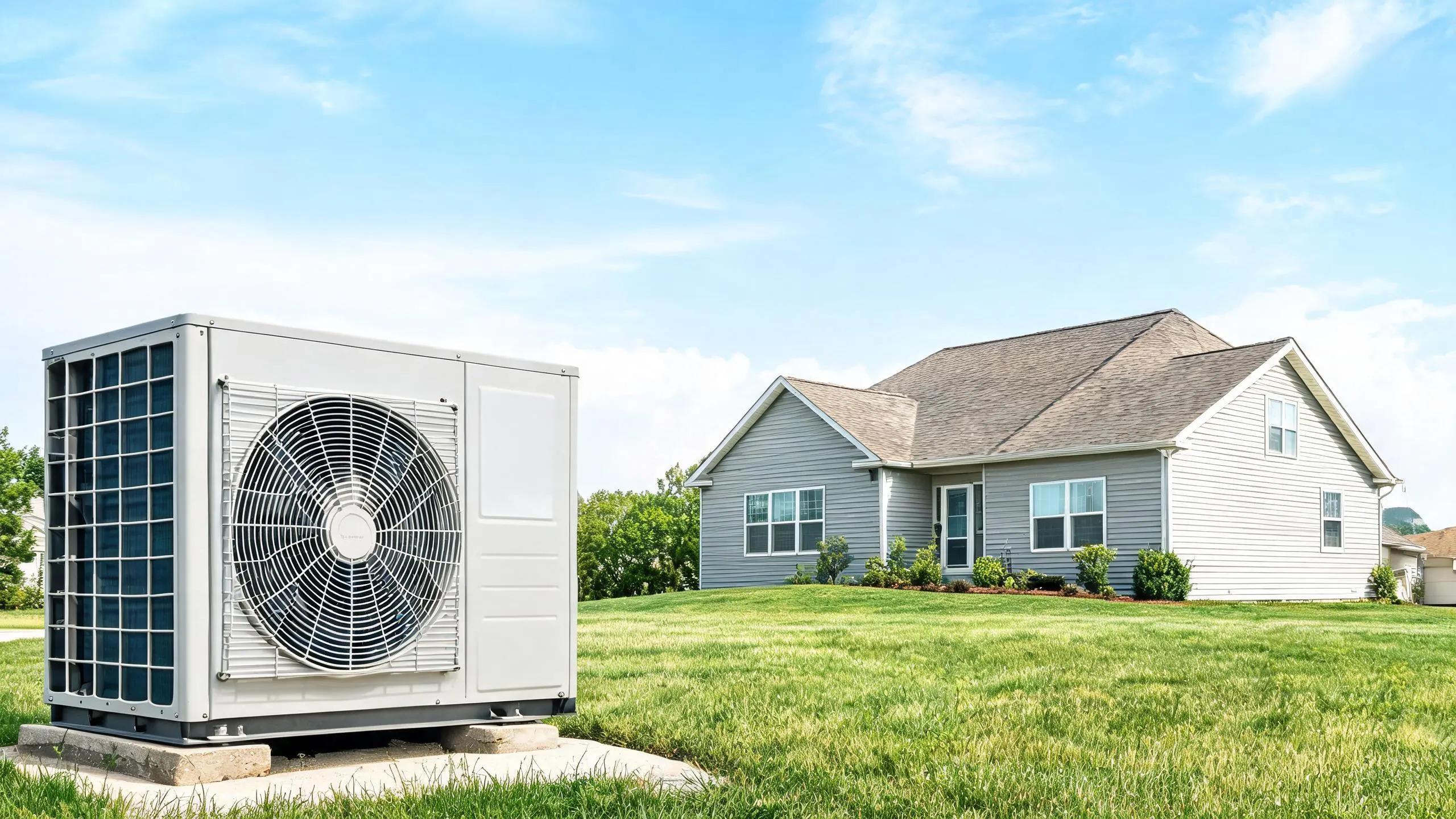






An outdoor HVAC condenser unit on a concrete pad in front of a single-story house with gray siding and a shingle roof.

Heat Pump Repair in Liberal, KS

Tell us about the job

Takes about a minute. No obligation.

RepairHeat PumpSeward County, KS
Step 1 of 2

What ZIP code is the job in?

Seward County sees more than its share of severe weather. Between 2015 and 2024 the county recorded 215 severe weather events, including 126 bouts of damaging wind and 70 hail events. A heat pump's outdoor unit sits right in the path of that. Hail dents the cabinet and bends the fins around the coil, and wind-blown debris can do the same even in a clear storm with no hail at all. The unit can keep running afterward and still have a bent coil or a damaged fan blade working against it. Six tornadoes touched down in the county over that same stretch, which is a reminder that the outdoor unit has no real shelter from what a bad storm carries with it.

7 months
October through April, your system heats
5 months
May through September, it cools
22°F
the average winter night it heats against
91°F
the average summer afternoon it cools against
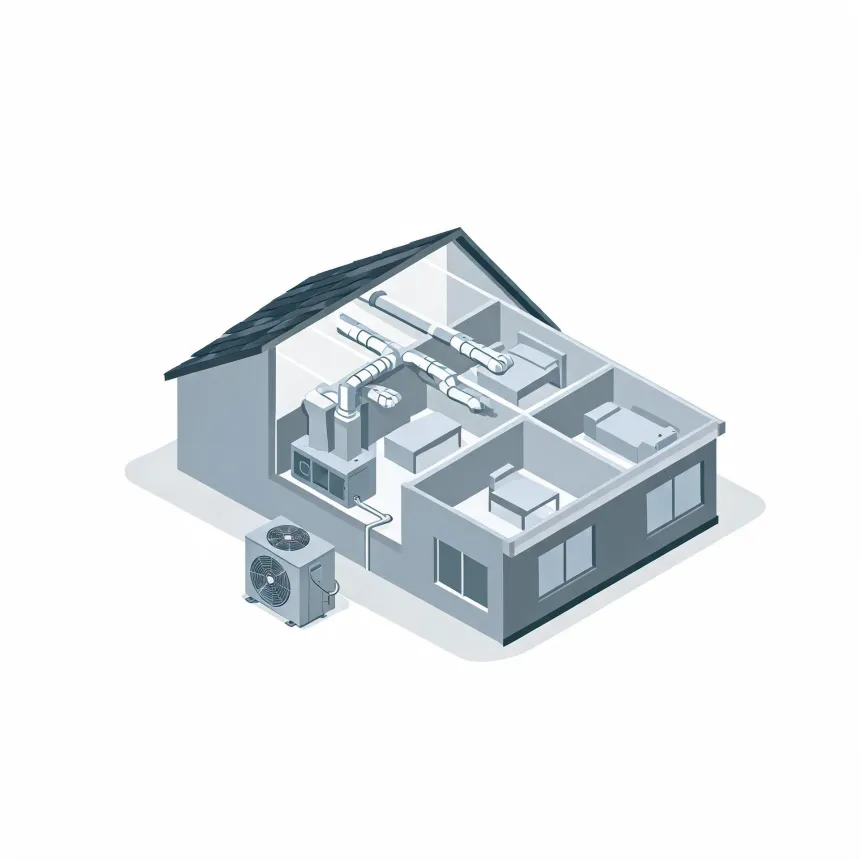
Isometric grayscale illustration of a cutaway house showing interior rooms, ceiling ductwork connected to an indoor air handler, and an outdoor condenser unit beside the exterior wall.
Your system heats October through April and cools May through September.

NOAA nClimDiv, 1991–2020 normals

Half the homes in Seward County were built in 1973 or earlier.

A heat pump installed with a house that old is a candidate for replacement, not just repair.

Your heat pump earns its keep from October to April here

Cooling runs May through September
Heat runs October through April
Climate zone 4A
Built for weather, not just temperatureThe outdoor unit runs through wind and hail both, and it still has to heat and cool on the days in between.

Ask the contractor straight out how much life is left in the system before agreeing to a big repair. If the unit came with the house and the house is on the older side here, that repair bill deserves a second question: what would a new system cost instead. A compressor or reversing valve job on an aging heat pump can run close to what replacement costs. Get both numbers before deciding which way to go. A contractor who has serviced the unit before may already know its condition well enough to tell you straight which way makes sense.

If the last storm came through your unit, get it looked at

Running fine after a storm doesn't mean nothing bent. A dented fin or a nicked blade can sit there working against the unit for months before it fails outright. If your outdoor unit took wind or hail recently, have it checked now rather than after it quits.

Find a contractor
A man in a dark jacket, cap and tan work pants climbs porch steps toward a red front door, carrying a canvas tool bag in his right hand, with a potted shrub at left.
A gray air-source heat pump mounted on a concrete pad next to a house with gray vinyl siding, surrounded by gravel and flanked by green shrubs and white hydrangea flowers.

Years of weather add up before the breakdown does

This unit has already been through storms before whatever is wrong with it now. When something that has taken years of wind and hail starts acting up, the cause is as likely to be stress built up over time as it is a single bad part. A tech who checks the coil fins and the cabinet while diagnosing the actual complaint can catch a second problem before it becomes the next call.

Check the simple things first

Look at the thermostat before anything else. Make sure it's set to heat or cool as needed and the batteries aren't dead. Check the breaker box for a tripped breaker on both the indoor air handler and the outdoor unit, since a heat pump draws from two separate circuits. Walk outside and look at the unit itself. If the fan isn't spinning and you don't hear any hum, that's different from a fan spinning while the air coming out stays weak.
Know what to leave alone

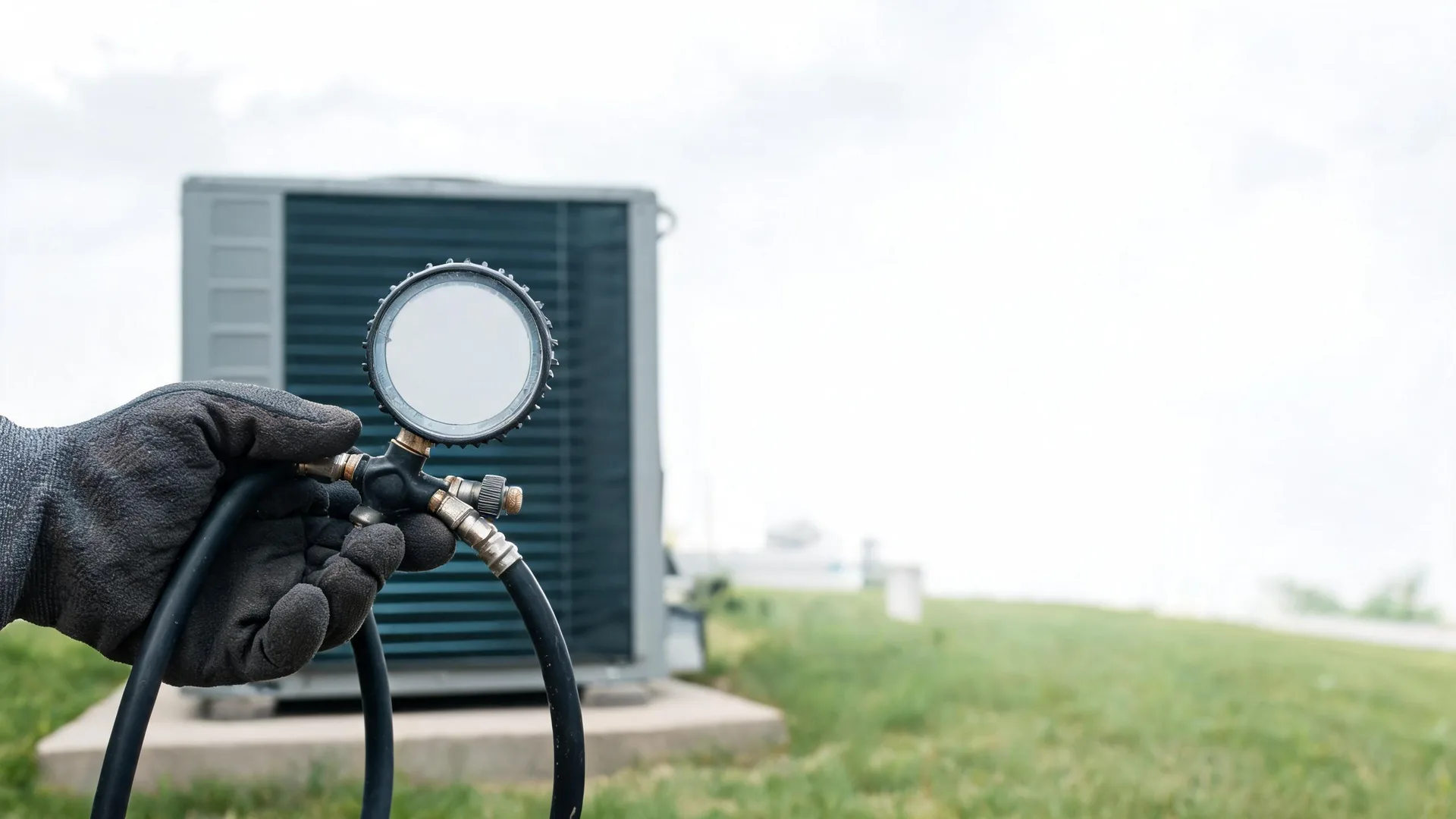
Don't pull the outdoor unit's cabinet apart or touch anything inside it. The capacitor in there holds a charge even with the power off, and refrigerant lines need a gauge set and training to handle safely. A homeowner can clear leaves and debris away from the unit and rinse the outside of the coil gently with a hose. Anything past that, including a coil that looks bent or a compressor that hums but won't start, is a call for a tech rather than a project.

A heat pump that's struggling doesn't fix itself by staying on. If the system is low on refrigerant, the compressor keeps working harder to move what little it has, and that heat builds up where it shouldn't. A compressor that overheats repeatedly can burn out windings that were fine a month ago. A failing run capacitor makes the compressor or fan motor draw more current than it should every time it tries to start, and that strain shortens the motor's life with each cycle. Even something as simple as a dirty coil forces the system to run longer to do the same job, and that extra runtime wears on every part downstream of it. The longer a known problem keeps running, the more likely it is to take something else down with it.

A repair is worth doing when the rest of the system is sound and only one part failed. A bad capacitor, a failed contactor, a blown fan motor are all parts a tech replaces on their own, and the unit runs the same afterward as it did before. The compressor is a different case. It is the most expensive part in the system, and the labor to replace it is close to the labor a new unit needs, so a failing compressor is usually the point to ask about replacing the whole system instead. A refrigerant leak raises the same question, since finding and sealing it can run close to the cost of moving to a new coil. What matters most is whether the unit has been reliable apart from whatever is wrong right now, or whether this is one more call in a pattern of them.