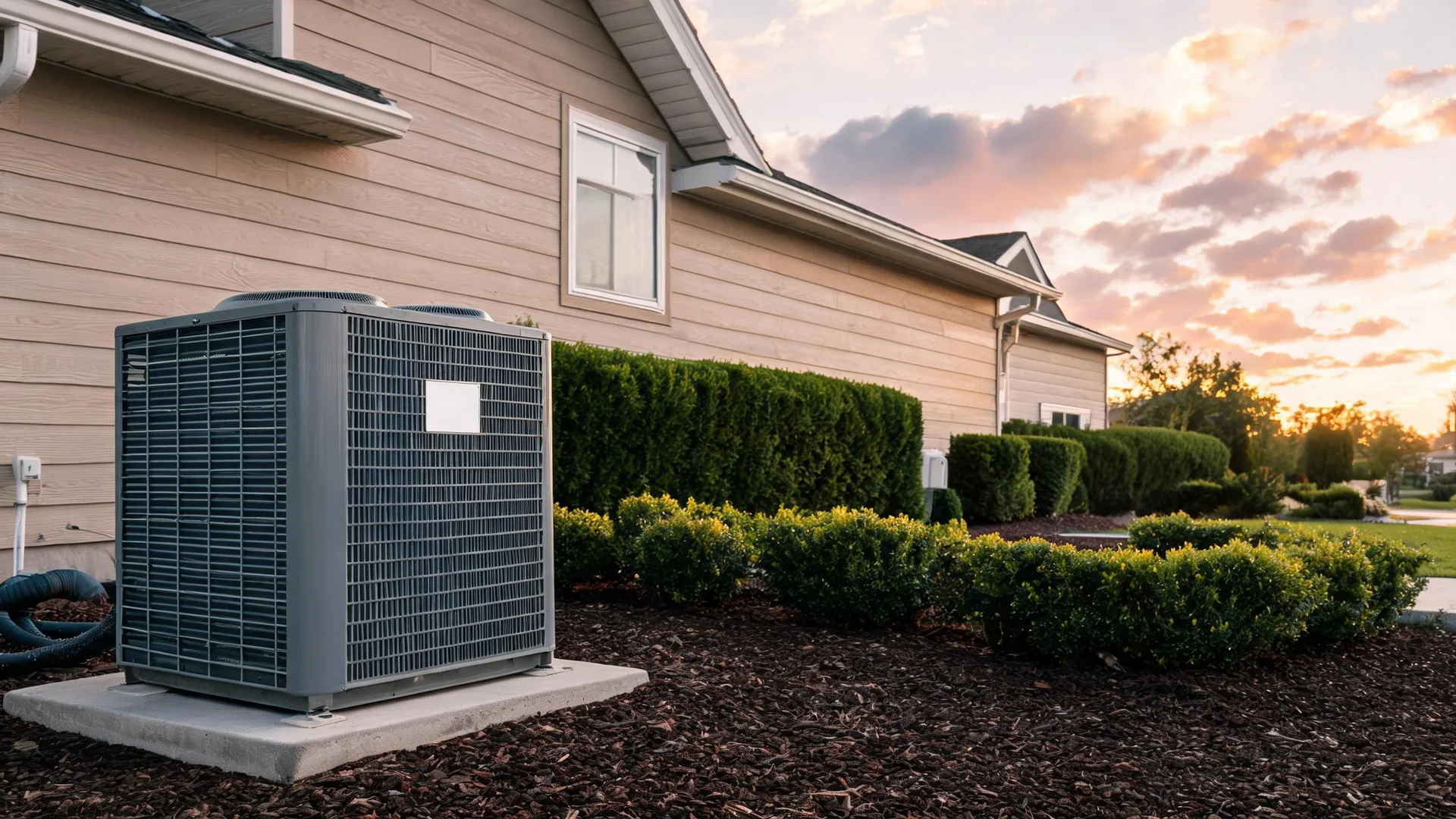
An outdoor HVAC condenser unit on a concrete pad in front of a two-story suburban house.

Heat Pump Repair in Marysville, KS

Tell us about the job

Takes about a minute. No obligation.

RepairHeat PumpMarshall County, KS
Step 1 of 2

What ZIP code is the job in?

The air here holds a lot of moisture

A dew point near 63°F through June, July and August means the air is heavy most of the summer. Your heat pump has to pull more moisture out of the air to cool your home, and that's harder on it than dry heat ever is.


That strain adds up over time

A system working against heavy air all summer wears sooner than one that doesn't. When something goes wrong, it's usually that strain catching up with a part, not a fluke. Getting it diagnosed right matters more here than most places.

7 months
October through April, your system heats
4 months
June through September, it cools
19°F
the average winter night it heats against
87°F
the average summer afternoon it cools against
Isometric cutaway illustration of a small house showing interior rooms with furniture, an indoor air handler with ductwork, and lines running to an outdoor condenser unit beside the building.
Your system heats October through April and cools June through September.

NOAA nClimDiv, 1991–2020 normals

Half the homes in Marshall County were built in 1959 or earlier.

A heat pump on a house that old is more likely nearing the end of its working life than at the start of one.

Electricity here runs 15.36 cents a kilowatt-hour, and a struggling heat pump burns through it every month it's not fixed

Power here costs 15.36 cents per kilowatt-hour
83 damaging wind events from 2015 to 2024
68 hail events from 2015 to 2024
This county gets storms most places don't172 severe weather events hit Marshall County between 2015 and 2024, and your outdoor unit sits right in the path of them.

Heat runs here from October through April, about seven months straight. September is when a heat pump that's been limping along finally gets asked to do more, and that's usually when it quits. A weak part can coast through a mild stretch and still fail the first cold morning it has to work for real. Low overnight temperatures averaging 19°F through December, January and February mean the system can't just struggle, it has to keep up for hours at a stretch. If yours is already acting up before the season gets going, that's the time to find out whether it's worth repairing or whether you're better off putting that money toward a new one.

Have your heat pump diagnosed before you decide what to do about it

A system already strained by the moisture and the cold snaps here doesn't need a storm to break down, but it doesn't need much of one either. Get it looked at before you guess what's wrong.

Find a contractor
A man in a gray shirt, cap, and work pants carries a canvas tool bag up white porch steps toward a red front door, with a potted shrub beside the entry.
A gray heat pump condenser unit mounted on a concrete pad against the gray lap-siding exterior wall of a house.

Some of these get worse the longer you wait

A refrigerant leak is the clearest example. A system low on charge still runs. The compressor still turns, air still comes out of the vents, so nothing looks wrong from inside the house. But the compressor is built to pump refrigerant, not air, and when there isn't enough charge in the line it starts pumping something closer to vapor. That wears the compressor in a way a full charge never would. Ice on the coil works the same way. A little frost melts off in the defrost cycle without anyone noticing. Left alone, that ice builds, blocks airflow across the coil, and forces the compressor and fan motor to work against a system that can't breathe. Neither problem fixes itself by running. Both get worse the longer the unit keeps going, right up until the part under the most strain is the compressor itself, which is the expensive one to lose.

It won't switch between heat and cool right

A heat pump stuck in one mode, or blowing cool air when it should be heating, usually points to a stuck reversing valve. That valve is what flips the system between heating and cooling, and once it sticks, the system can't do its job either direction.

It runs, but the house never feels right

Short cycling, warm air in winter that never gets warm enough, or a unit that won't shut off are all signs of a system losing capacity, not a system about to go completely dead. Catching it at this stage is what makes repair worth considering instead of just waiting for a full breakdown.

A heat pump fails for a handful of reasons, and most of them show up in the same few parts. The reversing valve sticks. The defrost board stops telling the unit when to shed ice off the outdoor coil. A capacitor weakens and the compressor or fan motor struggles to start. Refrigerant leaks out slowly at a fitting or coil joint, and the system keeps running while it does less and less work. None of these happen overnight. A unit usually gives some warning first, running longer than it used to, or cycling more than it should, before it quits outright. Catching one of these early is almost always cheaper and simpler than waiting for the part to take the compressor down with it.

A heat pump losing capacity doesn't run less, it runs longer to make up for what it's lost. Every extra hour it runs costs more here than in most places, and that cost keeps showing up on the bill until the part causing it gets fixed. Waiting to see if it gets worse just means paying more for the same repair, for longer. Get it diagnosed now, while it's one weak part and not a compressor on its way out.