An outdoor air conditioning condenser unit mounted on a concrete pad in front of a single-story suburban house.

Heat Pump Repair in Newton, KS

Tell us about the job

Takes about a minute. No obligation.

RepairHeat PumpHarvey County, KS
Step 1 of 2

What ZIP code is the job in?

The air here works against the system

A heat pump moves heat, and summer here gives it a lot to move. The dew point in Harvey County averages 64°F through June, July and August, which is heavy air for the coil and compressor to handle. That load runs for months, not weeks.


Weather adds its own wear

Harvey County saw 91 damaging wind events and 59 hail events between 2015 and 2024. An outdoor unit sits outside through all of it. Bent fins, a dented cabinet or debris pulled into the fan can all start as weather damage and end up as a refrigerant or electrical problem.

7 months
October through April, your system heats
5 months
May through September, it cools
23°F
the average winter night it heats against
90°F
the average summer afternoon it cools against
Isometric cutaway illustration of a single-story house showing interior rooms, ceiling ductwork connected to an air handler, and an outdoor condenser unit linked by a line set.
Your system heats October through April and cools May through September.

NOAA nClimDiv, 1991–2020 normals

A heat pump leans hardest on its weakest part the day the load changes.

That first cold snap in October or the first warm stretch in May is when a repair call here tends to come in.

Half the homes here were built before your heat pump was

Half the homes here were built by 1970
Climate zone 4A
Power here costs 14.68 cents per kilowatt-hour

Harvey County logged 163 severe weather events between 2015 and 2024, and a good share of that was wind and hail. The outdoor unit has no choice but to sit through it. Hail dents the cabinet and bends the fins on the coil, and bent fins choke the airflow the coil needs to work. Wind-driven debris gets pulled into the fan and can throw it off balance or jam it outright. A unit that took a hit like that can keep running for weeks before the real problem shows up, usually as a refrigerant leak or a short somewhere in the electrical. The county saw 4 tornadoes touch down between 2015 and 2024, so sometimes the damage is obvious, but most of it isn't.

Find out what years of hard running actually did to it

Wind and hail have had plenty of chances at the outdoor unit over the years, and heat and humidity have worn on the rest of it every summer since. Whatever is wrong right now likely traces back to one of those. A proper diagnosis finds the actual part and fixes that, instead of masking what's underneath it.

Find a contractor
A man in a dark shirt and tan work pants carries a worn canvas tool bag up concrete steps toward a red front door of a gray clapboard house, with a potted shrub in a red planter beside the entry.
A gray heat pump condenser unit mounted on a concrete pad against the gray lap-siding exterior wall of a house.

Ask how old it is before you pay to fix it

If the heat pump came with the house, ask the contractor how old it is before agreeing to a repair. A system that old is closer to the end of its life than the beginning, and that changes what a repair bill is worth paying. One installed more recently is a different conversation. Either way, it's worth asking before any money changes hands.

What you can check yourself

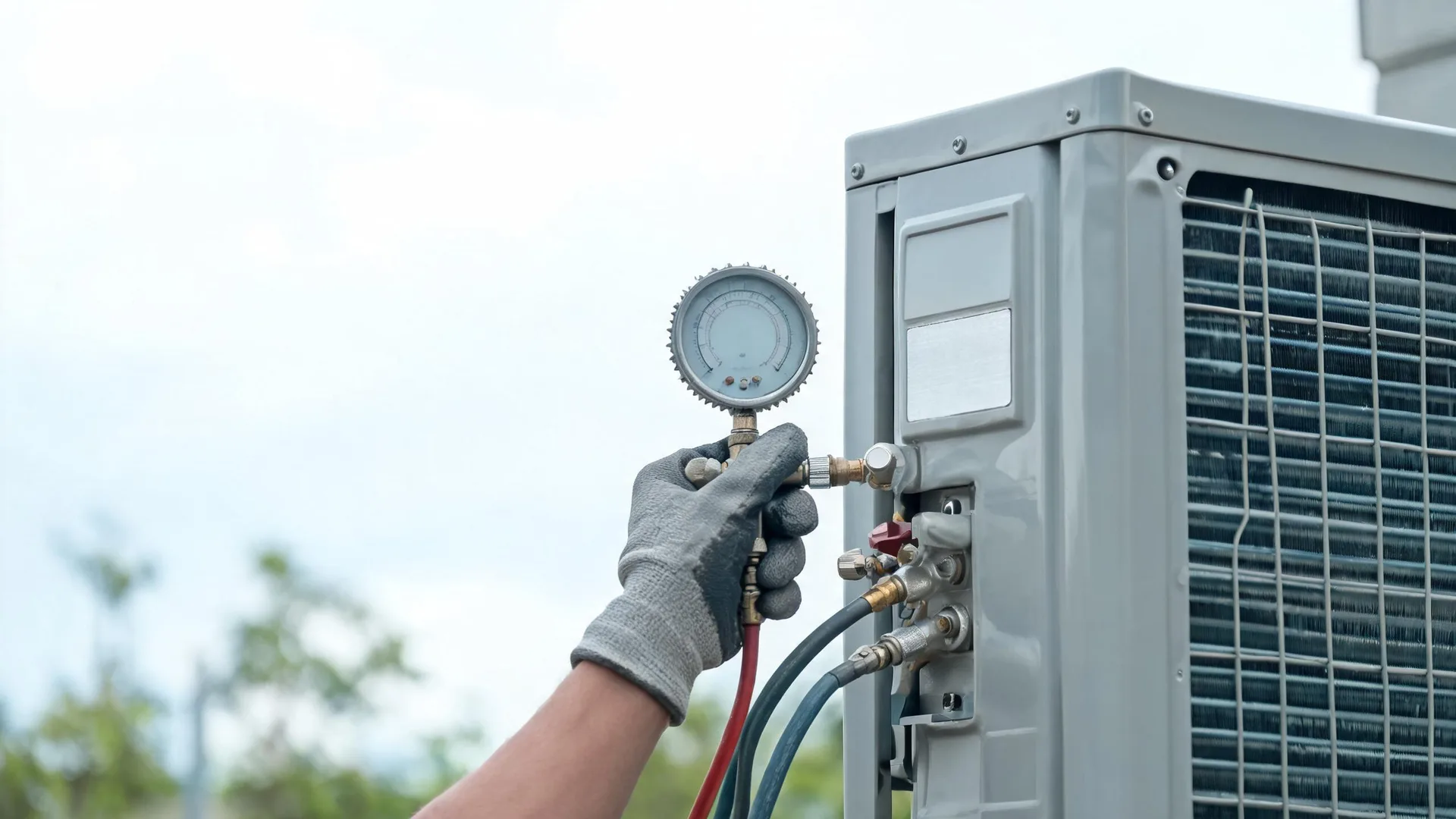
Look at the thermostat first. Make sure it's set to heat or cool as needed and the batteries aren't dead. Check your breaker panel for a tripped breaker, both the one for the indoor air handler and the one for the outdoor unit. Walk outside and look at the outdoor unit. If ice is built up on the coil or the fan isn't spinning, that's worth noting before anyone comes out. Check your air filter too. A filter clogged with dust chokes airflow and can make the whole system struggle or shut down on its own.

What to leave alone

Don't pull panels off the outdoor unit or touch anything inside the electrical compartment. Don't pour water or anything else on a frozen coil to melt it faster. If the system is icing up, switching it off and letting the fan run without the compressor can help it thaw, but forcing it isn't worth the risk to the coil or to you. A refrigerant leak, a bad capacitor or a failing reversing valve all need a gauge set and training to diagnose safely, and guessing at those parts usually turns a small repair into a bigger one.

A heat pump in trouble gives you clues before it quits outright. Short cycling is one, where the system kicks on, runs a few minutes, and shuts off again without finishing a full cycle. That wears on the compressor more than steady running ever does. Air that comes out lukewarm instead of properly warm or cool points to a refrigerant problem or a failing compressor. Strange noises matter too. A grinding or squealing from the outdoor unit usually means a motor bearing is going. Clicking that repeats without the system starting points to a relay or capacitor that can't hold a charge anymore. If you notice the system running far longer than it used to just to hit the temperature on the thermostat, something is already making it work harder than it should.

If the outdoor unit took a hit from hail or wind in the last few years, don't wait for it to fail to find out. Ask the contractor to check the coil fins and the fan while they're out there, even if the complaint that brought them is something else entirely. Bent fins can choke airflow for months before the system struggles enough for you to notice. A fan thrown off balance by debris will wear its motor faster than normal, and that failure tends to arrive suddenly rather than gradually. Catching the damage now costs less than waiting for it to take out a part.