







A snow-covered small-town street at dusk, with lit white clapboard houses, bare trees, and a grain elevator silhouetted against an orange and blue twilight sky.

Heat Pump Repair in Osage City, KS

Tell us about the job

Takes about a minute. No obligation.

RepairHeat PumpOsage County, KS
Step 1 of 2

What ZIP code is the job in?

A heat pump around Osage City is moving heat both ways most of the year, and the air it works against is part of the problem. Summer dew points here average 66°F, which is heavy, sticky air, and the system has to pull real moisture out of it every time it runs. That's steady work on the compressor and the coil, not an occasional burst. Hail is a factor too. Osage County recorded 70 hail events between 2015 and 2024, and the outdoor unit sits outside through all of it, fins and coil exposed to whatever comes down. Add cold winters pulling heat the other direction, and the unit gets worked from both sides with no real break. When something starts acting up, it's worth having a contractor look at the actual cause rather than just clearing the symptom.

7 months
October through April, your system heats
5 months
May through September, it cools
23°F
the average winter night it heats against
88°F
the average summer afternoon it cools against
Isometric line illustration of a cutaway single-story house showing interior rooms with furniture and ceiling ductwork, connected to an outdoor condenser unit on the ground outside the left wall.
Your system heats October through April and cools May through September.

NOAA nClimDiv, 1991–2020 normals

A heat pump that won't switch between heat and cool is usually stuck on the reversing valve, not the thermostat.

That's a part a homeowner can't test safely, so it's one to describe to the contractor rather than poke at.

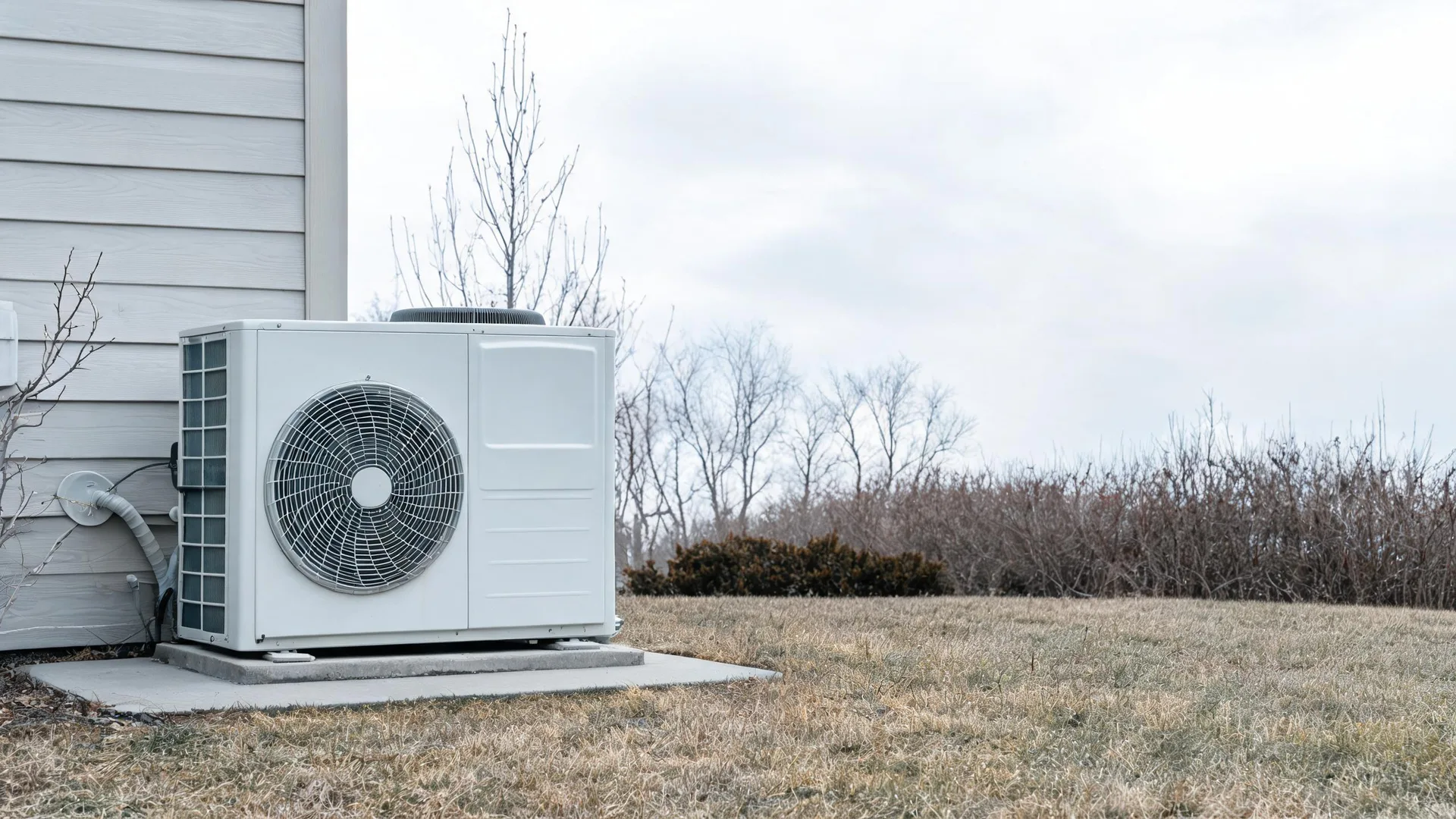
This county sees its share of hail and wind, and the outdoor unit stands right in it

157 severe weather events from 2015 to 2024
19% of homes statewide lost power a day or more in 2024
71 damaging wind events from 2015 to 2024
The First Cold Snap Finds the Weak PartHeat here runs October through April, and trouble usually shows up fast once the load hits.

If the outdoor unit took a hit from hail or a branch came down near it in a storm, that's worth a look even if the heat pump still runs. Bent fins or a cracked fan blade don't always stop the system right away. They just make it work harder and wear faster, which is the same problem this county's weather already causes on its own. A contractor can check the coil and fan for storm damage in the same visit as whatever repair brought you here. Worth mentioning if you've had a bad storm come through recently, even if the unit seems fine.

Find out what's actually wearing out, not just what's acting up

Between the humidity and the hail, the outdoor unit doesn't get an easy year here. When it starts acting up, that's usually the wear catching up with it, not bad luck. A contractor can find the actual part behind it and fix that, so the repair holds.

Find a contractor
A man in a dark long-sleeved shirt and dirt-stained tan jeans walks away from the camera up porch steps toward a red front door, carrying a worn canvas and leather tool bag.
A dark gray heat pump unit mounted on a concrete pad next to a house with gray siding and a stone veneer wall.

What the Machine Tells You Before It Quits

A heat pump doesn't give much warning before it quits outright, but it tells you things along the way if you're paying attention. Short cycling is one of the first. The unit kicks on, runs a few minutes, shuts off, then starts again, and it never settles into a normal run. That's hard on the compressor, which isn't built to start and stop that often. Ice on the outdoor coil in weather that doesn't call for it is another. A little frost in cold weather is normal and the defrost cycle clears it. A coil that stays iced over, or ices up in mild weather, points to low refrigerant or a defrost control that isn't doing its job. Airflow out of the vents that feels weak or just not as warm or cool as it should be often traces back to the reversing valve or a failing blower motor. A grinding or squealing sound from the outdoor unit usually means a fan motor bearing is going out, and that's not something that gets better on its own. Strange smells, especially anything electrical or burnt, mean shut it off and get someone out rather than waiting to see if it passes. None of these mean the whole system is done for. Most of them are a single part failing while the rest of the unit is fine, and catching it early is what keeps it that way.

Most Failures Are One Part, Not the System

A heat pump has a short list of parts that wear out before anything else does: the capacitor that gives the compressor and fans their starting kick, the contactor that switches power to the outdoor unit, the reversing valve that swaps the system between heat and cool, and the defrost board that clears the outdoor coil in winter. Each one fails on its own, and the rest of the unit keeps working right up until that part gives out. A capacitor going weak shows up as a fan that hums but won't spin, or a compressor that struggles to start. A stuck contactor means the outdoor unit won't fire at all even though the thermostat is calling for it. These aren't wear spread evenly across the machine. They're specific parts with a specific job, failing because that job wears on them more than anything else in the system.
What That Means for Diagnosis

Because failure usually traces back to one part, the right move is finding which one rather than replacing what's easiest to reach. A compressor that won't start could be the capacitor, the contactor, or the compressor itself, and those three repairs are not close to the same job or the same cost. A contractor checks the part with a meter before deciding anything, because guessing by symptom alone gets it wrong often enough to matter. The upside is that most heat pump repairs are smaller than they sound. A system that seems dead is frequently one failed part away from running fine again, not a sign the whole unit needs replacing.

A heat pump that's struggling doesn't fail cleanly. It fails louder, and it pulls other parts down with it. A weak capacitor makes the compressor try to start without enough of a jolt, and every failed attempt heats the compressor windings a little more than a normal start would. Do that enough times and you've turned a capacitor repair into a compressor replacement. A coil icing over works the same way. The system can't move heat through ice, so it runs longer to do the same job, and that extra runtime is what finishes off a blower motor that was already on its way out. Shutting the system off when something sounds or feels wrong doesn't fix the problem, but it stops a cheap part from taking an expensive one down with it.

The question isn't really repair or replace. It's whether this failure is a one-off or the latest in a string. A unit that's needed a capacitor once in several years and nothing else is a sound machine having a bad day. A unit that's had the contactor replaced last year and the blower motor the year before is telling you something different, even if each repair was small on its own. Age matters here more than any single symptom does, since a compressor or coil failure on an old unit often costs more to fix than the unit has years left in it. A contractor who's seen the repair history can tell you which kind of situation you're actually in.