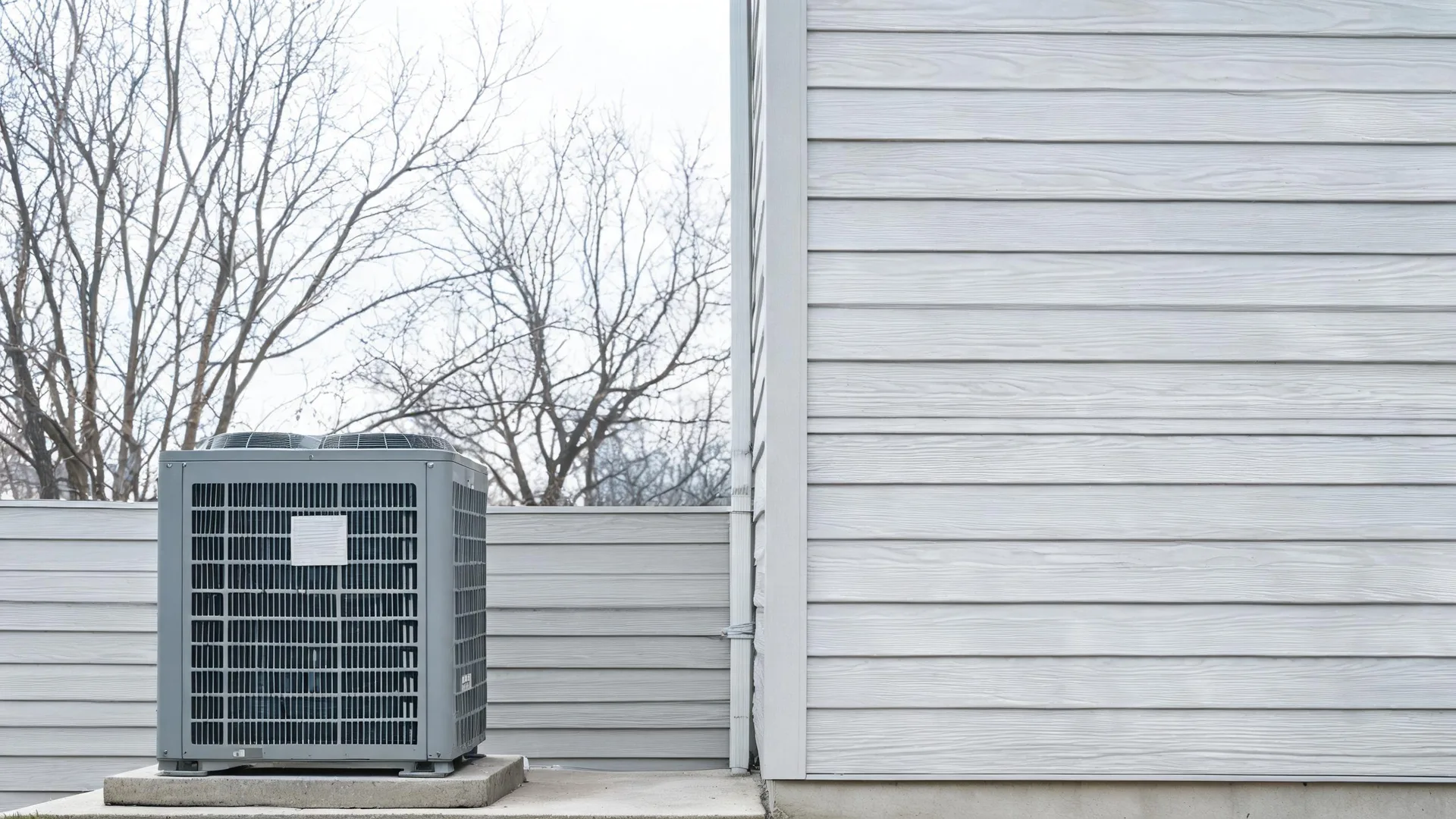
Hail is worth ruling out first
Franklin County has had 46 hail events between 2015 and 2024. A hailstorm can dent the fins on your outdoor unit or bend the fan blade. If a storm came through recently, that's worth checking before anything else.
Takes about a minute. No obligation.
Franklin County has had 46 hail events between 2015 and 2024. A hailstorm can dent the fins on your outdoor unit or bend the fan blade. If a storm came through recently, that's worth checking before anything else.
Outside of hail, nothing about Ottawa points to a strange cause. A heat pump here fails for the same reasons it fails anywhere. A weak capacitor, a low charge, a bad sensor. A contractor who finds the actual part at fault can usually fix it rather than replace the unit.
NOAA nClimDiv, 1991–2020 normals
A heat pump in Franklin County starts its heating months in October.
When the first cold snap hits in October, a part that was already weak is what gives out.



A heat pump that is low on charge or running a weak capacitor does not get cheaper to ignore. Kansas homes paid 14.15 cents per kilowatthour in 2024, and a struggling unit uses more of it to put out the same heat. That cost shows up on the bill before the unit quits for good. Fixing the actual part, not replacing the system, is usually what brings the cost back down.
Half the homes in Franklin County were built in 1975 or earlier, half in 1975 or later. Older or newer, a heat pump that quits is almost always one part, not the whole system. Finding the actual cause means fixing what failed instead of guessing at the rest.
Find a contractor
A heat pump that is starting to fail usually tells you before it quits outright. It runs longer than it used to, or it blows air that is not quite warm enough, or not quite cool enough. You hear it cycling on and off more than it should, or the outdoor unit starts making a noise it never made before, a clicking, a buzzing, a hard clunk when it kicks on. Ice building up on the outdoor coil when it should be defrosting itself is another one worth paying attention to. Any of these is the system telling you a part is struggling, not that the whole unit is done.
Look at the outdoor unit first. Clear away leaves, grass clippings or anything blocking the fins, and make sure nothing is sitting against the cabinet. Check the air filter inside and swap it if it is dirty. Walk through the house and see if every vent is open and unblocked by furniture or rugs. Check the thermostat batteries and make sure it is set to the mode you expect. None of this takes tools or know-how, and it rules out the simple causes before anyone looks at the real parts.
Do not open the outdoor unit's cabinet or touch anything inside it. The capacitors in there hold a charge even with the power off. Do not try to chip away ice on the coil by hand, and do not pour water or chemicals on it to melt it faster. If the breaker has tripped, you can reset it once, but if it trips again, leave it off and get someone out rather than resetting it repeatedly. A part that is failing can usually still be fixed. A part that gets forced or damaged by guesswork is a different job.
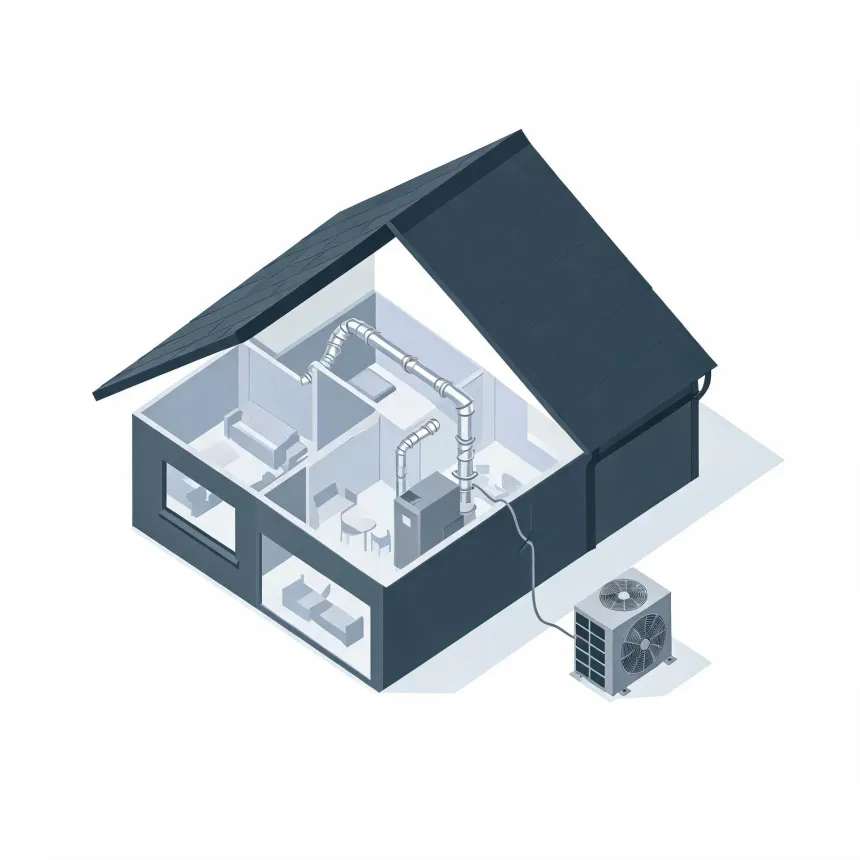
Most heat pump failures trace back to a handful of parts, and the same ones wear out whether the unit is young or old. The capacitor is the usual suspect. It gives the compressor and fan motor the jolt they need to start, and after enough start cycles it weakens until the motor struggles to turn over or hums without starting at all. The reversing valve is the part unique to a heat pump, since it switches the system between heating and cooling, and when it sticks the unit gets stuck blowing the wrong temperature or stops switching modes altogether. Refrigerant charge is another common point of failure, though it almost always means a leak somewhere in the line rather than the refrigerant simply running low on its own. Sensors and defrost controls fail too, and when they do the outdoor coil can ice over because the system no longer knows to defrost itself. None of these are the compressor itself, which is built to last the life of the unit and rarely the thing that actually fails.
A diagnostic visit starts outside, at the unit itself. A contractor checks the pressure in the lines, the amps the compressor is drawing, the temperature of the air coming off the coil. Those numbers point at whichever part is struggling before any cover comes off. Electrical parts get tested with a meter rather than guessed at. A capacitor can look fine and still be weak, and a motor can hum and still be failing. If the reversing valve is suspect, the contractor listens to it shift and feels the lines on either side to see if it is actually switching. Refrigerant is checked last, not first, since adding charge to a system that is leaking only hides the problem for a while. The goal is to end the visit knowing which part failed, not just that something did.