A two-story black-clad house with a dark gabled roof stands in front of a row of tall deciduous trees, viewed across a blurred green lawn in the foreground.

Heat Pump Repair in Overland Park, KS

Tell us about the job

Takes about a minute. No obligation.

RepairHeat PumpJohnson County, KS
Step 1 of 2

What ZIP code is the job in?

Humid air makes a heat pump work harder

The dew point here averages 65°F through June, July and August. That's heavy air, and a heat pump has to pull more moisture out of it to cool the house. The coil and compressor both feel that extra load all summer.


A storm can hit the outdoor unit directly

Johnson County saw 170 hail events and 179 damaging wind events between 2015 and 2024. The outdoor unit sits outside year round, and its coil fins and fan blades take that weather head on. A repair call here is often tied to something the machine was built to handle, pushed past what's normal.

7 months
October through April, your system heats
5 months
May through September, it cools
23°F
the average winter night it heats against
87°F
the average summer afternoon it cools against
Isometric cutaway illustration of a gray house showing interior rooms, a central air handler with ducts in the attic, and refrigerant lines running to an outdoor condenser unit beside the building.
Your system heats October through April and cools May through September.

NOAA nClimDiv, 1991–2020 normals

Half the homes in Johnson County were built in 1989 or later.

A heat pump that came with a newer house has usually got years left in it, which makes repair the right first call.

This county sees serious storms almost every year

367 severe weather events from 2015 to 2024
19% of homes statewide lost power a day or more in 2024
179 damaging wind events from 2015 to 2024
The first cold snap in October finds the weak partHeat here switches on in October, after sitting idle since April.

If the outdoor unit has been through a hailstorm or a bad wind event, it's worth a look even when the heat pump seems to be running fine. Hail dents the coil fins, and bent fins block airflow the coil needs to work right. Wind-blown branches and debris do the same thing, or worse, they can bend the fan or nick a refrigerant line. None of that always shows up as a problem right away. A unit can run for weeks with damaged fins before the house starts cooling slower or the compressor starts working harder than it should. Have it checked after a storm, not just when it stops working.

Get the real cause fixed, not just the symptom

Whatever's going wrong with the heat pump, there's a decent chance the real cause traces back to how hard this climate runs it. A tech who checks it properly will find out whether it's wear from a long cooling season, storm damage to the outdoor unit, or something else, and fix the part that's actually causing it. That's what makes a repair hold.

Find a contractor
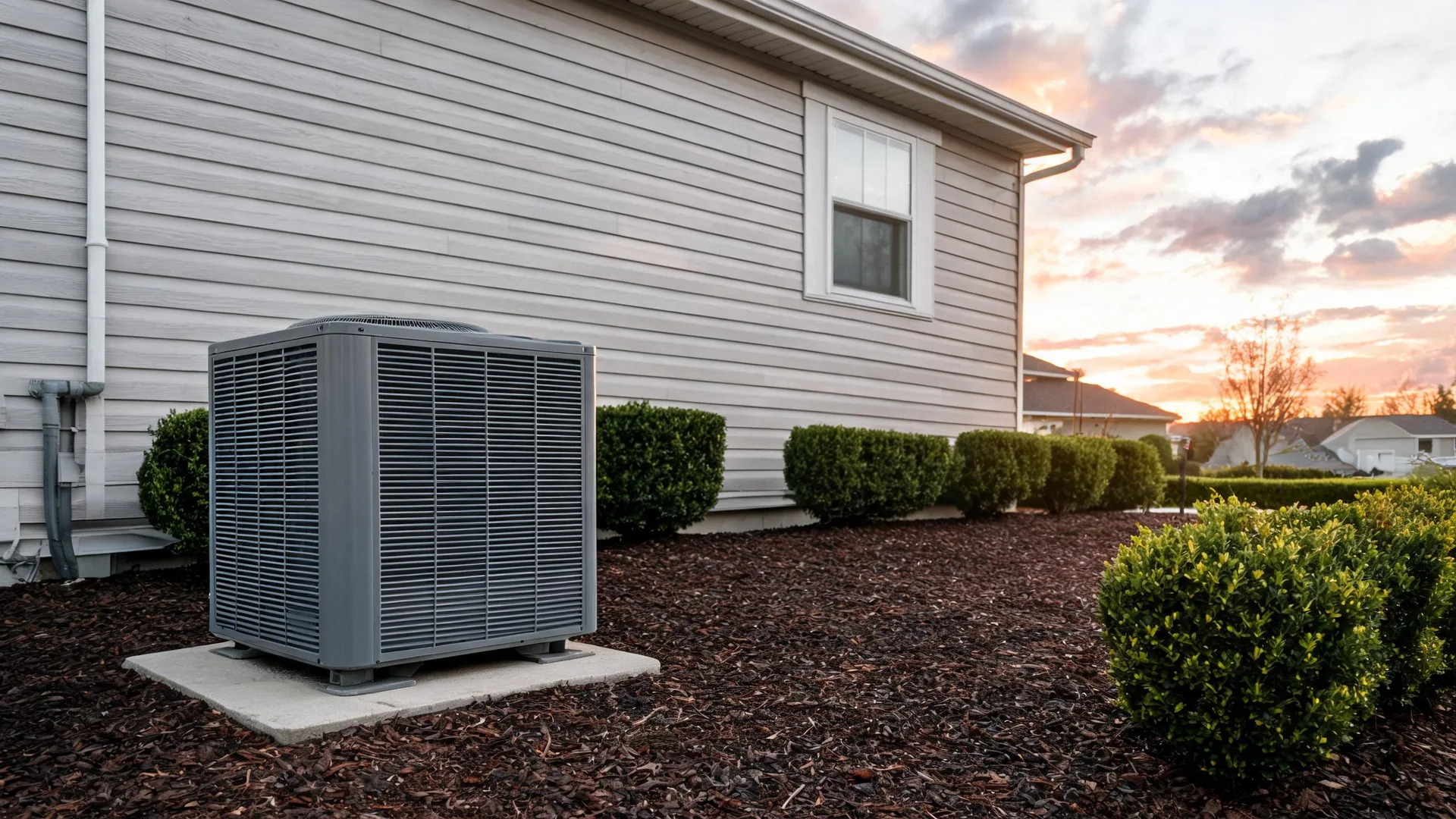
A gray outdoor HVAC unit mounted on a concrete pad beside a house with gray lap siding and a stone foundation.

A newer system is worth fixing right

A heat pump that's a few years old is usually still working through its expected lifespan, not at the end of it. If repair fixes what's wrong, there's no reason to treat it as a stopgap before a replacement. Get the actual problem diagnosed first. A tech can tell you whether the part that failed is a one-off or a sign of something bigger, and that's what should drive the decision, not the age of the unit.

Check the thermostat settings first

Make sure it's set to heat or cool as needed and the temperature is actually set past the current room temperature. Check the batteries if it has a screen that looks dim or blank. Someone can bump a setting or switch a mode by accident, and that looks exactly like a broken heat pump when it isn't one.

Look at the outdoor unit and the air filter

Walk outside and see if the unit is running, and clear away any leaves, grass clippings or ice built up around the coil fins. Then check the air filter inside. A filter clogged with dust blocks airflow the whole system needs, and that alone can make a heat pump blow warm air or ice over.

A heat pump that needs attention usually tells you before it quits outright. Warm air blowing when it should be cold, or cold air in heating mode, often means the reversing valve is stuck and can't switch the refrigerant flow. Ice building up on the outdoor coil and not clearing during the defrost cycle points to a failing defrost control board or a low refrigerant charge. Short cycling, where the unit kicks on and off every few minutes instead of running a full cycle, wears the compressor faster and usually traces back to a bad sensor or a dirty coil. Listen for it too. A grinding or squealing sound from the outdoor unit often means the fan motor bearings are going, and a hard clunk at startup can mean the compressor itself is struggling. Any of these is worth a call before the part it's straining finally fails.

A repair decision really comes down to one thing: what broke, and what that part's connected to. A failed capacitor or a bad sensor is a cheap, contained fix, and it doesn't tell you anything about the rest of the system. A compressor that's failing, or a coil that's leaked more than once, is a different conversation, because those point to the system wearing out rather than one part giving up early. Age matters less than people think. A heat pump with a single failed component still has every other part running on its original lifespan, and fixing the one thing that broke is usually the right call. Where it gets harder is when a tech finds the same stress on more than one part at once. That's the sign worth paying attention to, not how many years the unit has been outside.