A nighttime view of a residential street lined with single-story brick houses and large trees lit by warm exterior lights.

Heat Pump Repair in Parsons, KS

Tell us about the job

Takes about a minute. No obligation.

RepairHeat PumpLabette County, KS
Step 1 of 2

What ZIP code is the job in?

Half the homes here were built in 1958 or earlier

Labette County's housing stock is old. A heat pump in one of these houses may not be the original unit. Whatever is running now could be closer to the end of its life than its owner thinks, especially if nobody knows when it was last replaced.

A repair bill is worth asking about first

A compressor or reversing valve failure means something different on an older unit than on a newer one. Before paying for the repair, it is worth finding out how much life the system has left. The repair might be the right call, or it might just delay the one that is coming anyway.

7 months
October through April, your system heats
5 months
May through September, it cools
27°F
the average winter night it heats against
89°F
the average summer afternoon it cools against
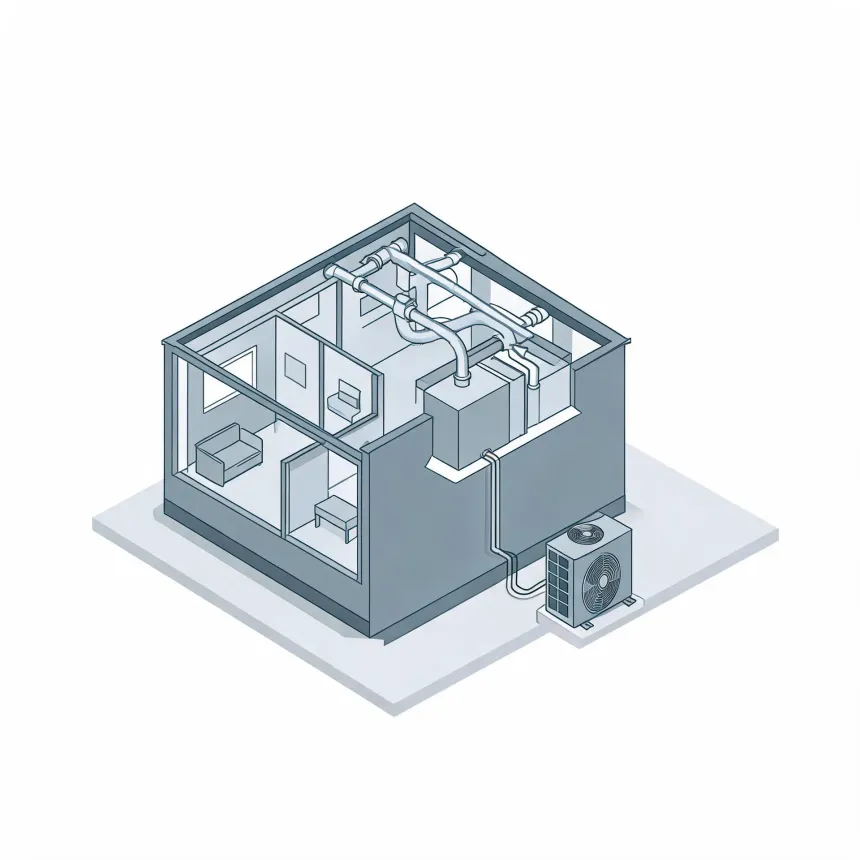
Isometric line illustration of a cutaway house showing interior rooms with furniture, ceiling ductwork connected to an indoor air handler, and refrigerant lines running to an outdoor condenser unit on a pad.
Your system heats October through April and cools May through September.

NOAA nClimDiv, 1991–2020 normals

Check the outdoor unit before anything else. If the fan isn't spinning or the coil is caked in dirt and debris, the system can't move heat properly in either direction.

Check the air filter and the thermostat batteries too. A clogged filter or a dead thermostat can look exactly like a failing heat pump and costs nothing to rule out.

Hail and heavy summer air both land on the same outdoor unit

43 hail events from 2015 to 2024
Power here costs 14.78 cents per kilowatt-hour
Climate zone 4A

Heat pumps here run from October through April, so the load starts building in September. A unit that struggled last spring doesn't get a break before winter heating starts back up. The first cold snap in October asks the compressor and reversing valve to switch over and work hard right away, and a part that was already weak tends to fail right there. Same thing in May, when cooling starts and the system has to reverse again. Overnight lows average 27°F through December, January and February, so a heat pump that's losing ground has seven months to show it. Getting a repair looked at before the season turns is worth more than waiting for it to quit on the coldest night.

A heat pump working this hard needs a real diagnosis, not a guess

The outdoor unit takes hail and heat both, and that combination is likely what's behind whatever it's doing now. A proper diagnosis finds the actual part at fault, whether that's storm damage, a wiring issue, or something wearing out from the workload. Get it looked at before deciding whether to fix it or plan for what's next.

Find a contractor
A man in a dark shirt and tan work pants, seen from behind, carries a worn canvas tool bag up concrete steps toward a red front door, with a potted evergreen shrub beside the entry.
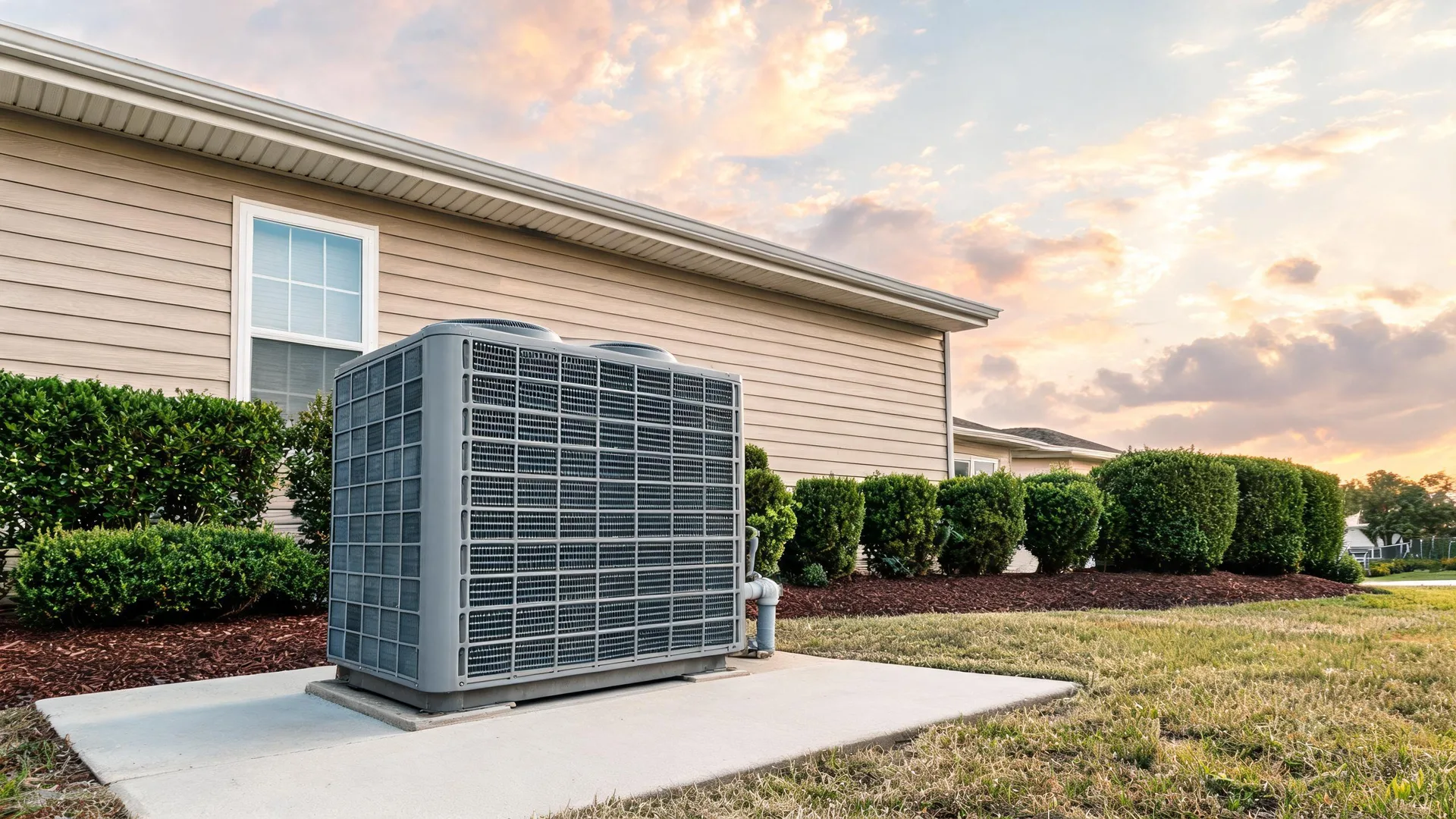
A gray outdoor HVAC unit mounted on a concrete pad beside a house with gray lap siding and a stone foundation.

What actually wears out, and why

A heat pump wears out from the outside in. The outdoor unit sits exposed through every season, so the fan motor bearings, the outdoor coil and the compressor take the brunt of it. Dirt and debris packed against the coil make the system work harder to move heat, and that extra strain is what pushes a marginal part into failure. Inside, capacitors lose their ability to hold a charge over time, and a weak one shows up as a compressor that hums and strains instead of starting clean. Contactor points pit and burn from years of making and breaking the circuit, until one day they don't make contact at all. Refrigerant doesn't get used up, so a system that's low has a leak somewhere, usually at a fitting, a coil, or a line set connection that's been slowly losing its seal. The reversing valve takes mechanical wear every time it switches between heating and cooling, and a valve that sticks partway is one of the more common reasons a heat pump stops doing its job in one mode but not the other. None of these parts fail because a season was hard. They fail because they've been doing the same job, over and over, for years, and something finally gives out.

Running a bad compressor shortens its life fast

A compressor that's starting to fail still runs, but every cycle after that adds wear it won't recover from. A compressor low on refrigerant or losing oil keeps grinding through the same hours as a healthy one, except now it's doing it with less lubrication and more strain on the windings. What starts as a minor fault can turn into a seized compressor if it keeps being asked to work.

A struggling heat pump can take other parts with it

The reversing valve, the defrost control board and the outdoor fan motor all depend on the system running the way it was designed to. A refrigerant leak makes the compressor run hotter and longer to hit the same temperature, and that extra heat and runtime wears on whatever is next to it. Catching the original problem early usually means fixing one part instead of several.

Most heat pump problems announce themselves before the system quits outright. Warm air blowing when it should be hot, or cool air that never quite gets cold, usually means the reversing valve isn't switching fully or the refrigerant charge has dropped. Short cycling, where the unit kicks on and off every few minutes instead of running a full cycle, points to a failing sensor or a compressor that's struggling to start. Ice building up on the outdoor coil and not clearing during defrost cycles means the defrost board or sensor isn't doing its job. Listen for it too. A new rattle, a hum without the fan turning, or a loud click followed by silence are all the system telling you a part is on its way out. None of these mean the whole unit is done, but ignoring them long enough usually turns one bad part into several.

A diagnostic visit starts outside, at the unit itself. The tech checks refrigerant pressure on both the high and low side, because a reading that's off tells them whether they're chasing a leak or a failing compressor. They'll test the capacitor and the contactor, since a weak capacitor can make a compressor hum and strain without ever starting. Inside, they check the air handler, the coil, and the blower motor, looking for ice, restricted airflow, or a motor that's running slower than it should. They'll also cycle the reversing valve by hand to see if it actually switches when told to, because a valve that's stuck partway is a common reason a system blows warm air in heating mode. By the end, the tech should be able to point to the one part causing the trouble, not just the symptom you called about.