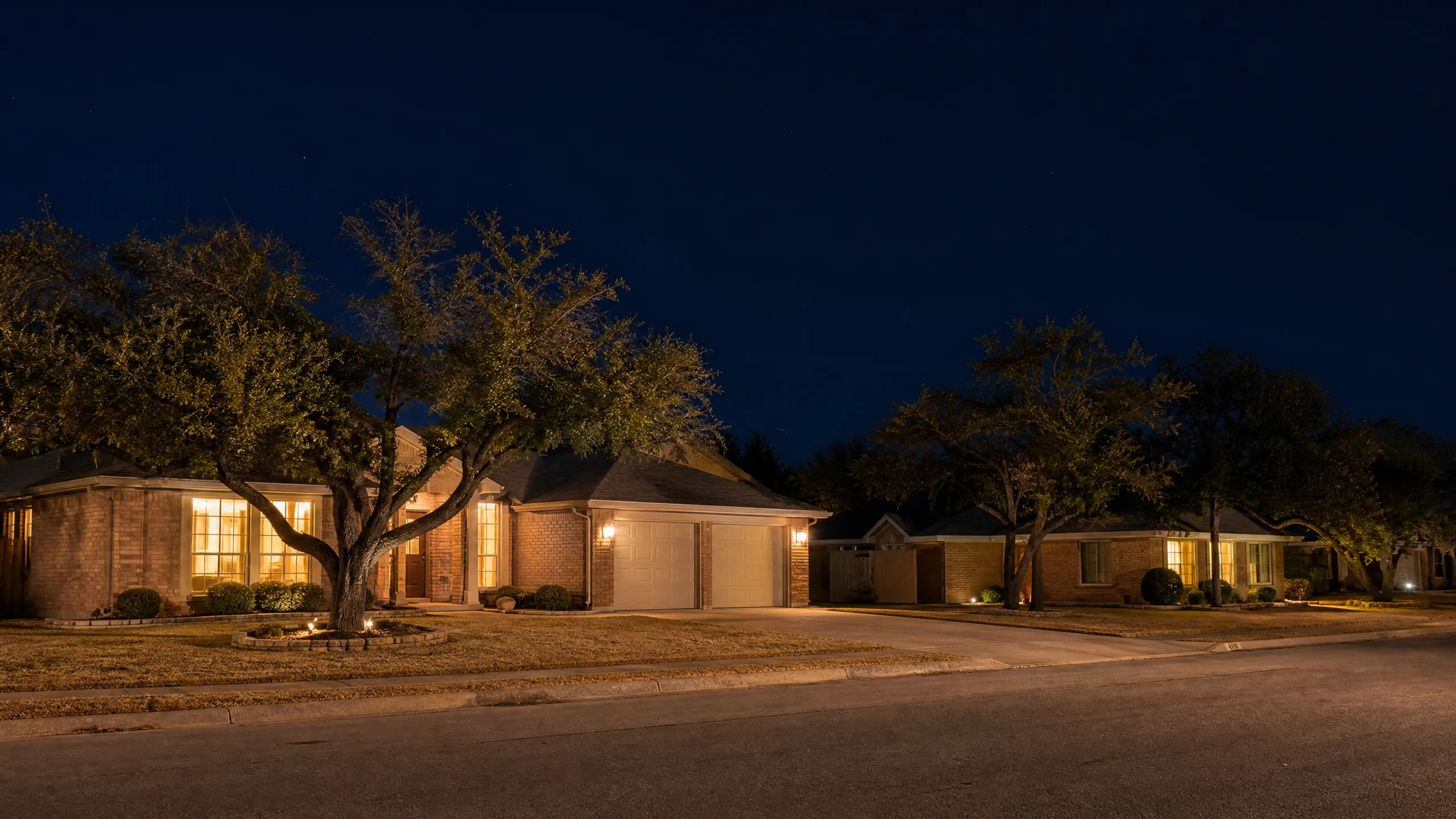
Two single-story brick suburban houses with attached garages and mature trees, photographed at night under a dark blue sky.

Heat Pump Repair in Pittsburg, KS

Tell us about the job

Takes about a minute. No obligation.

RepairHeat PumpCrawford County, KS
Step 1 of 2

What ZIP code is the job in?

Humid summers push it hard

A heat pump here spends the summer pulling moisture out of air that sits around a 67°F dew point, heavier than most of the country deals with. That is steady, long work on the compressor and the coil, not an occasional sprint.


Storms add their own wear

Crawford County recorded 84 damaging wind events and 49 hail events between 2015 and 2024. An outdoor unit takes that weather straight on. Bent fins or a jarred connection from a storm can cause problems that only show up later, as a system that won't heat or cool right.

7 months
October through April, your system heats
5 months
May through September, it cools
26°F
the average winter night it heats against
88°F
the average summer afternoon it cools against
Isometric cutaway illustration of a single-story house with a dark gabled roof, showing interior rooms with ductwork leading to an indoor air handler and an outdoor condenser unit connected by lines on the ground outside.
Your system heats October through April and cools May through September.

NOAA nClimDiv, 1991–2020 normals

Half the homes around Pittsburg were built in 1972 or earlier.

A heat pump installed when a house like that was new is long past due for trouble.

A heat pump here switches jobs twice a year, and a weak part fails right at the switch

Cooling runs May through September
Heat runs October through April
84 damaging wind events from 2015 to 2024

Crawford County saw 142 severe weather events between 2015 and 2024, and 84 of those were damaging wind. Add in 49 hail events and 4 tornadoes, and an outdoor heat pump unit has taken a real beating these past years. It sits outside through all of it, with nowhere to take cover. Hail dents the fins on the outdoor coil, and wind-blown debris does the same or worse. A unit that caught a bad storm can keep running for months before the damage shows up as weak heating or weak cooling. If a storm came through and hit the outdoor unit, that is reason enough to have it looked at, whether or not it is acting up yet.

Find out what's actually wrong before it gets worse

A heat pump that works this hard all year does not fail for no reason. When it stops heating or cooling right, something wore out or something got knocked loose. Getting it looked at finds which one it is, so the fix holds.

Find a contractor
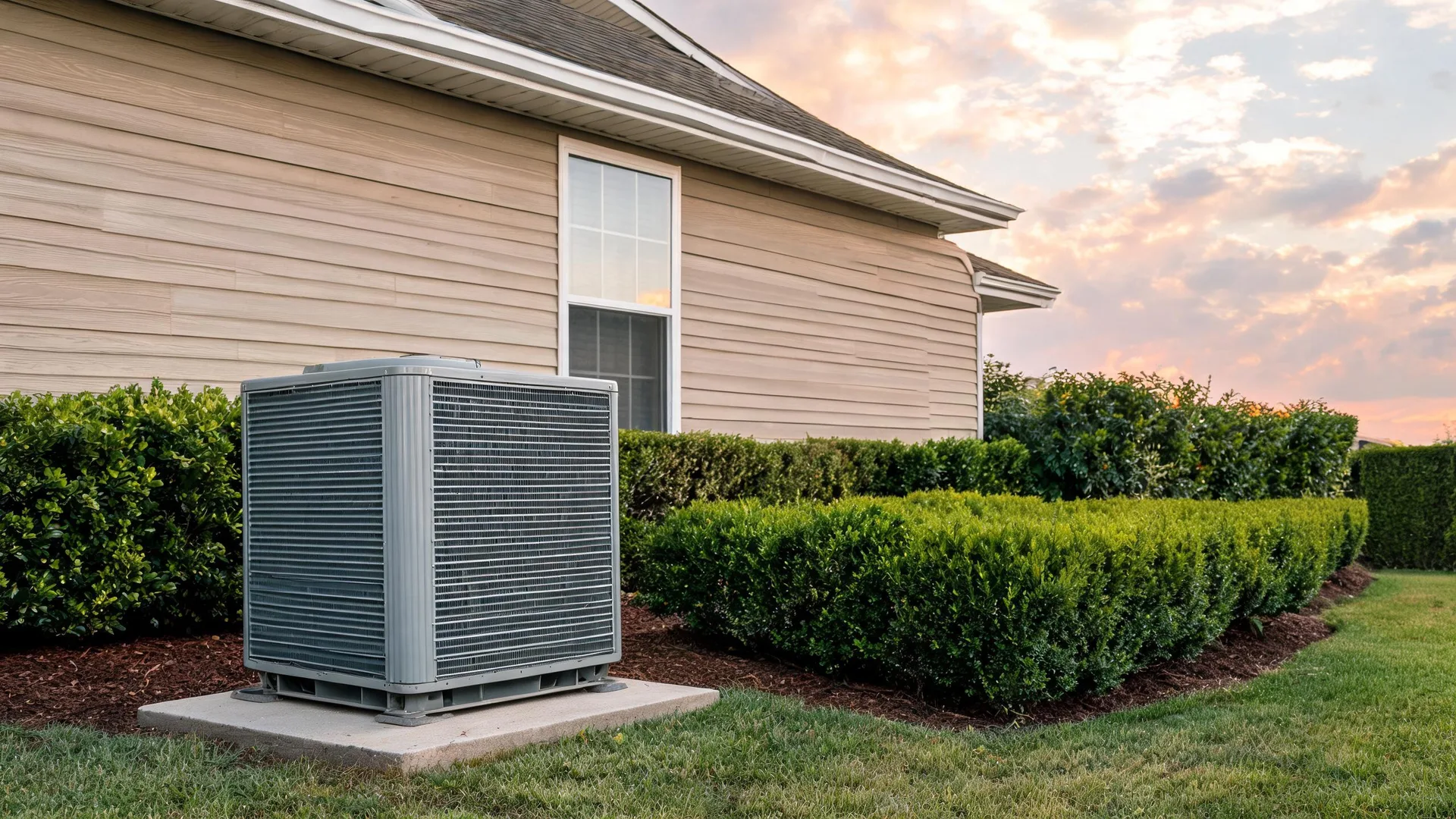
A dark gray heat pump unit mounted on a concrete pad next to a house with gray siding and a stone veneer wall.

How much life is left in this one

If your heat pump came with a house like that, it is not a young system. Ask whoever comes out to look at it how much life is left before you spend money on a big repair. A compressor or coil near the end of its run costs more to keep patching than to replace, and a tech who has it apart can tell you which side of that line yours is on.

The reversing valve is the part unique to this machine

A heat pump has one part a furnace or straight air conditioner does not: the reversing valve that switches it between heating and cooling. When it sticks, the system can get stuck in one mode, blow air that is not warm enough or cool enough, or short cycle. A valve that is starting to go is often the reason a heat pump seems to work fine one week and not the next.

Most other failures are wear and tear anyone's AC gets

Past the reversing valve, a heat pump breaks down the way a central air conditioner does. The capacitor that starts the compressor and fan motors weakens with age and heat cycles. The contactor that switches power to the outdoor unit pits and burns from arcing. Refrigerant leaks out slowly at fittings and joints, starving the system of what it needs to move heat. Any one of these shows up as the unit running but not heating or cooling the way it should.

A heat pump that is struggling still moves some heat, so it is tempting to let it ride and see if it sorts itself out. Left running, a small problem usually finds a way to become a bigger one. A refrigerant leak that is only costing a little capacity today will starve the compressor of lubricant eventually, and a compressor is not something anyone patches. A failing capacitor makes the compressor draw harder on every start until it trips the breaker or burns out the motor windings. A dirty outdoor coil makes the whole system run longer to do the same job, and that extra runtime wears out whatever part was already weak. The unit will often keep going right up until the part it was leaning on gives out completely, and that failure costs more to fix than the one that started it.

If a storm has come through since the last time this heat pump was serviced, that is worth mentioning to whoever comes out. A tech can pull the panel off the outdoor unit and check the coil fins, the fan blade and the wiring for anything a storm knocked loose, even where nothing looks wrong from the yard. Bent fins can be combed back out, and a connection jarred loose is a quick fix if it is caught before it burns a wire or trips something else. None of that shows up on a quick look from outside. It takes someone opening the unit up to know for sure.