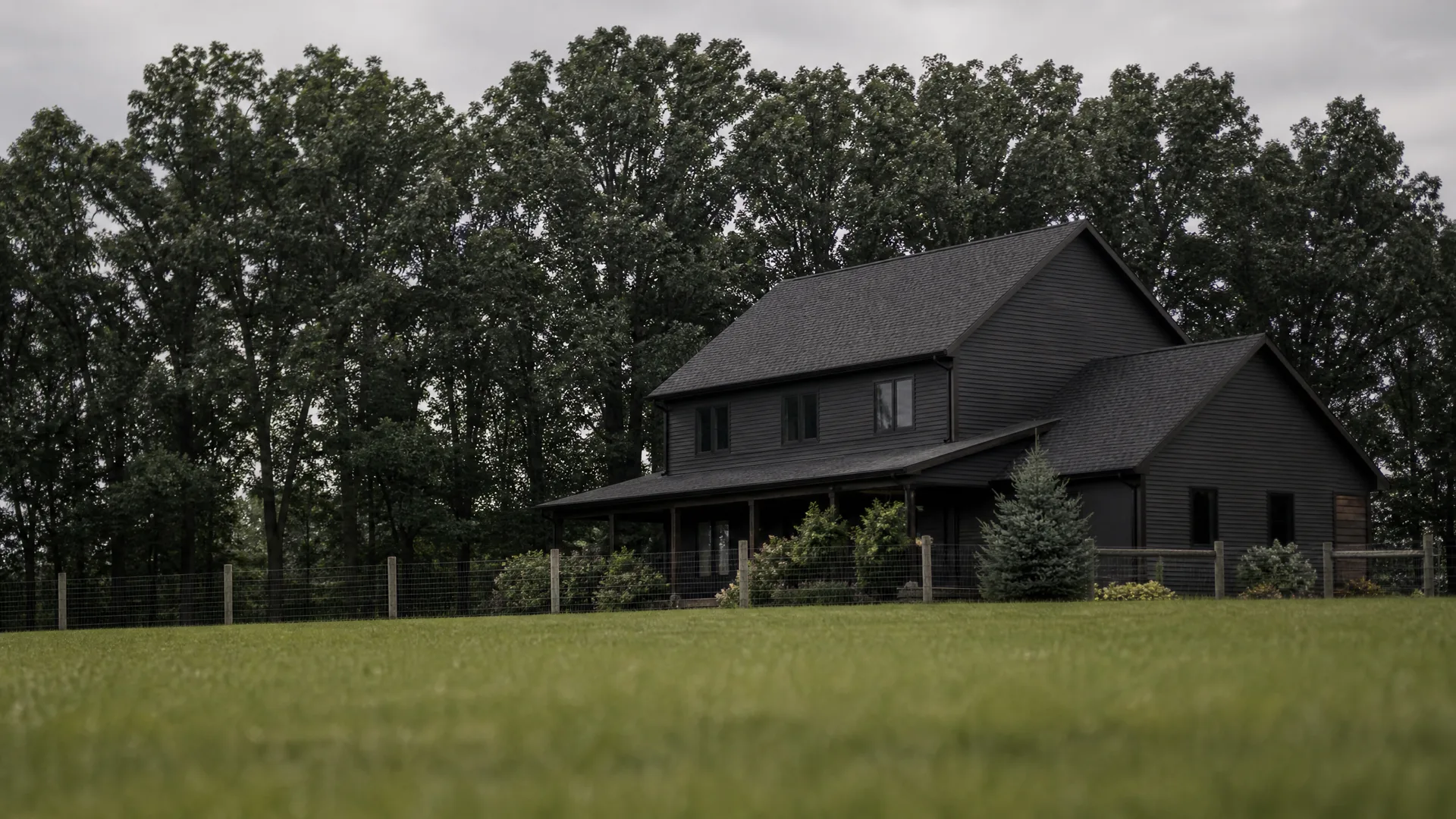
A dark-painted two-story house with a covered porch and gabled roof stands behind a wire fence, with a mown lawn in the foreground and a dense row of tall deciduous trees under an overcast sky behind it.

Heat Pump Repair in Sabetha, KS

Tell us about the job

Takes about a minute. No obligation.

RepairHeat PumpNemaha County, KS
Step 1 of 2

What ZIP code is the job in?

Winter is when a heat pump earns its keep

Nights here average 19°F through December, January and February. A heat pump leaning on backup heat or struggling to defrost in that kind of cold isn't dealing with anything unusual for Sabetha. It's dealing with the kind of cold heat pumps are built to handle.


Find the actual cause before replacing anything

A heat pump that won't hold temperature, runs constantly, or trips its breaker in winter usually has one specific thing wrong with it, like a failing defrost control or a low refrigerant charge. The fix is diagnosing that part correctly, not assuming the whole unit is worn out.

7 months
October through April, your system heats
4 months
June through September, it cools
19°F
the average winter night it heats against
86°F
the average summer afternoon it cools against
Isometric grayscale illustration of a cutaway house showing interior rooms, ductwork and an indoor air handler connected by lines to an outdoor condenser unit on the ground outside.
Your system heats October through April and cools June through September.

NOAA nClimDiv, 1991–2020 normals

Heat pumps in Sabetha run from October through April.

September is when a weak part gets found before it has to work through a cold night.

Sabetha sees its share of wind and hail, nothing that points to one cause over another

99 severe weather events from 2015 to 2024
19% of homes statewide lost power a day or more in 2024
55 damaging wind events from 2015 to 2024

Half the homes in Nemaha County were built in 1974 or earlier, and half in 1974 or later. That split doesn't point to anything in particular. An older house might still have its original ductwork or an outdoor unit that's been replaced since. A newer one isn't automatically trouble-free either. What a heat pump has behind it depends on what's been done to that specific system, not when the house went up. The part that's actually failing, a contactor, a reversing valve, a low charge, is found by checking the unit itself.

Electricity in Kansas isn't cheap, and a struggling heat pump runs up the bill every day it's off

Kansas homes paid 14.15 cents per kilowatthour in 2024, and a heat pump leaning on backup heat or short cycling uses more of it than one running right. The longer the real problem sits, the more it costs to let it keep running that way.

Find a contractor
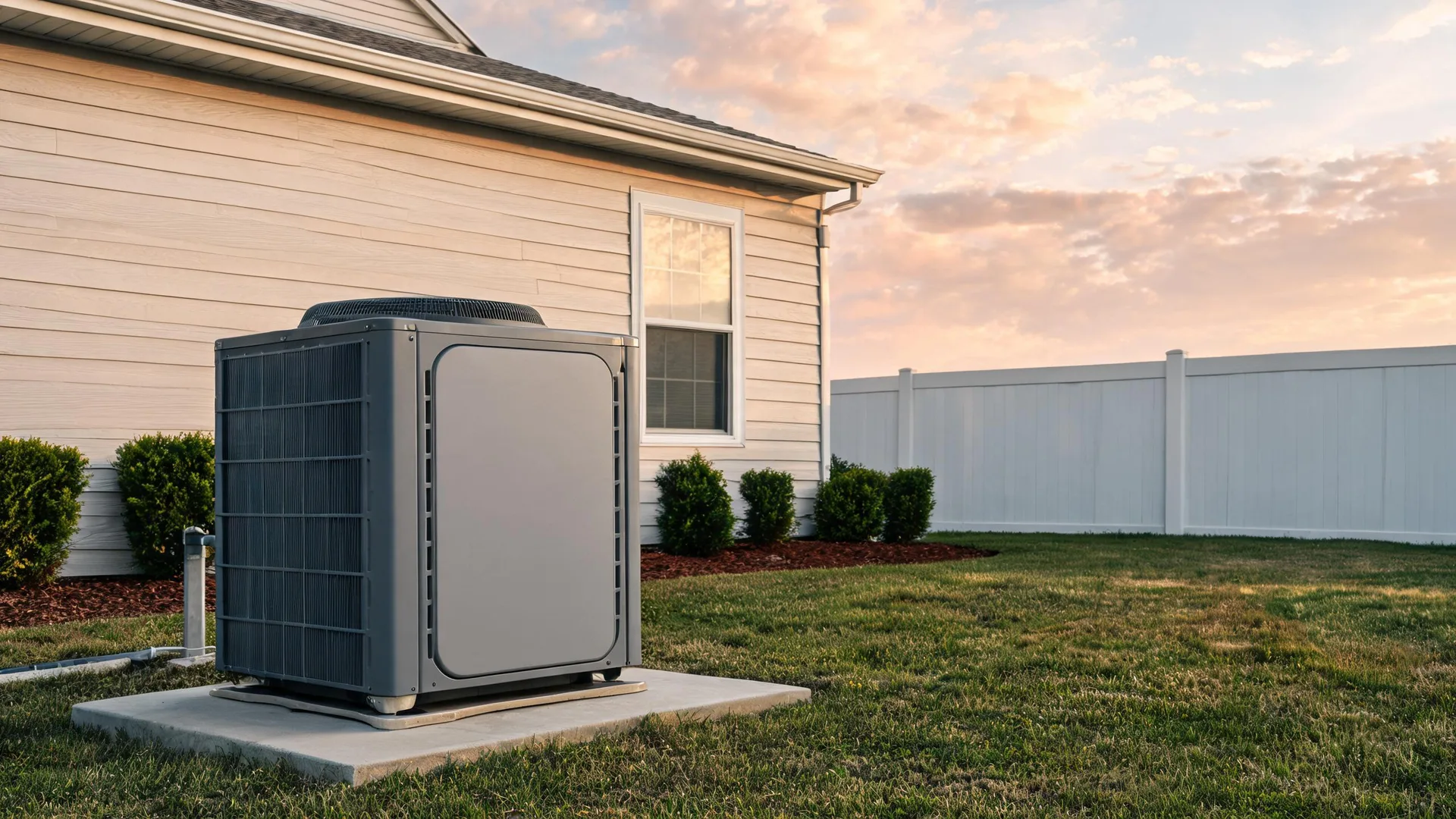
A gray heat pump outdoor unit mounted on a concrete pad next to a residential house with lap siding and stone accents.

It runs all year, so it fails differently than a furnace does

A heat pump runs every month of the year, and that changes how it fails compared to a furnace or an AC that gets months off. The reversing valve is the part most specific to a heat pump, and it's also the one that quietly starts sticking after enough cycles switching between heating and cooling. The defrost board and sensor are next, since both control a process that only matters to heat pumps and runs over and over through the cold months. Contactors and capacitors wear the way they would in any outdoor unit, pitting and losing capacitance with every start. Refrigerant charge drifts down over time from small leaks, and a heat pump running low on charge struggles to pull heat from cold air long before it struggles to cool. None of this means the unit is worn out. It means something specific inside it has been asked to start, switch, and defrost over and over, and finally didn't.

What you can check from the thermostat

Set it a few degrees above room temperature and listen for the outdoor unit to kick on. If the indoor fan runs but no heat comes out, or the system never starts at all, that narrows things down before anyone arrives. Check the breaker too. A tripped breaker that won't reset, or trips again right away, points to an electrical fault rather than something a reset will fix.

What to leave alone

Don't pull panels off the outdoor unit or touch the wiring inside it. If there's a thick coat of frost or ice on the outdoor coil that hasn't cleared after a defrost cycle, that's worth noting for the tech but not something to chip off yourself. Clearing snow or debris away from the unit so air can move around it is the one hands-on thing that's safe to do.

A heat pump that's struggling doesn't fix itself by staying on. If it's low on charge, the compressor keeps working harder to move heat that isn't there, and that shortens its life. If the defrost control is misfiring, ice keeps building on the outdoor coil, blocking the airflow it needs to do anything at all. A reversing valve that's starting to stick gets worse with every cycle, not better, since each switch between heating and cooling is what wears it down. Leaning on backup heat while the real fault sits there doesn't rest the system either. It just hides the symptom while the part underneath keeps failing. The sooner the actual cause gets found, the less there is for anything else to wear out trying to compensate for it.

A diagnostic visit starts with questions, not tools. When did it start, what does it sound like, does it happen in heating mode or cooling mode or both. Then comes a check of pressures and electrical readings at the outdoor unit, since those numbers point toward a weak capacitor, a failing contactor, or a charge that's drifted low before any panel comes off. The indoor coil and airflow get checked too, since a heat pump starved for airflow on one side shows symptoms that look electrical but aren't. Reading the fault history on the control board, if it has one, often narrows things down before anything gets tested by hand. The goal isn't to replace parts until something works. It's to find the one thing that's actually wrong and show the reader what it was.