





A two-story black-clad house with a dark shingled roof and covered porch stands in front of a dense row of tall conifers, viewed across a green lawn shot from ground level under an overcast sky.

Heat Pump Repair in Topeka, KS

Tell us about the job

Takes about a minute. No obligation.

RepairHeat PumpShawnee County, KS
Step 1 of 2

What ZIP code is the job in?

A heat pump in Shawnee County earns its keep. The outdoor unit sits exposed to whatever the weather brings, and that includes 108 hail events here between 2015 and 2024, plus damaging wind hitting the county 224 times over that same stretch. Hail dents the fins on the outdoor coil, and bent fins choke off airflow the system needs to work right. Summer adds its own strain. A dew point averaging 65°F through June, July and August means the air is heavy, and the heat pump has to pull more moisture out of it to keep a house comfortable. All of that adds up to parts wearing down sooner than they would somewhere calmer. When something starts acting up, it's worth having a contractor look at the actual cause rather than guessing.

7 months
October through April, your system heats
5 months
May through September, it cools
22°F
the average winter night it heats against
88°F
the average summer afternoon it cools against
Isometric cutaway illustration of a house showing interior ductwork, an indoor air handler, and beds, with an outdoor condenser unit connected by lines outside the wall.
Your system heats October through April and cools May through September.

NOAA nClimDiv, 1991–2020 normals

Electricity here runs 14.90 cents a kilowatt-hour.

A heat pump losing efficiency burns through more of it every month until it's fixed.

This heat pump runs almost year round, and trouble shows up right when a season starts

Cooling runs May through September
Heat runs October through April
224 damaging wind events from 2015 to 2024

Shawnee County logged 351 severe weather events between 2015 and 2024, and 7 of those were tornadoes. That outdoor unit sits outside through all of it, with nothing but a thin metal cabinet between the coil and whatever comes down. Across Kansas, 19% of households lost power for a day or more in 2024, and a heat pump that loses power mid-cycle doesn't always come back running the way it did before. A branch, a chunk of ice, debris thrown by wind, any of it can bend the fan cage or crack a line without stopping the unit outright. It can keep running after a hit like that and still be worse off than it was.

Get the real problem found before it wears into a bigger one

A dented coil or a motor strained by a summer's worth of heavy air does not always shut a heat pump down. It just makes it work harder than it should to do the same job. Getting the actual cause checked now means the fix addresses what's really worn, not just the symptom.

Find a contractor
A man in a dark jacket, cap and tan work pants climbs wooden porch steps toward a red door, carrying a canvas tool bag beside a potted shrub in a red planter.
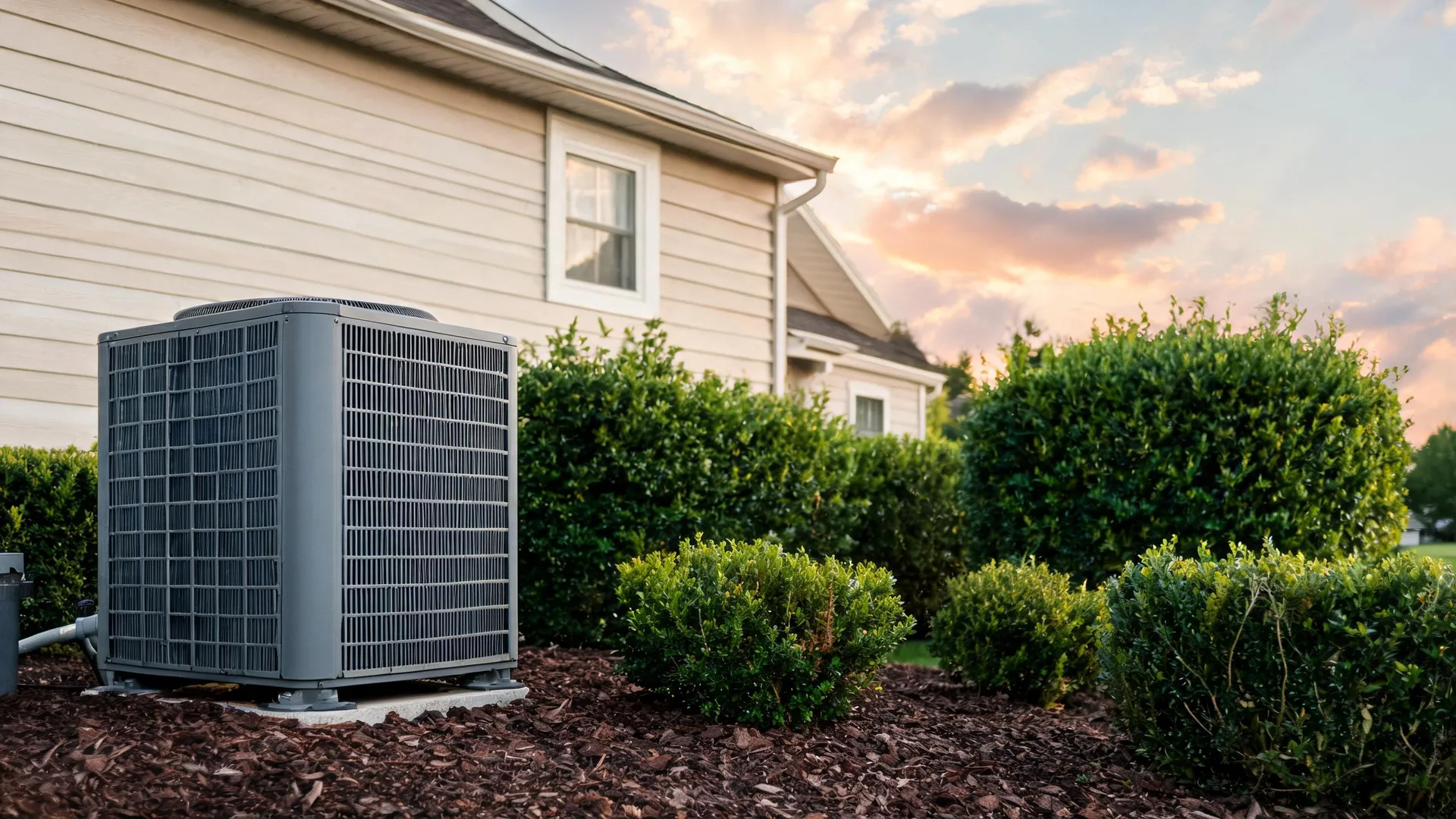
A gray heat pump outdoor unit mounted on a concrete pad next to the stone-accented exterior wall of a house.

An older system calls for a different question

Half the homes in Shawnee County were built in 1972 or earlier. A heat pump that came with a house that age has likely already been swapped out once, but if yours hasn't, it's worth asking how much life is left in it before sinking money into a major repair. An older home also means the ductwork and electrical setup it's tied into are that same age, and a heat pump works best when what it's connected to was built for it. Before paying for a big fix, ask the contractor straight: is this worth repairing, or is it closer to the end than the beginning.

What a failing heat pump sounds and feels like

A heat pump in trouble rarely just stops. It runs longer than it used to without catching up to the thermostat. Air coming out of the vents feels lukewarm instead of properly warm or cool. The outdoor unit might start making a grinding or rattling noise it never made before, or ice builds up on the coil and stays there instead of melting off during the defrost cycle. Short cycling, where the system kicks on and off every few minutes, usually points to a refrigerant problem or a failing sensor. Any of these on their own is worth a call. Together, they mean something is already failing, not about to.
Why waiting costs more than the repair itself

A heat pump that is struggling still tries to do its job, and that is the problem. A weak capacitor makes the compressor strain every time it starts. A dirty coil makes the whole system run longer to move the same amount of heat. None of that breaks the unit today, but it wears down the parts around the original problem faster than normal. A repair caught early is usually one part. Left alone, it turns into the compressor or the whole outdoor unit, and that is a different job and a different conversation with the contractor.

A refrigerant leak is a good example. A system low on charge still runs, but the compressor has to work harder to move what heat it can, and it runs longer to do it. That extra strain is what kills compressors early. A dirty filter does something similar from the other end. Airflow drops, the coil can't shed heat properly, and ice starts building where it shouldn't. The unit doesn't know to stop and protect itself. It just keeps pushing through a problem that's getting worse, and every hour it runs that way is an hour closer to a part failing instead of just wearing.

If hail or wind has hit the outdoor unit this year, don't wait for it to sound broken before having it looked at. A contractor can check the fin pattern on the coil, the fan cage and the line set for the kind of damage that doesn't stop a heat pump but does shorten its life. That's a different visit than a repair call after something quits, and a quicker one. Shawnee County saw 224 damaging wind events and 7 tornadoes between 2015 and 2024, so plenty of outdoor units have taken a hit without anyone knowing it yet.