





A snow-covered small-town street at dusk, with lit white clapboard houses, bare trees, and a grain elevator silhouetted against an orange and blue twilight sky.

Heat Pump Repair in Wellington, KS

Tell us about the job

Takes about a minute. No obligation.

RepairHeat PumpSumner County, KS
Step 1 of 2

What ZIP code is the job in?

A heat pump in Sumner County earns its keep. Summer air here sits heavy, with the dew point averaging 65°F across June, July and August, and that moisture load means the system runs long hours just to keep a house comfortable. Hail is part of the picture too. The county saw 69 hail events between 2015 and 2024, and the outdoor unit sits right outside, exposed to whatever comes down. That combination of heavy use and weather wear adds up faster than most homeowners expect. When a heat pump here starts acting up, it's usually not bad luck. It's the toll of the work it's been doing.

7 months
October through April, your system heats
5 months
May through September, it cools
25°F
the average winter night it heats against
91°F
the average summer afternoon it cools against
Isometric cutaway illustration of a single-story house showing interior rooms with furniture, an attic duct system connected to an indoor air handler, and an outdoor condenser unit linked by lines along the exterior wall.
Your system heats October through April and cools May through September.

NOAA nClimDiv, 1991–2020 normals

A heat pump that's struggling blows air that doesn't feel warm or cool enough, cycles on and off too often, or starts making a new noise at the outdoor unit.

Catch those signs early and a technician is working with a system that's failing. Wait, and they're often working with one that already has.

Half the homes here were already old when this heat pump was installed

Half the homes here were built by 1962
69 hail events from 2015 to 2024
Power here costs 14.38 cents per kilowatt-hour

October is when heat kicks back on here, and that first cold snap is when a weak heat pump shows what it's been hiding all year. A system that limped through summer on a failing part usually can't switch over to heating without that part giving out. Overnight lows average 25°F across December, January and February, and a heat pump working against that kind of cold leans hard on whatever is already worn. The same goes in reverse come May, when cooling starts back up and asks for a full season of run time right away. Get it looked at before the season turns, not after the house is already uncomfortable.

Have it diagnosed properly, and let the diagnosis decide

A heat pump that's been working this hard deserves a real diagnosis, not a guess. A technician who knows what this climate does to a system can tell you whether the fix is a part or a sign of more to come.

Find a contractor
A gray heat pump outdoor unit mounted on a concrete pad next to the stone-accented exterior wall of a house.

Check how many years this one has logged

The data plate on the outdoor unit gives the install date. If this heat pump came with the house, that date is worth checking before deciding what to spend on a repair. A system already well into its years doesn't owe you a big repair bill just because it's still running. Ask the technician how many years this one has logged and weigh that against what the fix will cost. That's the number that should drive the decision, not how the system sounds right now.

The reversing valve carries the wear others don't

A heat pump switches direction every time it moves between heating and cooling, and the reversing valve is what makes that switch happen. A furnace never does this. Over years of cycling back and forth, the valve can stick or fail to shift fully, leaving the system blowing air that doesn't match what the thermostat is asking for. It's one of the more expensive parts to replace, and it only takes this kind of abuse because a heat pump works twice as many months as a system that just cools.
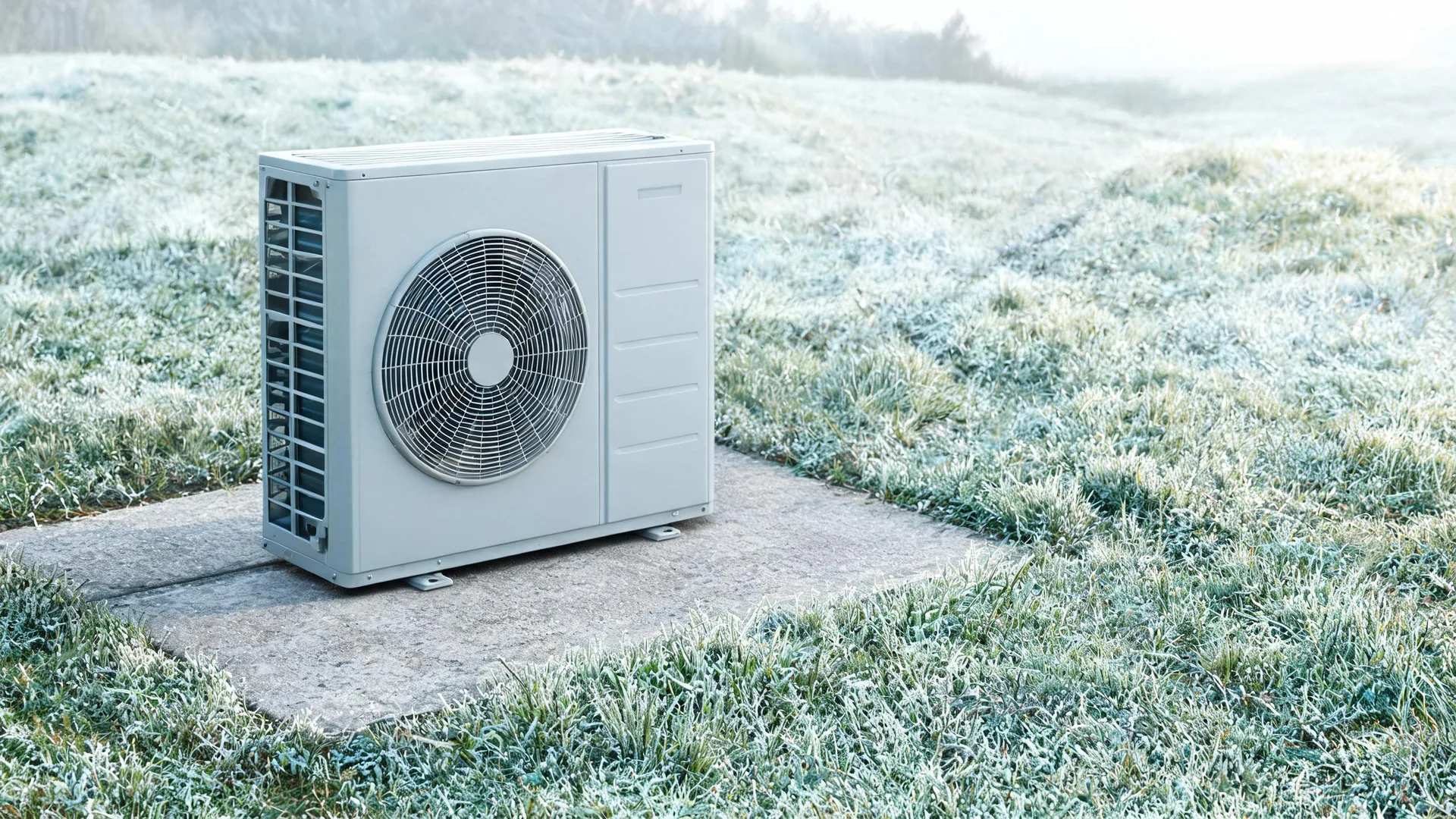
The outdoor coil fails from the outside in

The outdoor coil sits exposed to the weather year round, and that's where a lot of heat pump trouble starts. Dirt, grass clippings and bent fins block airflow across it, and the system has to work harder to move heat across a coil that can't breathe. A dented or crushed section from debris or impact does the same thing to a smaller patch of coil. Left alone, restricted airflow strains the compressor, which is the part nobody wants to replace.

A few things are worth checking before a service call. Look at the outdoor unit first. If leaves, grass clippings or ice are packed against the coil, clear them away, since blocked airflow alone can make a heat pump seem broken when it isn't. Check that the thermostat is set to the right mode and hasn't been bumped to a temperature it can't reach. Inside, pull the air filter and hold it up to the light. If you can't see through it, swap it, because a clogged filter chokes airflow the same way a dirty outdoor coil does. Check the breaker box too. Heat pumps trip breakers more than people expect, and a reset is sometimes all it takes. If the system is running but the air doesn't feel right, or a breaker trips again right after you reset it, stop there and let a technician take over.

A repair makes sense when the problem is a single part doing a job it was built to do. A capacitor, a contactor, a blower motor, these fail on their own schedule and swapping one brings the system back to where it was. Replacement starts to make more sense when the compressor is the problem, because that's the part that moves the refrigerant and does most of the work, and a failing one often means the rest of the system has been straining right along with it. The other thing worth weighing is how many repairs this system has already needed. One fix is a fix. A third call in a couple of years for a different part each time means the system as a whole is wearing out, not just the piece in front of you. A technician who's already inside the unit can tell you which kind of problem this is before any decision gets made.